


Contacts

92 Bowery St., NY 10013

thepascal@mail.com

+1 800 123 456 789

Category: PLAY2LEARN

IMPORTANCE OF PLAYPLAY2LEARN

Play helps Class 2 student build confidence, improve language skills

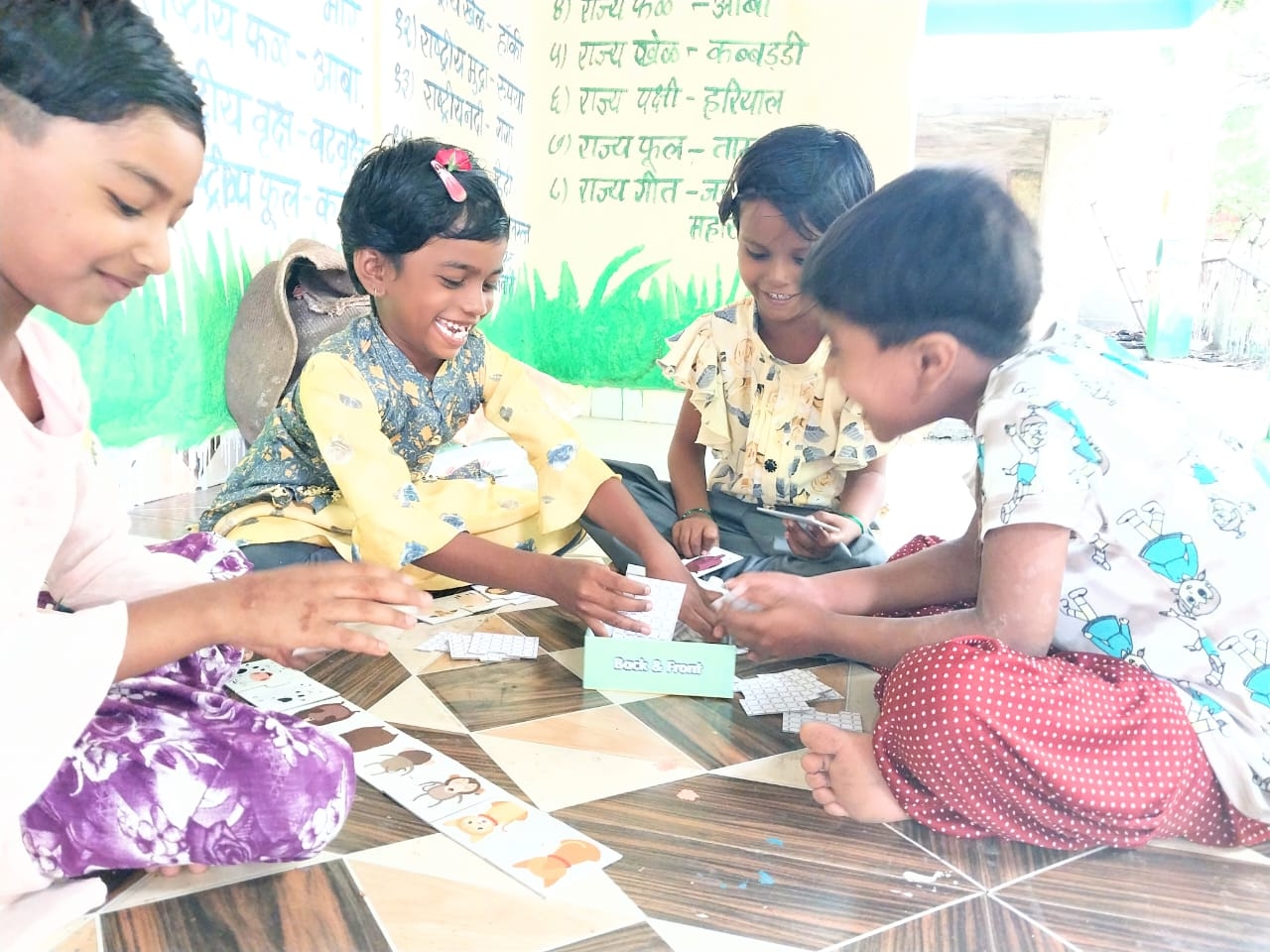
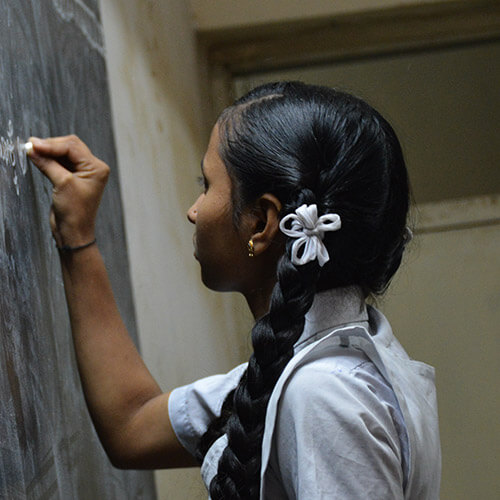
Divya is a Class 2 student, who lives in Maharashtra’s Ahmednagar district in a joint family. Her Mother is a domestic worker, while her father and uncle work as labourers. The children Toybank – Development through Play works with come from vulnerable communities and do not have access to quality play. 

When Divya first came to the Bal Bhavan, she did not want to sit in class and was afraid to interact with other students. She would often cry when brought to the Bal Bhavan. In the ‘Power of Play’ workshops the teachers attended, they were told about using play to strengthen the student-teacher bond and how to effectively use play in their classrooms. When the teacher noticed that Divya was being hesitant to sit in class, she introduced her to board games and started playing with her. 

Eventually, Divya got comfortable and began attending the Bal Bhavan regularly. When she moved to a higher grade in the following year, she struggled with reading, writing and speaking, and was not very confident. To help her, the teachers began playing games such as fruit flash cards, which help with visual recognition, memory, and also used games based on letter recognition, language and vocabulary and spelling building. 

They played these games daily and the teachers noticed improvements in her. Divya also started finding it fairly easier to read and spell words, eventually leading to improved skills. She began sitting with her classmates and they began competing to learn better, while ensuring that they helped each other. Learning through play made learning fun and easy for Divya, which led her to top her class in her exams. 

Research shows that play has a transformative impact on children’s holistic growth, equipping them with the skills and mindsets needed to grow into well-rounded adults in an ever-changing, increasingly volatile and uncertain world. At Toybank, we are committed to building critical life skills in at-risk children by increasing their access to play. 

IMPORTANCE OF PLAYPLAY2LEARN

Mothers, play and participation: A story from rural Maharashtra

This competition was a reminder to not let play disappear from our lives.

Parents play a pivotal role in children’s development. Yet, not many parents have the leisure of playing, in particular Mothers, given the burden of domestic responsibilities and gendered social norms.

However, play is and should be for everyone. From improving parent-child and teacher-student bonds, creating fear-free, safe spaces for conversation to bringing respite from the stress of everyday life, there are endless benefits of play for adults and children. Earlier in March, the United Nations declared June 11 as the International Day of Play in efforts to preserve, promote, and prioritise play so that all people, especially children, can reap the rewards and thrive to their full potential. 

To celebrate this, on June 20, a school in Sagroli village, near Maharashtra’s Nanded district decided to use play to create a safe, joyful and empowering space for Mothers, who are often hesitant to participate in parent-teacher meetings. The teachers of the primary school invited their students’ mothers to a day of play. 


The Opentree Foundation’s flagship project, Toybank – Development through Play, has had a play centre at this school for years, as part of our long-standing partnership with the Sanskriti Samvardhan Mandal (SSM), an organisation dedicated to the holistic development of rural communities through impactful interventions in Education, Skill & Livelihood, Agriculture, and Environmental Conservation.

The school organised a competition for Mothers using some of the games from Toybank’s play programmes. While some Mothers enjoyed competing with one another to see who would complete the puzzles first, the others used their creativity and imagination to build different things using blocks. There was a sense of excitement, curiosity, joy and community, as these mothers played with child-like excitement, participated with enthusiasm, and for a few hours, forgot about chores and responsibilities.

The day ended with all Mothers receiving a sapling as a prize for their enthusiasm and participation, and a request to the school’s parent-teacher committee to organise such play sessions regularly, for both mothers and fathers. As one of the parents put it, “this competition was a reminder to not let play disappear from our lives”, which truly underscores just how important play is in this world, for both adults and children. 

Experiences like these are a powerful testimony to the transformative Power of Play.  When educators and parents are empowered with play, they use it to make this world a better place for themselves, and for children, something we have strived to do for the past 20 years. 

IMPORTANCE OF PLAYPLAY2LEARNSAFE SPACE

Class 5 students develop collaboration skills through play

Research shows that play has a transformative impact on children’s holistic growth, equipping them with the skills and mindsets needed to grow into well-rounded adults in an ever-changing, increasingly volatile and uncertain world. At Toybank – Development through Play, we are committed to building critical life skills in at-risk children by increasing their access to play. 

In one of the play sessions at the Maharashtra Vidyalaya school in Mankhurd, our Outreach Play Worker (OPW) observed that a group of three girls would not interact with anyone in class. They are all 11-years-old and studying in Class 5. 

In order to get them to interact with the other classmates, the OPW introduced them to games that would help them develop collaboration skills. The board games included puzzles of the Solar System and India Map, numeric games such as Multiplication, Tic-Tac-Toe and strategy-based games such as African Safari and Othello. All of these games require them to play in groups and interact with others. 

When children play in groups, they are encouraged to collaborate, communicate and share ideas with each other. This strategy helps in developing social skills, problem-solving abilities and teamwork. The OPW had learned about this during one of the workshops we organised and decided to use the same strategy with this group. 

This helped the group gain confidence to talk and play with the others in class and, while having developed essential life skills. In conversation with the OPW, the teacher spoke about how play sessions have been benefiting children and also helping with their mental well-being. 

IMPORTANCE OF PLAYPLAY2LEARN

Play sessions let me witness growth in children, says Grade 11 volunteer

While we have always been exposed to play as a fundamental need in our lives, children from vulnerable communities lack this approach.

It has been a huge learning and an incredible experience to witness the impact of play in the lives of children from marginalised communities, during my internship with The Opentree Foundation. 

The organisation conducts play sessions through its flagship project: Toybank — Development through Play, with its 623+ play centres set up in 339 government schools of Maharashtra.  The play sessions begin with fun activities for the children as a group, to set the momentum for the rest of the session. It’s also a way for children to unwind and take a break from their ongoing classes.

Games that involve multiplication, reading the time, chess, and multiple others are then brought out for children. I noticed that these games varied in complexity and catered to every child in the room. As a volunteer, I attempted to play all games with the children. Teaching them how to tell the time, counting numbers up to 20 with them, and taking part in multiple other groups were just some of the activities I was a part of over a span of three weeks. 

While we have always been exposed to play as a fundamental need in our lives, children from vulnerable communities lack this approach. Interning with TOF allowed me to witness how play helps these children develop essential life skills. Through the multiple play sessions I attended, I was able to witness growth in children, including basic Math skills, social skills and improvement in some of their language skills. 

In addition to this, on the International Day of Play, I got the opportunity to co-host an Instagram LIVE with chief play people, including Robyn Monro Miller, President of the International Play Association; Marguerite Hunter Blair, CEO, Play Scotland and Shweta Chari, CEO & Co-founder, TOF. The conversation included discussions around what can be done to make the world more playful for our children and what can we as young people do to advocate for play. It not only allowed me to understand how play is perceived at a global level, but also helped me understand the need for the Right to Play in India. 

Aarush Kamdar is a Grade 11 student, former intern at TOF and now a play volunteer. 

IMPORTANCE OF PLAYPLAY2LEARN

Volunteer Speaks: ‘Play is a fundamental right, every child must have access to quality play’

Every child deserves the Right to Play as a fundamental part of their upbringing. Let us all advocate for playful growing years for every child in India.

We were at my child’s annual school fest; and my little one felt overwhelmed by the noise and choices around. So, we decided to take a walk around to see if we could find something of her interest and we stumbled upon The Opentree Foundation’s (TOF) stall, where welcoming smiles caught her attention. While she immersed herself in board games and the volunteers engaged her, I learned about the organisation.

The Opentree Foundation is a Mumbai-based non-profit, founded in 2004, with Toybank — Development through Play as its flagship project. Their mission instantly resonated with me. Working with a play space design firm and being part of a family of play enthusiasts, I understand and appreciate the Power of Play. But, what truly captivated me was the foundation’s use of play to enrich lives. They nurture children to become strong individuals, promote open-mindedness, and impart vital life lessons through play, all in a structured and impactful way.

Play is integral to our lives, a cherished part of our family routine, it is a basic right. However, for many children quality play is a privilege. This realisation led to me volunteering with TOF. 

Volunteering with the organisation has helped me:

Share the joy of play: Bring in my energy, excitement, perspective, experience in the play sessions and impart some impromptu learning led by the games or interactions we have.

Belief in the cause: After I spoke to the co-founder, Shweta Chari, and heard the emotion and conviction she had towards making Right to Play a reality for every child in India, I knew I wanted to contribute.

Playful living: Play does not need to be a chore or an activity you indulge in for a short while in a day. Play and playfulness is a way of living a better life. I felt that volunteering with TOF would have a positive impact on my days. The thought of indulging in play with a group of children only meant: excitement, joy and fun. 

So far, my volunteering experience at the foundation has been a humbling and joyful experience. The instant connection with children through play is remarkable; they play with enthusiasm and openness, embracing respect, kindness, and sharing, as that is what TOF’s play sessions promote. Most play sessions are filled with curiosity and squeals of excitement. Heartwarming moments, like them including me in their games and cheering for me, show how bonds form quickly through play. I have learned a few new games in these sessions I attended, and have played it again with my family back at home. Attending these play sessions allows me to disconnect from my regular routine and to-do lists. 

Play is more than just fun. It is a necessity. It creates cherished childhood memories, teaches crucial life skills, and shapes attitudes. Every child deserves the Right to Play as a fundamental part of their upbringing. Let us all advocate for playful growing years for every child in India!

This article has been drafted by Gunjan Shenoy, a volunteer with The Opentree Foundation, talking about her experiences from attending play sessions.

If you would like to volunteer with us, please drop an email to mail@opentree.org! 

IMPORTANCE OF PLAYPLAY2LEARN

Hope 2024: DAIS students become a voice for Right to Play

On February 24, we witnessed play in all its forms at Hope 2024, the CAS (Creativity. Activity. Service.) fete held at the Dhirubhai Ambani International School (DAIS) in Mumbai. The annual fete organised by the school’s team and students served as a platform for various NGOs to spread awareness about their cause and raise funds. 

Our amazing 14 CAS volunteers from Toybank – Development through Play showcased their commitment by setting up fun activities at their stall, including Chess, Roll the Dice, Basketball and more. They had also designed collaterals to spread awareness on the Power of Play. It was a delightful sight to witness these young minds channelling their creativity and energy towards mainstreaming play. 

DAIS Toybankers also shared their experience of facilitating play at one of our play centres at the Gandhi Bal Mandir School, where they resonated with the Conscious Playapproach that aims to build essential life skills of communication, critical thinking and socio-emotional learning. They spoke about their experiences in witnessing skill development through play and how play helps promote collaboration and develop problem-solving skills. 

Beyond just fundraising, the students took initiatives to advocate for the importance of play in child development. They highlighted the significance of mainstreaming play and the fundamental Right to Play for every. Their efforts not only raised awareness, but also helped the audience understand the transformative Power of Play in shaping young lives.

It was a wonderful feeling to know that future generations truly understand and appreciate the value of play and are torch bearers for ensuring that we mainstream play in India. Play helps us drown all the other noise and puts us quickly into our true selves, into our elements, allowing us to be ourselves. Through our work, we aim to make the Right To Play a reality for every child in India.

We would also like to thank Bollywood stars Abhishek Bachchan, Boman Irani and Daboo Ratnani for being so gracious and supporting the Power of Play. 

IMPORTANCE OF PLAYPLAY2LEARN

How playing in a team builds leadership skills

It was an exciting Monday for students of Class 6 at the Priyadarshini Vidyamandir in Kandivli, Mumbai, as their morning began with Play. Students were split into groups and given games at random. One such group included five girls who were overjoyed when they received Mechanix and decided to construct something of their choice.

As a group, they first decided what they wanted to construct. It was an amusement park ride, the one which has multiple swings and rotates in circular motions. They then split the tasks among themselves and decided to construct one swing each, and later put it together. One member of the group was handing over bolts and nuts as required and holding the base structure together. 

At one point, when there were too many thoughts on how the structure should be put into place, Esha (name changed) stepped in and came to a conclusion for the team. She did this while taking into account everyone’s opinions and perspectives. 

“I like play sessions,” she said. “It allows me to have a fun time with my friends and play new games every time. I also enjoy being the leader in a group.”

Play makes learning far more engaging and applicable. It is focused on learner agency, where children have the freedom to make choices. Studies have shown that when you are more invested in your own learning, there is a chance that whatever you have learned is going to stay for longer with you. 

Apart from academics, there are also the life skills that children need to succeed as adults. And learning through play also gives children a chance at practicing those skills. When you make children play in a group, they are learning to put forth their perspective and opinions and also listen to the others in the team. And Esha’s group is one such example. 

IMPORTANCE OF PLAYPLAY2LEARN

Kala Ghoda Festival 2024: ‘Volunteering with Toybank a fulfilling experience’

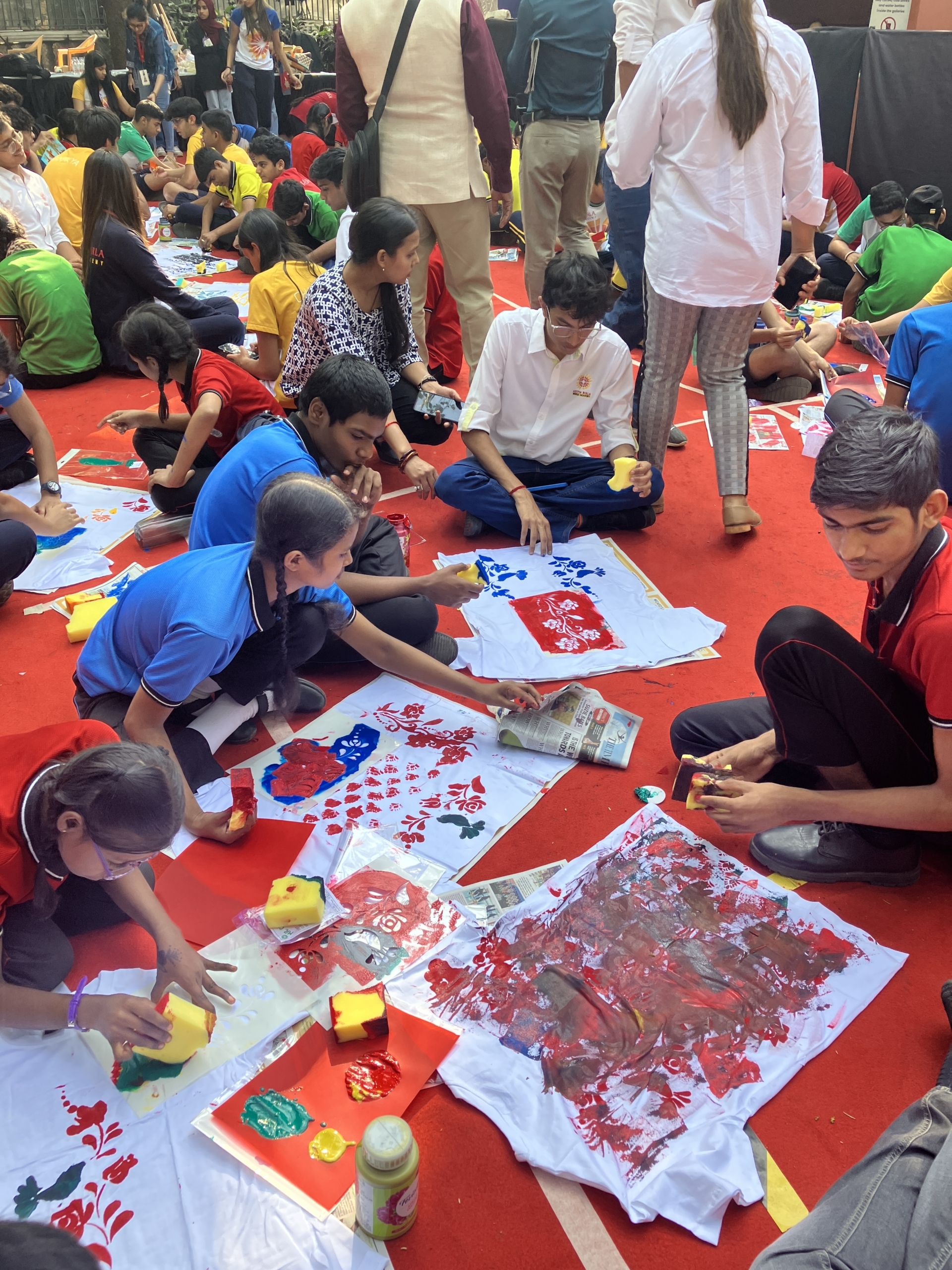
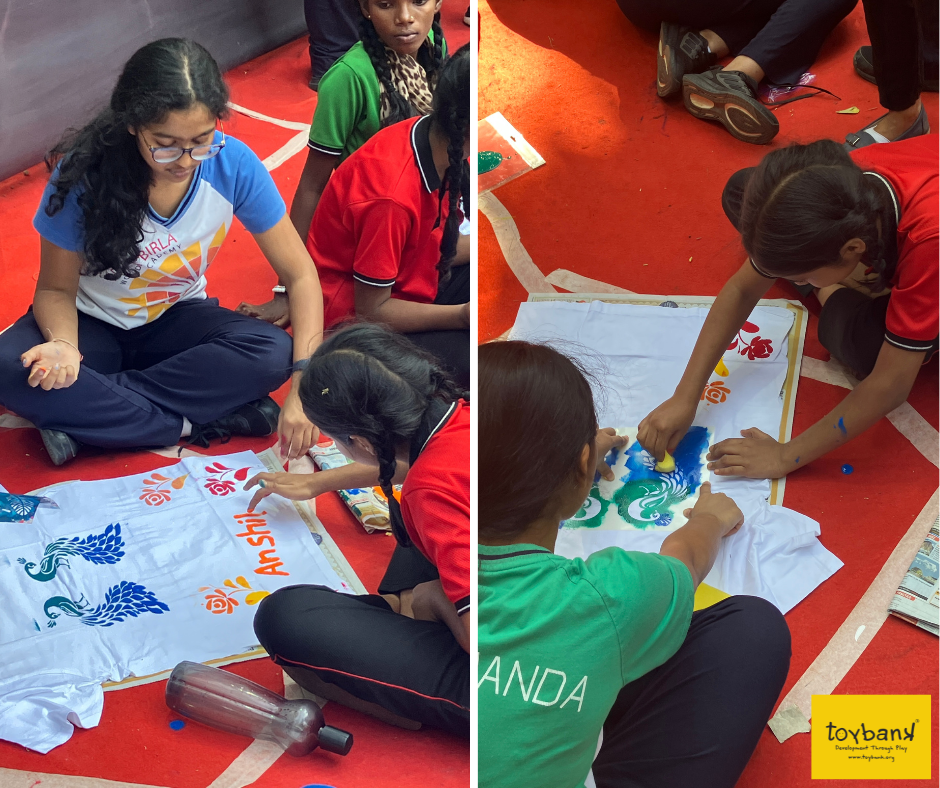
On January 26, our school, Aditya Birla World Academy (ABWA), collaborated with Toybank – Development through Play to celebrate play in all forms at the Kala Ghoda Arts Festival 2024. We conducted a t-shirt painting activity with 30 children from the Gilder Lane Municipal School, Mumbai Central. 

We were split into different groups and were overjoyed, as we guided a group of young artists to designing a t-shirt. It was a wholesome and fulfilling experience as we worked, learned and laughed together with the children. It was not just a good experience, but also left the children with memories and a small takeaway in the form of the t-shirts they designed. 

Initially, it seemed like a simple task. It felt like we had to place a template on the tshirt and ask them to paint it anyway they liked, but the experience was a lot more wholesome than that. One of the girls had her own vision with the story she wanted her t-shirt to tell. She curiously glanced around to see the stencils others were using and what colours were available. She borrowed the required resources for her designs and ensured that other groups had enough for themselves. It made me appreciate the little things in life, seeing how she would trade materials with others so everyone could have variation and options for the art on their t-shirt. 

All in all, we were spectators to their art and seeing how their mind worked to create such vivid, colourful and bright pieces was also interesting. Even the sheer variation between all the tshirts was an exciting sight. Some painted their entire t-shirts into a completely different colour before using the stencils and some made multicolour forests and flowers.

Seeing the sheer joy on the faces of the children made all our worries disappear, fading away as we were completely absorbed in the activity. This showed us that taking out a few hours from our life to help others is a more fulfilling experience than anything else. 

This article is written by a group of Class 11 students, who are also Toybank – Development through Play volunteers, under the CAS programme from their school, Aditya Birla World Academy (ABWA). 

IMPORTANCE OF PLAYPLAY2LEARN

Through Play, 10-year-old explores creativity, develops problem-solving skills

Naseem (name changed) is a 10-year-old studying at the MHB School in Malad (West). When Toybank’s Outreach Officer (OO) went to Naseem’s class, the teacher mentioned that he was disruptive in class. The OO also noticed that it was difficult for Naseem to pay attention in class and he deliberately disturbed them. He would not pay attention even when the rules for the games were being explained. The other children also avoided playing with him, as he would bother his group and not let them play.  

The OO decided to use play to build a relationship with Naseem, one game at a time. The OO introduced a rule saying that the children who did the activity well would get the games first. At the start of every play session, the team conducts an energiser or ice-breaker with the entire group before handing over the games. Energiser activities help children reactivate their brain after their academic classes. The OO also reiterated the rules of the play session, emphasising the importance of respecting each other and speaking respectfully without engaging in fights. 

Overtime, as play sessions progressed, Naseem began to take interest in teamwork and play. He began enjoying the play session and said that it helped him feel calm and relaxed. In one of the play sessions, he even led his team in the “Make your own rules” activity. 

As part of our play programme, we encourage children to create their own board games after conducting different kinds of games and activities with them throughout the year. Through these sessions and activities, children get a chance to explore their creativity and develop their problem-solving skills. Children who have been steadily and consciously exposed to play and play opportunities throughout the year are able to think in terms of creating play for themselves.

IMPORTANCE OF PLAYPLAY2LEARN

Power of Play: Class 8 student uses creativity to construct car, set it in motion

Siddharth (name changed) is a Class 8 student and attends the Mumbai Public School (CBSE) in Mulund. He is an active student and is always engaged in class. When the play sessions were first introduced, the Mechanix game interested him the most, as he is fond of cars and wanted to construct one himself. However, he could not complete its construction within one play session. In the next few sessions, he decided to play the same game, as he did not want to give up and was keen on constructing a car. 

With more time on hands, he could execute it skillfully. Once he had constructed a car, he was curious to set the car in motion. This time, he collaborated with his friend and made an attempt to do this with leftover materials such as wires, power banks and more. While Mechanix allowed them to construct a car, their imagination and creativity led them to set the car in motion. They also fitted a sensor on their vehicle, which allowed the car to detect obstacles on its path and automatically apply the brakes. 

Games such as Mechanix help children build skills of logical thinking, cognitive thinking, creativity and problem-solving. Play sessions are a space for children to explore their creative minds and go beyond imagination. In conversation with Toybank’s Outreach Officer, the teacher mentioned that Siddharth felt very happy to have completed this project and he also aspires to create his own automobile someday.