Contacts

92 Bowery St., NY 10013

thepascal@mail.com

+1 800 123 456 789

EVENTSIMPORTANCE OF PLAYPLAY SUMMITPLAY2LEARN

Play Summit 2025: Finding Play

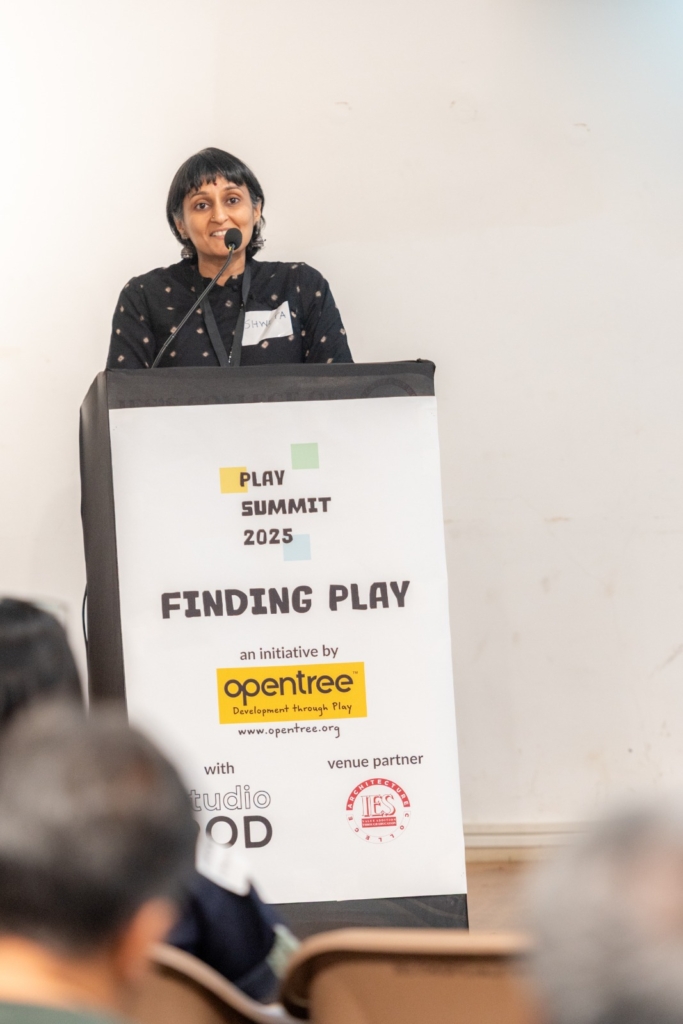
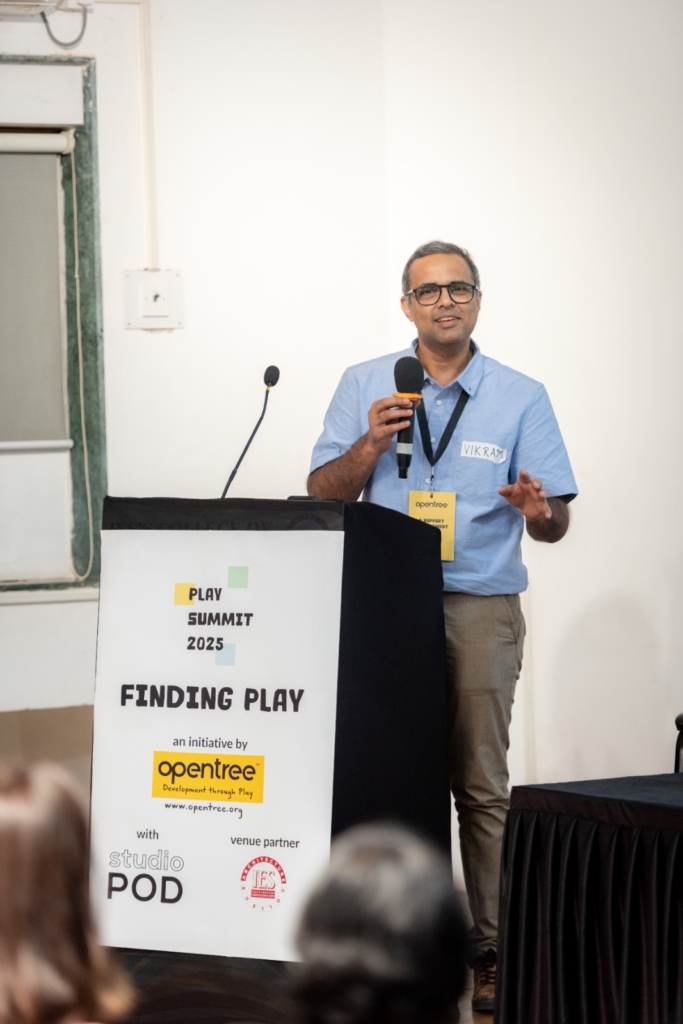
Why the Play Summit Matters: A Note from Our Co-Founders, Shweta Chari and Vikram Nerurkar

The Opentree Foundation’s Play Summit was born from a question that has followed us for over two decades: what happens when Play is kept out of children’s lives — and what becomes possible when we choose to bring it back in?

For more than 21 years, our work at The Opentree Foundation has taken us into 900+ classrooms, schools, and communities, impacting 1 million+children across 12 districts of Maharashtra. Again and again, we have seen how deeply children need Play — not as a reward or a break, but as the way they make sense of the world, build relationships, learn with joy, and discover their own agency.

We have also seen how easily Play disappears when systems prioritise efficiency over curiosity, control over trust, and outcomes over experience. Over time, we have come to understand this not as a failure of intent, but as a failure of design. 

This year’s Play Summit, Finding Play, was our attempt to bring this idea to life. Along with our collaborators at StudioPOD, we wanted participants to pause and notice where Play already exists, often in overlooked corners. To name where it has been constrained by design choices and power structures. 

Play Summit 2025 brought together more than 300 people – children, educators, students designers, funders, and system leaders to build shared language and responsibility around Play, and to ask — honestly and collectively — what does it take to create conditions where Play can thrive with intention, dignity, and equity?

Designing for Play: A Day of Ideas and Action

Play Summit 2025 unfolded as a day where thinking about Play, and experiencing it was woven into every minute. 

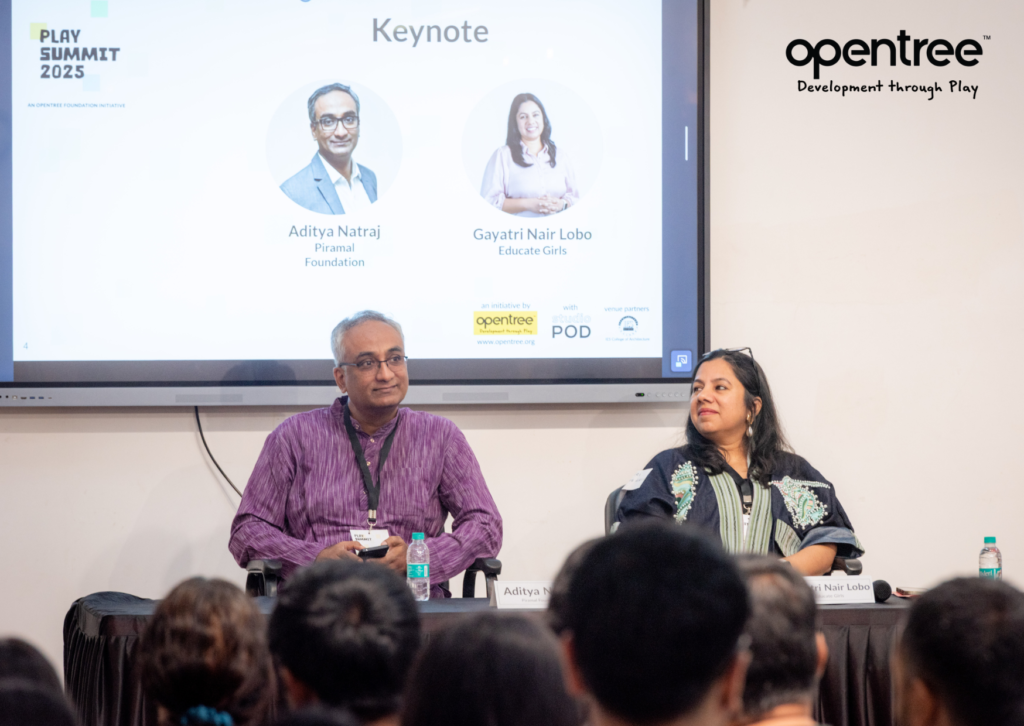
The opening keynotes set the tone. Aditya Natraj, CEO of the Piramal Foundation, reflected on the role Play can play in building learning environments rooted in dignity, leadership, and possibility. Gayatri Nair Lobo, CEO of Educate Girls, the first Indian organisation to receive the 2025 Ramon Magsaysay Award, grounded the conversation in equity, asking what children across contexts truly need to thrive as confident, empathetic human beings.

Together, they positioned Play not as enrichment, but as essential infrastructure.

Alongside the keynotes, we also launched Playpedia.in — TOF’s open-source repository of Play ideas. Co-created by teachers, facilitators, and children across contexts, Playpedia brings together practices rooted in everyday realities, making Play possible and accessible everywhere.

A powerful shift followed when children from TOF’s partner schools in Ahilyanagar and Mumbai took the stage as Play Experts. Speaking from their lived experiences in classrooms, streets, and neighbourhoods, they made one thing clear: children are not passive recipients of design decisions. They are active creators of Play, even when systems make it difficult.

The Summit created space not just to talk about Play, but to practice it.


 Across the day, conversations expanded to explore Play through multiple lenses.

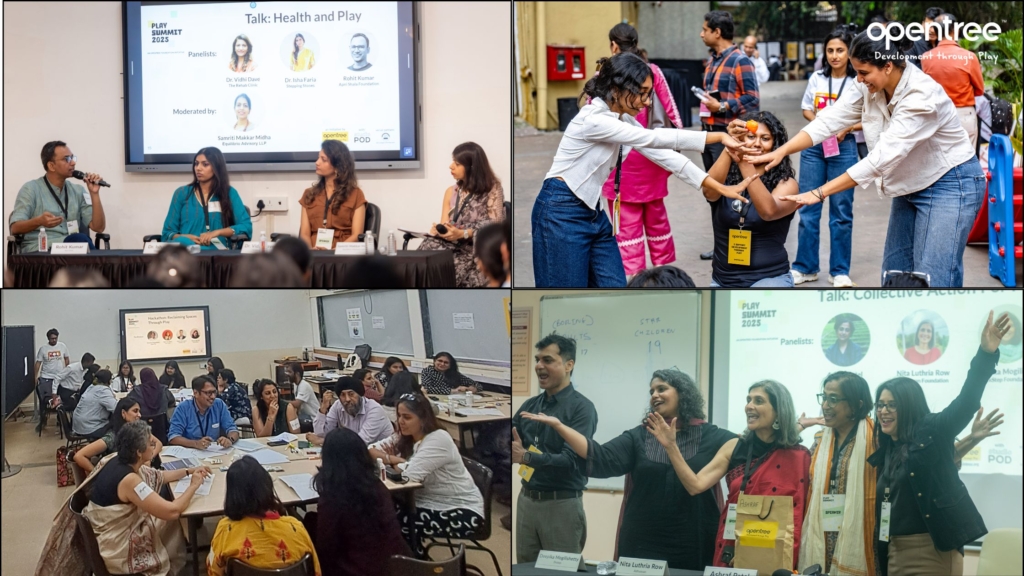
Health & Play examined why Play is central to holistic wellbeing, and how the spaces we inhabit — schools, playgrounds, neighbourhoods — can nurture connection, comfort, and resilience.

Collective Action for Play highlighted the importance of shared vision and collaboration, especially if Play is to become a real priority within India’s development agenda. The message was consistent: change does not happen in isolation, and Play is no different.

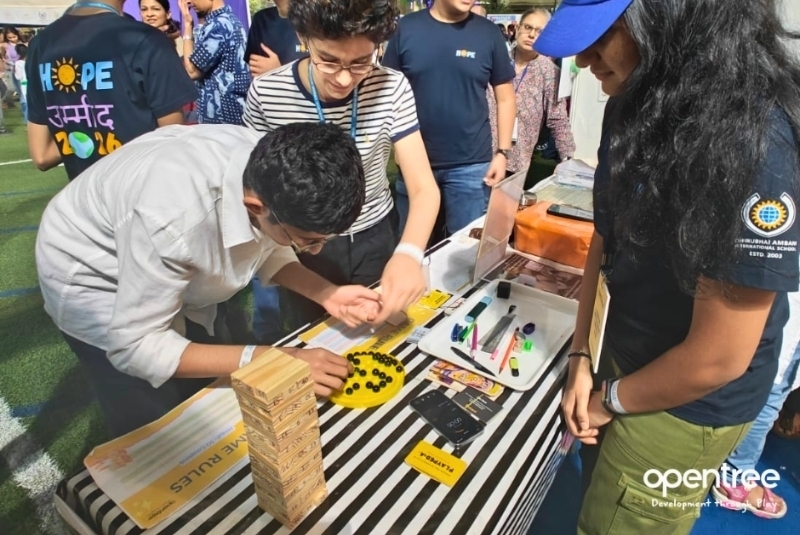
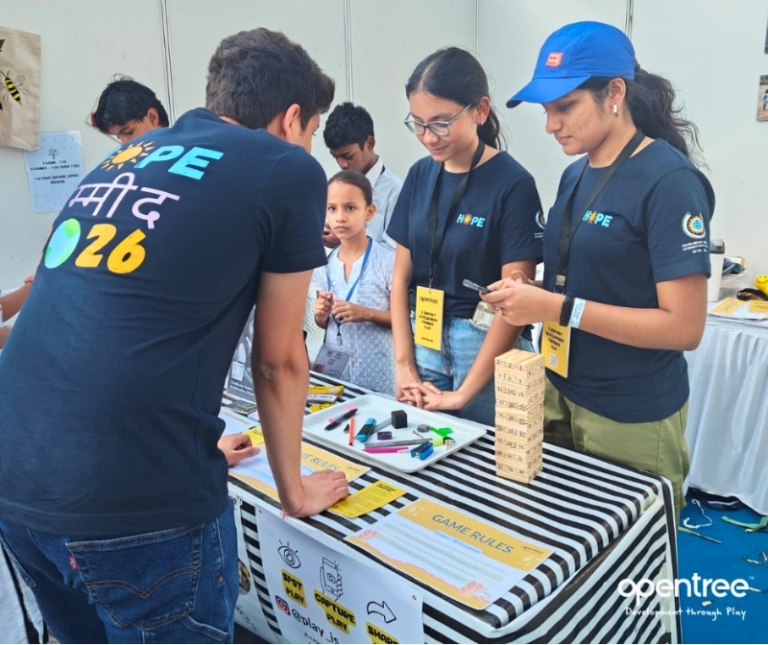
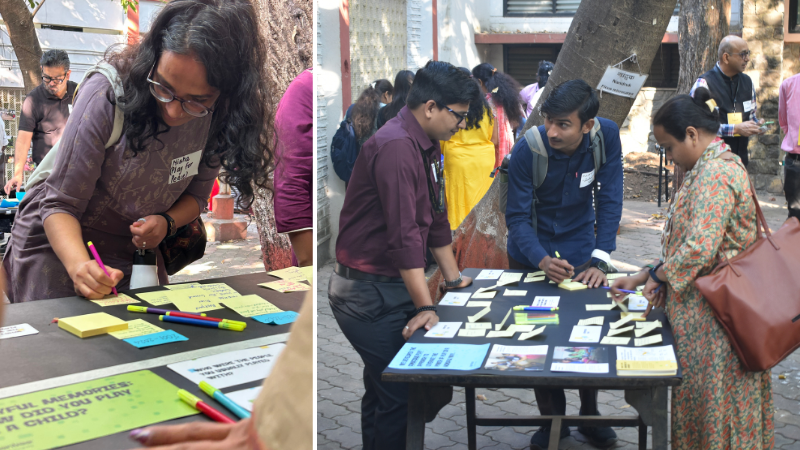
Through workshops and hackathons, participants reimagined Play in the everyday — as simple, replicable practices; as everyday spaces redesigned for Playfulness; and as ordinary objects transformed to spark joy, curiosity, and connection, making Play tangible, practical, and grounded in real-world contexts.

Clockwise from top left: Talk: Health & Play, Participants at the Loose Parts workshop, Talk: Collective Action for Play, Participants at the Hackathon on Reclaiming Spaces through Play
Building the Case for Play

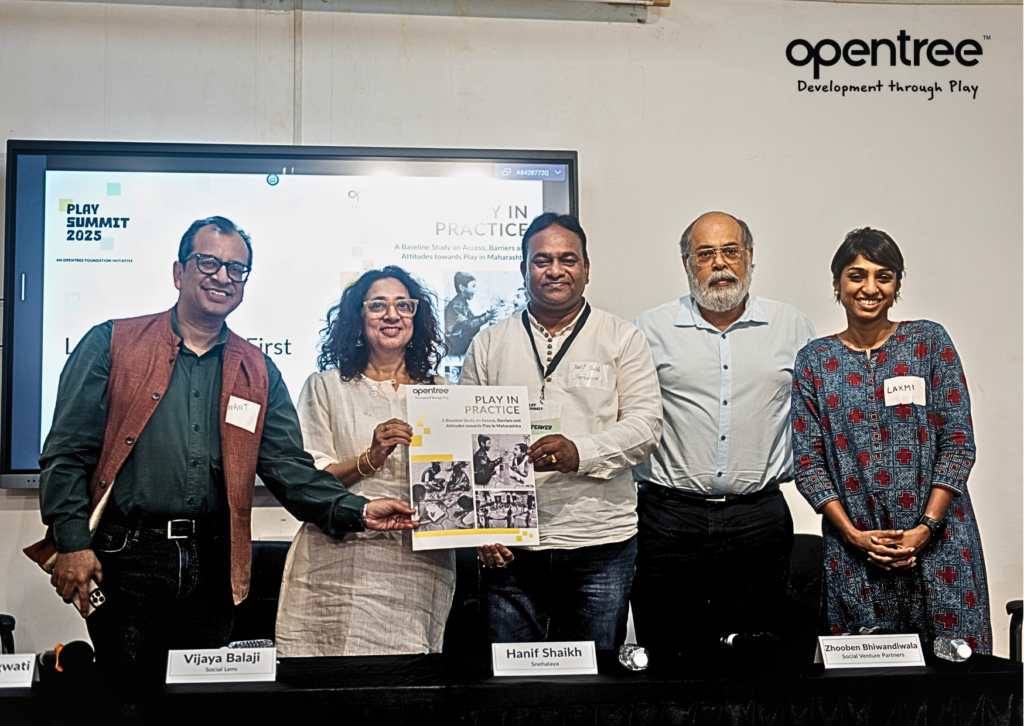
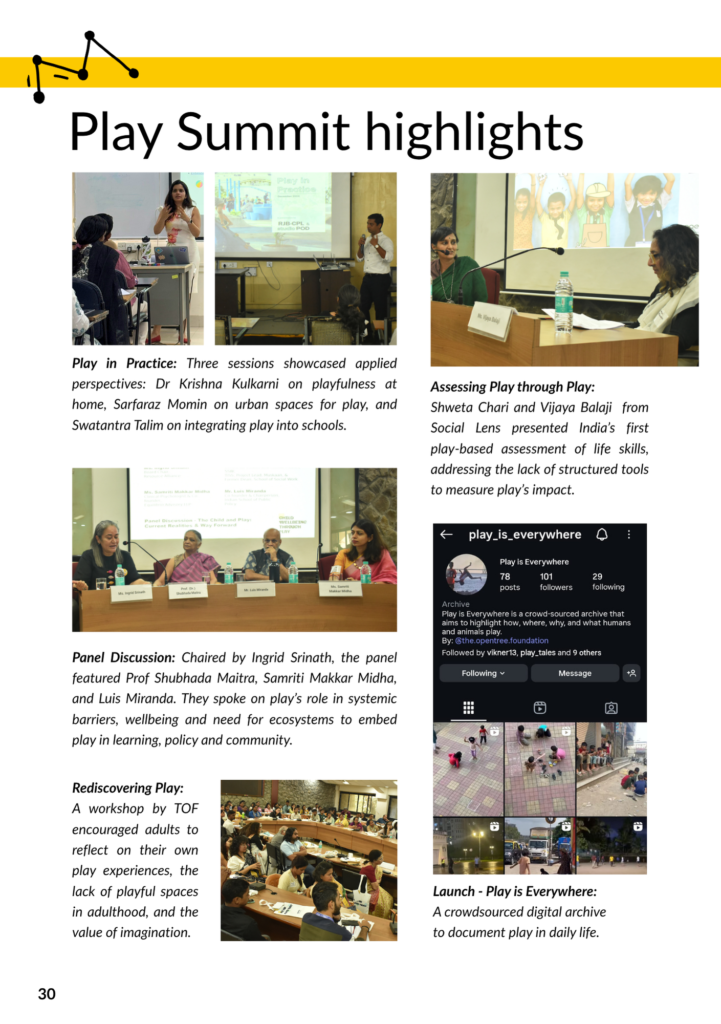
A pivotal moment in the day was the launch of Play in Practice, The Opentree Foundation’s latest Play research.

Rooted in over two decades of TOF’s work, the study examines how Play shows up in children’s everyday lives — what enables it, what constrains it, and what this means for how we design systems around children.

For years, one challenge has surfaced again and again in our work: the absence of strong, locally grounded evidence that reflects how Play actually unfolds in Indian realities — and why it matters. Without this evidence, Play continues to be undervalued in policy, planning, and practice.

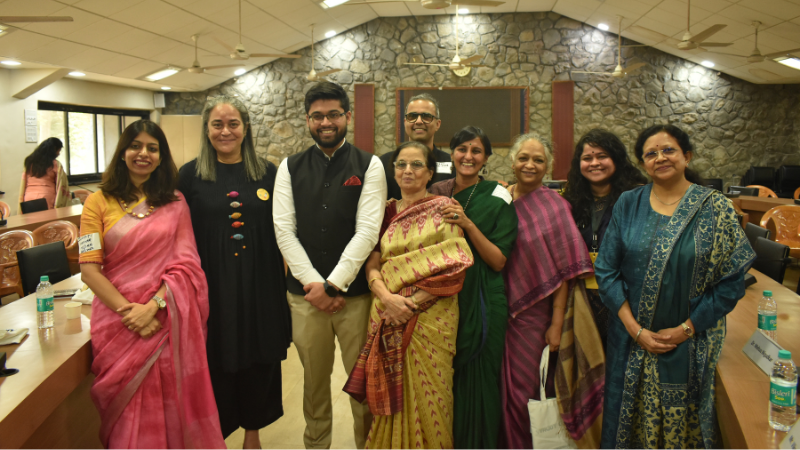
L-R: Anant Bhagwati (Bridgespan), Vijaya Balaji (Social Lens), Hanif Shaikh (Snehalaya), and Zhooben Bhiwandiwala (Social Venture Partners) launch the Play in Practice Research along with Laxmi Nair, Director, Programme Development, TOF

 The research was launched by Vijaya Balaji (Social Lens)Anant Bhagwati (Bridgespan)Hanif Shaikh (Snehalaya), and Zhooben Bhiwandiwala (Social Venture Partners) — leaders who deeply understand both the evidence gap and its implications.

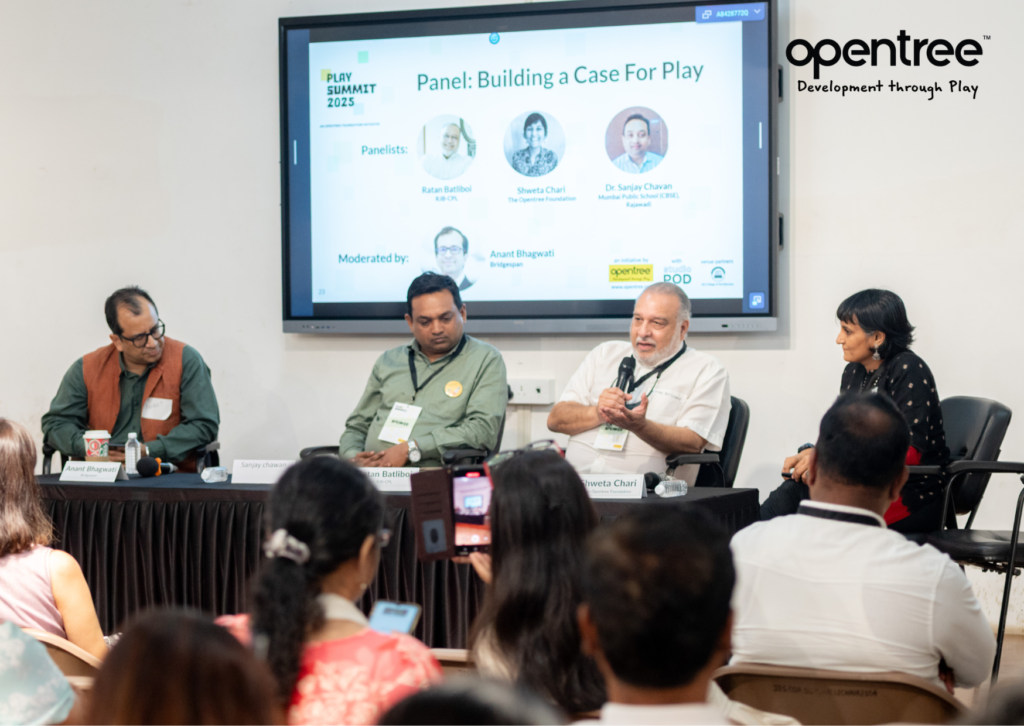
This was followed by a panel discussion, Building a Case for Play, featuring Shweta ChariRatan Batliboi, and Dr. Sanjay Chavan, Principal of Rajawadi MPS School. Each reflected on what transformative Play looks like, and how it can be made accessible within real systems.

L-R: Anant Bhagwati (Bridgespan) moderates a panel 'Building A Case for Play' with Dr. Sanjay Chavan, principal, Rajawadi Mumbai Public School (CBSE), Ratan Batliboi, acclaimed architect, and Shweta Chari, Co-founder & CEO, The Opentree Foundation


Hearing Dr. Chavan speak about the impact of Play on his students, teachers, and school community was a powerful testament to what long-term, trust-based partnerships can make possible.

The panel returned to a central truth: evidence matters, but so do narrative, collaboration, and the courage to challenge long-held assumptions. If Play is to shape the future of childhood and community, it must move from the margins to the centre of how decisions are made.

Experiencing Play and Its Many Possibilities

Alongside these conversations, the Summit was also a space to experience Play in all its richness.

Courtyards filled with blocks, loose parts, and everyday objects became sites of invention and imagination. StudioPOD’s POD Parks invited people to pause, connect, and Play. In the children’s library and Playpedia spaces, stories and games travelled across generations, with adults and children playing side by side.

Exhibits showcased children’s drawings of Play in their schools and cities, alongside designers’ visions of joyful, child-friendly spaces — offering glimpses of what could be possible when Play leads the way.

Finding Play, Designing Forward
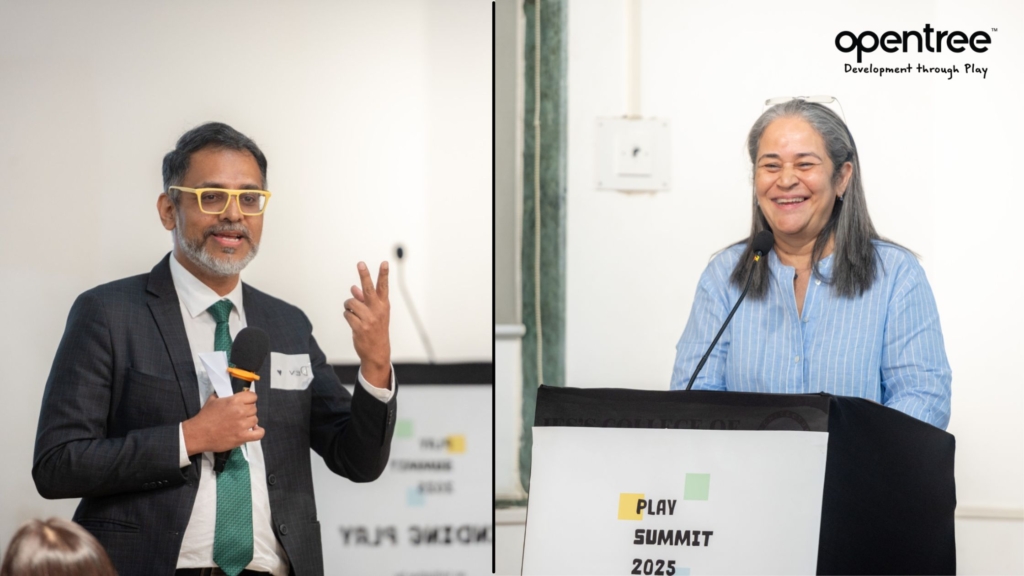
TOF's trustee, Devendra Naik (NoMoBo), and advisor Ingrid Srinath (Resource Alliance) brought Play Summit 2025 to a close, with powerful messages for Play to become a collective priority.

The day closed with a guided Play reflection by Devendra Naik, inviting participants to experience Play not as nostalgia, but as something deeply connected to how we learn, connect, and make meaning at any age.

In her closing note, Ingrid Srinath reflected on the day and on TOF’s journey, reminding everyone that sustaining Play requires commitment beyond moments like these.

Play Summit 2025 offered shared language, new relationships, and renewed responsibility — for each of us, as educators, practitioners, funders, policymakers, and caregivers.

Because Play does not survive by accident.
It survives when we choose to design for it.

EVENTS

Rediscovering Play: Insights Shaping Play Summit 2025

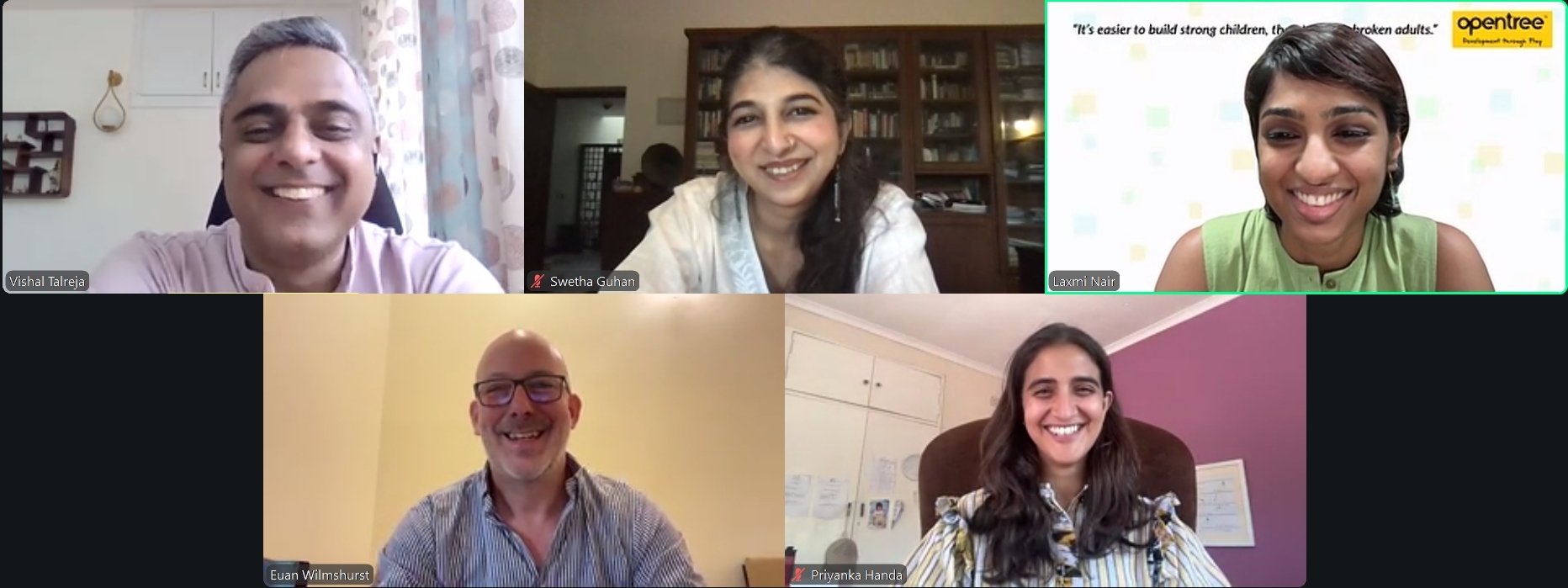
As we look ahead to Play Summit 2025, themed Finding Play, our global roundtable — Rediscovering Play: Stories of Transformation — set the perfect stage for a deeper, collective exploration of how play lives in classrooms, communities, and everyday moments. This conversation was not just a reflection on what play means, but an invitation to reimagine what learning, childhood, and human connection can look like when play takes its rightful place at the center.

Hosted by The Opentree Foundation, the roundtable brought together four global champions of play whose work spans early childhood education, community wellbeing, youth development, policy advocacy, and systemic reform: 

  • Vishal Talreja
    Co-founder, Dream a Dream (India)

  • Swetha Guhan
    Co-founder & Director, Key Education Foundation (India)

  • Priyanka Handa
    Co-founder, Learn to Play (Botswana)

  • Euan Wilmshurst
    Founder & Principal, KW Strategy (UK)

The session was moderated by Laxmi Nair, Director, Programme Development at The Opentree Foundation, who led the panel through personal stories, field insights, and critical reflections on the role of play in reshaping systems.

With over 200 participants joining live from across the US, UK, Germany, Nigeria, Tanzania, Vietnam, and many more countries, the conversation reflected a truly global perspective for rediscovering play as a right, a pedagogy, and a powerful social connector.

Play Is Not a Luxury, It’s a Low-Resource Lifeline

Setting the tone for the discussion, Euan shared a simple but powerful truth: “Even in the hardest times, even in the toughest circumstances, play does not have to be a luxury. It’s very low resource. Play is very easy to do.”

Across his global work, he has seen families and communities rely on play as a stabilising force, especially during moments of crisis. But he also spoke about the structural barriers that keep play out of children’s reach. In many urban areas in England, he noted, the only neighborhood playgrounds close during school holidays. Some even turn into car parks.

“It’s almost unbelievable when you say it out loud, but it shows why we need coalitions across communities. When people unite, for safer streets, clean public spaces, or play, the stories we tell can connect them all.”

He also highlighted a striking contradiction in children’s worlds today. Though 45% of children say they want to play outside with friends, many end up playing online, often in unsafe digital spaces like Roblox.

“It’s time we replace ‘go online’ with ‘go play outside,’ because even a generation raised on screens is craving real, human connection through play.”

Play Dissolves Fear, and Rebuilds Relationships

Priyanka shared moving stories from community playgroups and refugee camps in Botswana, where Learn to Play works with caregivers and young children.

“What play does is that it dissolves fear. It dissolves fear into connection and attachment. It transforms relationships.”

In a country where only 15% of children have historically had access to early childhood education, play becomes a point of entry: into learning, wellbeing, and even policy dialogue. She described what happens when adults: policymakers, district officials and parents join children in the act of play: “When adults sit in circles, blow bubbles, draw with sticks and sand, something shifts. Play opens hearts before it changes systems.”

And while data is important, she believes stories are what move people:

“When we champion play through stories, we move beyond statistics into human connection and shared humanity.”

Play Helps Us See Children More Clearly, and Reimagine Our Role as Adults

Swetha spoke about the moment early in her career that changed her relationship with play forever.

“The first time I realised the potential of just letting children play, not creating play, but engaging in it, was when I saw how much we learn from children in small, unplanned moments.”

These insights do not emerge during assessments or teacher-led instruction, she said. They emerge when adults step back, and when children are free.

“It has completely changed the way I look at play.”

But her most important realisation is about adults: “We need to unlock moments of play for adults too, because only when adults experience play can they advocate for it as a right for every child.”

At the Key Education Foundation, her team now builds play into their organisational culture, because playful adults create playful classrooms.

“As social change organisations, we get caught up in problems. But being playful ourselves changes everything.”

Their work on transforming parent-teacher meetings into joyful, playful family spaces has shown that: “Play truly becomes everyone’s problem and everyone’s joy to share.”

Play Creates Dignity, Identity, and Confidence for Children Facing Adversity

For Vishal, play became a discovery, a language that children from challenging backgrounds could use to reclaim their voice and agency.

“Play helps children who’ve experienced early challenges find respect, dignity, identity, confidence, and love. It shows them there’s a different way to learn.”

He emphasised that children rarely remember traditional lessons. What they remember is how those experiences made them feel.

“Our bodies remember powerful, transformative moments. Play helps make those memories positive. Long after lessons fade, children remember the joy, connection, and care they experienced.”

These memories become anchors — shaping resilience, hope, and self-belief.

Towards Play Summit 2025: Finding Play in Classrooms, Communities, and Everyday Life

The roundtable made one thing abundantly clear: play is universal, but access to play is not.
And to reclaim play, we need stories, systems change, community coalitions, and, most importantly, adults who remember how to play.

As we move towards Play Summit 2025, we carry these stories and reflections with us. They remind us that play is not a break from life: it is how we learn to live. It is how we heal, connect, imagine, and become.

IMPORTANCE OF PLAYPLAY2LEARN

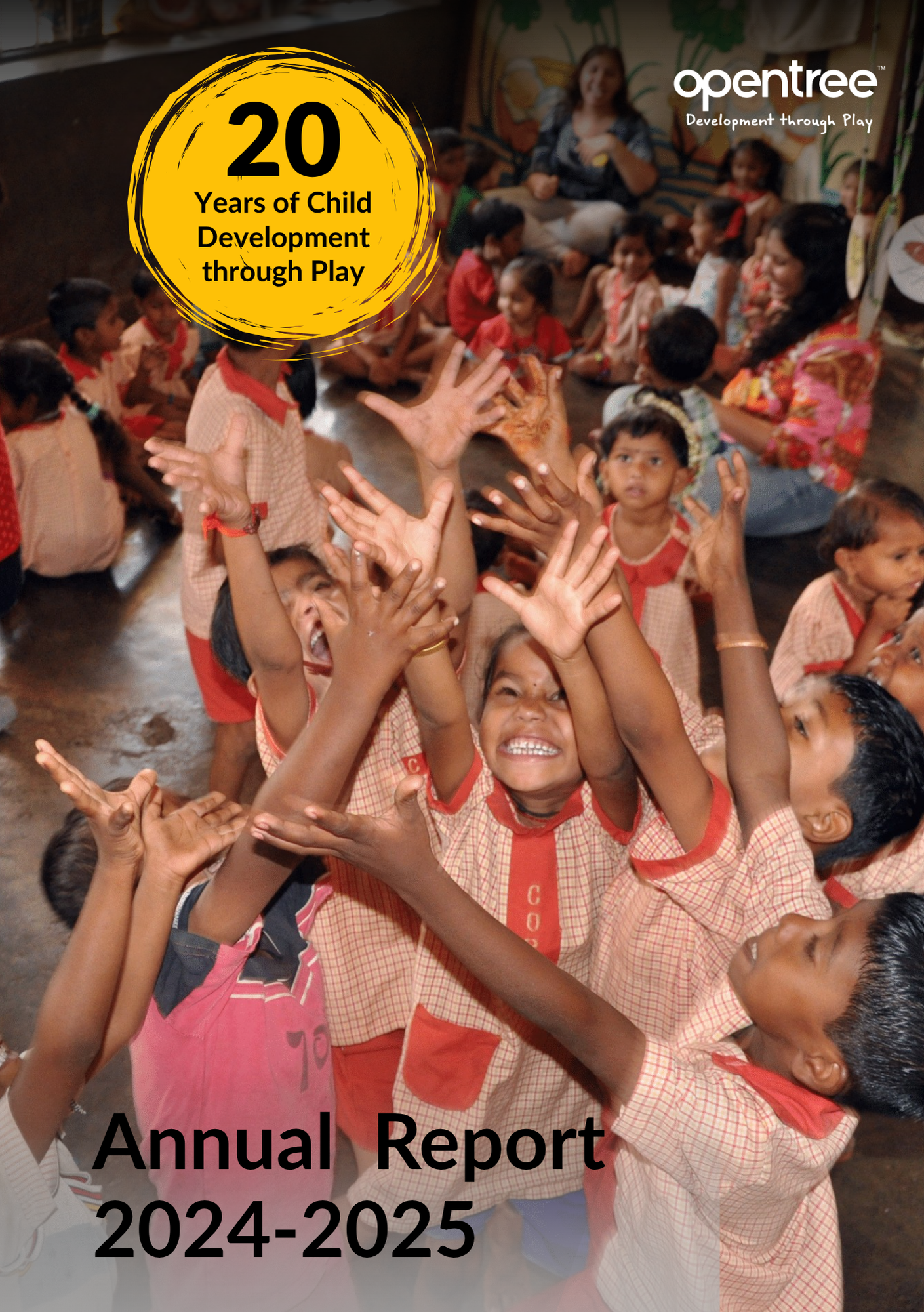
Annual Report 2024-2025: Twenty Years of Play, Joy, and Change

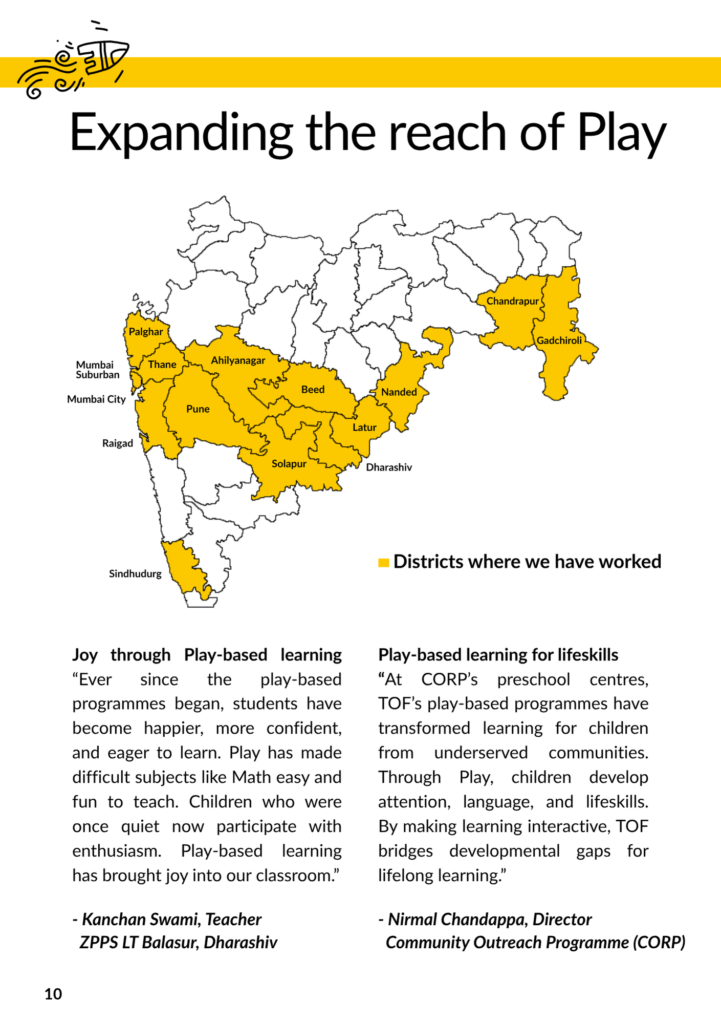
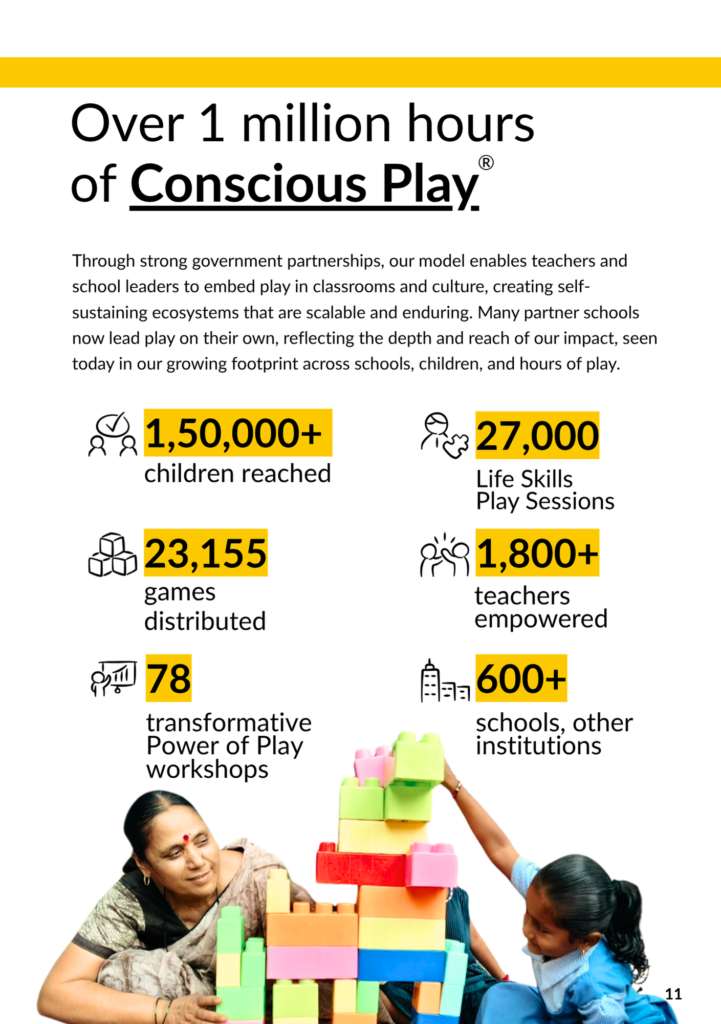
Twenty years ago, The Opentree Foundation began with a simple belief — that Play is not a luxury, but a necessity. What started in 2004 with one small group of children has grown into a movement transforming learning across 12 districts in Maharashtra. Through partnerships with 600+ under-resourced schools and 10,000+ teachers, we’ve seen how play unlocks imagination, resilience, confidence, and connection — helping children truly thrive.

This year marked a milestone moment. We hosted India’s first Play Summit, bringing together educators, policymakers, and community leaders to champion play as central to learning and wellbeing. Our recognition by HundrED.org as a leading global education innovation reaffirmed what we’ve always known — that play has the power to change lives.

"Through our Conscious Play approach, we’ve turned classrooms into spaces of curiosity and discovery, helping every child experience the joy of learning and the confidence to explore the world."
Shweta Chari
Co-founder & CEO, The Opentree Foundation

The 2024–2025 Annual Report celebrates this 20-year journey of learning, adapting, and staying rooted in the belief that every child deserves to experience the joy and freedom of play. As we look to the future, our next bold step is clear: to reach one million children by 2030 and build systems that embed play as a right, not a privilege.

Because when we choose play, we choose a future filled with possibility and dignity. 

EVENTS

Play Summit 2025

Play Summit 2025: Finding Play

💡 Why Play Summit

The Play Summit was launched in 2024 with a single vision: to build a thriving ecosystem for Play in India.

For two decades, TOF has embedded Play into classrooms, communities, and systems serving children. Yet, Play remains missing from most policies and practices. Even globally, Article 31 — which enshrines the child's right to play — is often considered "the forgotten article of the UN Convention."

Through this summit, we aim to fill this gap and co-create a discourse on play, seeding collaborative, collective action towards mainstreaming play at both people and policy levels.

🎯 Finding Play

Playful spaces transform how people learn, connect, and participate, creating more inclusive and resilient societies. But when it disappears, curiosity, connection and creativity vanish.

Reclaiming Play has the potential to shift how we live: shaping healthier children, stronger communities, more vibrant cities and villages, and more humane systems.

Together, The Opentree Foundation and StudioPOD are convening this year's Play Summit to spark a collective reimagining: what would our schools, homes, workplaces, streets, and systems look like if play was treated as essential?

"Play is how human beings fundamentally make sense of the world. This year's theme, 'Finding Play' is our invitation to rediscover the power of play to shape kinder, more creative, and more connected communities."

Shweta Chari — Shweta Chari, Co-founder & CEO, The Opentree Foundation

🗓️ What's happening at Play Summit 2025: Finding Play

Play Summit 2025 Programme Schedule

🧠 What to Expect

🎯

Engage

Keynotes, panels, and design hackathons that inspire and inform.

🎨

Experience

Hands-on, playful installations and exhibits.

🤝

Collaborate

Meet educators, designers, policymakers, and changemakers shaping the future of Play.

👥 Who It's For

👧

Children & Young People

Leading us back to what Play feels like.

👩‍🏫

Educators & NGOs

Redesigning classrooms and programmes.

🏗️

Urban Designers & Planners

Rethinking spaces that connect communities.

🏛️

Governments & Policymakers

Embedding Play into systems.

💡

Funders & Changemakers

Investing in innovation.

🎨

Artists, Designers & Students

Prototyping new materials, ideas, and installations.

📸 Glimpses from last year: Child wellbeing through Play

Ready to Find Play?

A collaboration between The Opentree Foundation & StudioPOD

📍 Venue Location

IES College of Architecture

Opp. Lilavati Hospital, near Reclamation,

ONGC Colony, Bandra West, Mumbai, Maharashtra 400050

EVENTSIMPORTANCE OF PLAY

Volunteering for Change: A Day of Play with Purpose

On September 20th, I had the incredible opportunity to volunteer at The Opentree Foundation’s (TOF) Play with Purpose event at one of their partner schools in Mumbai. This experience stands out as one of the most meaningful and compassionate events I have ever been part of.

I was drawn to TOF after exploring its philosophy and watching snippets of past play sessions. Seeing how these sessions genuinely transformed the lives of children inspired me to contribute to this mission. From my very first play session, I have cherished every moment: interacting with the children, witnessing their growth, and contributing in whatever small ways I could.

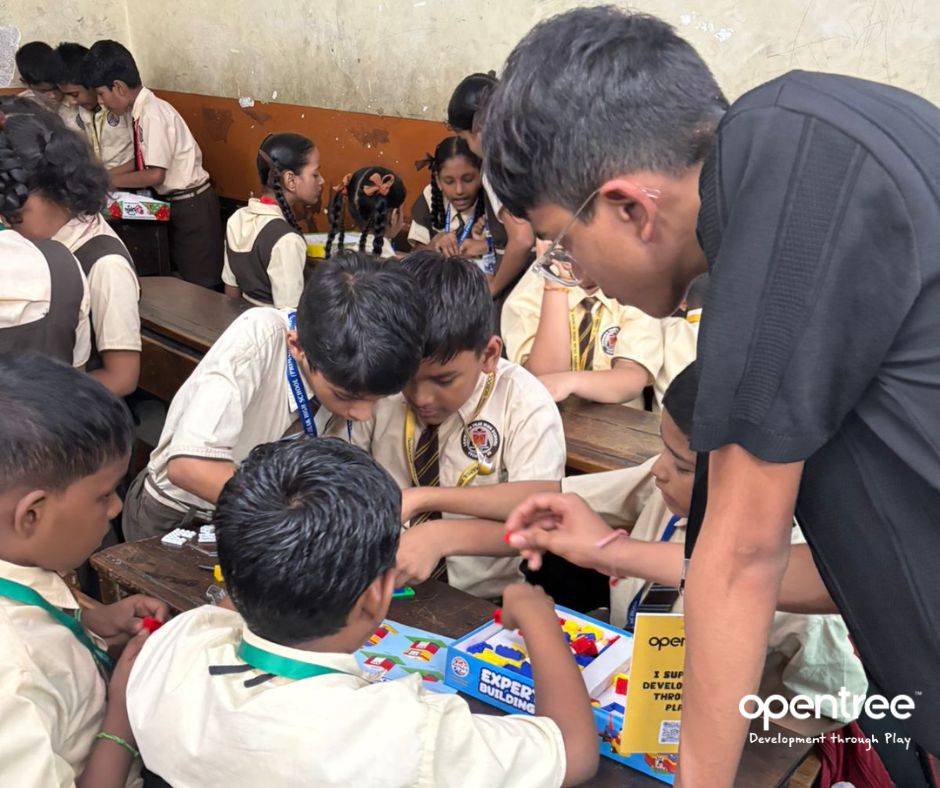
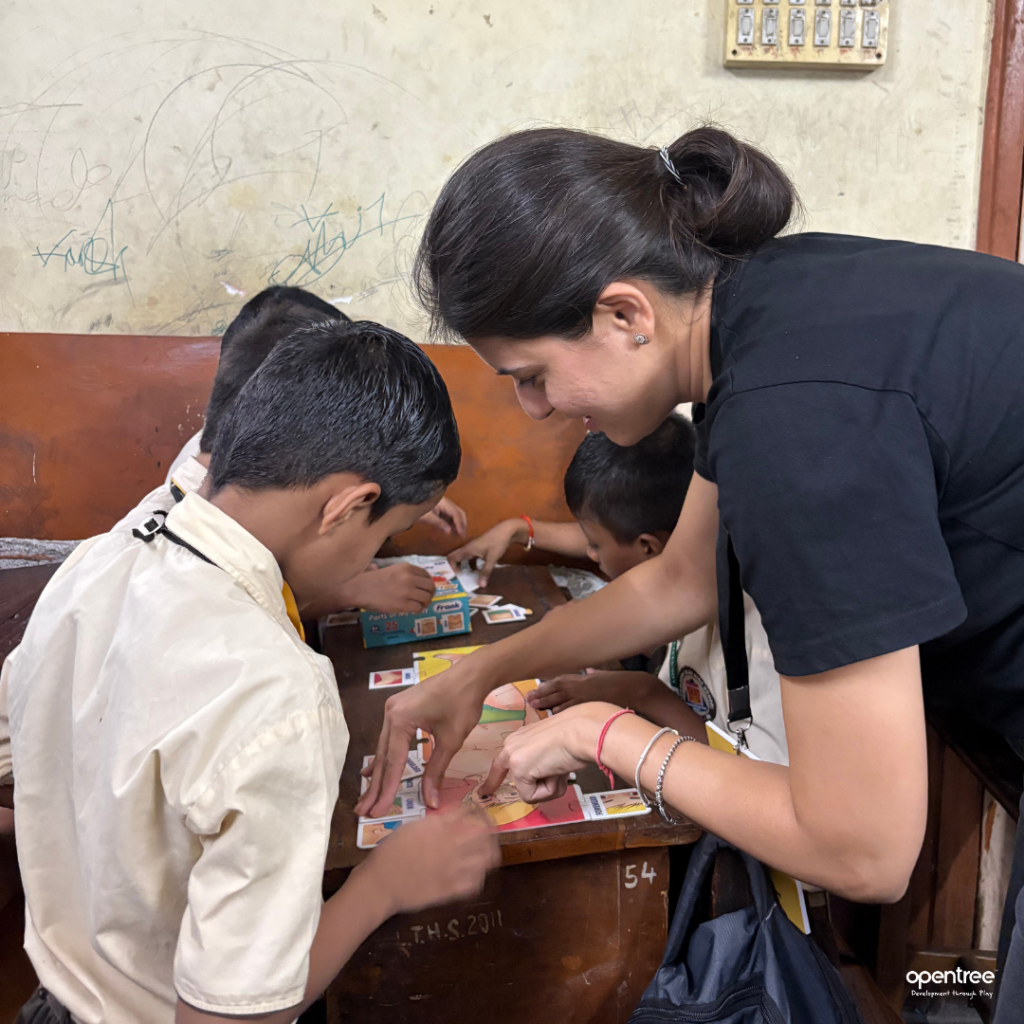
During the play sessions, children engaged with a variety of board games that encouraged critical thinking, teamwork, and communication. It was remarkable to see them discuss strategies with their peers, solve puzzles together, and even take turns leading their groups. One moment that particularly stayed with me was seeing the excitement on the children’s faces as they took on leadership roles, an inspiring reminder of the transformative power of play.

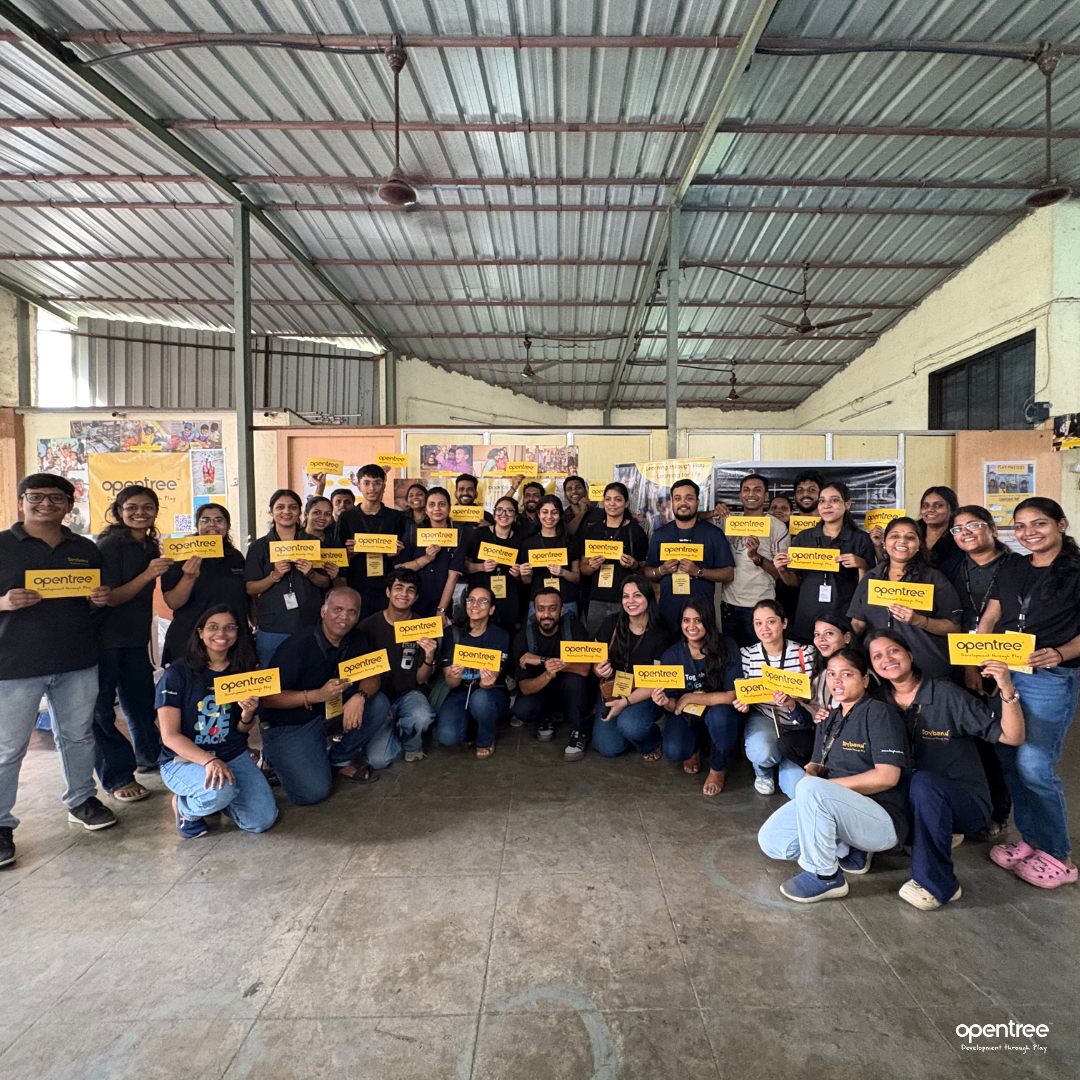
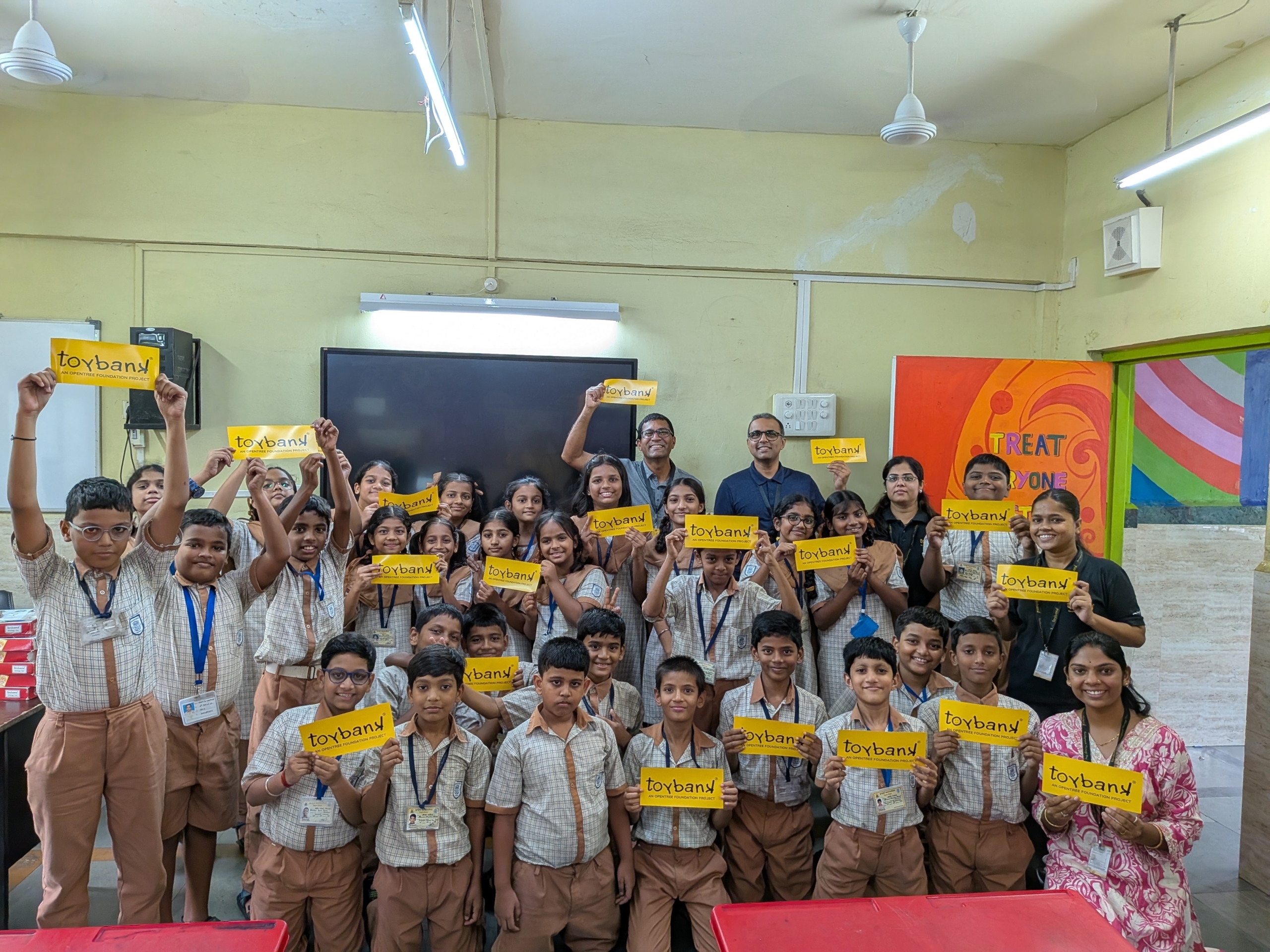
The event was not just about games, it was about joy, learning, and empowerment. At the games distribution, over 1,000 children received new games, and more than 25 volunteers participated, attending play sessions in every classroom. Witnessing the children’s smiles and enthusiasm was deeply fulfilling, reinforcing how even small actions can make a lasting impact.

Volunteering with the foundation has shown me that change begins with a single play session. I urge anyone willing and able to join this journey. Through play, we can inspire, empower, and create lasting impact in the lives of children.

This blog is written by Hridhan Ratanghayra, a volunteer at The Opentree Foundation.

IMPORTANCE OF PLAYPLAY2LEARNSAFE SPACE

The invisible stress children face in urban India, and how play helps

“Tss-tss- tss-pshhhh” — a long whistle from the pressure cooker next door breaks the silence at dawn. In a one-room apartment, a child wakes and folds away the cloth they slept on so the kitchen can be set up. Outside, rickshaws honk and vendors call out prices. After a hurried breakfast, the walk to school begins, the bag on their back almost as heavy as they are. But even when the school bell rings at the end of the day, their work isn’t over. There are groceries to buy, siblings to look after, a house to clean. At just 10-years-old, their hours are filled with chaos, rush, and responsibility.

This isn’t unusual. For millions of children growing up in India’s cities, this is everyday life. Homes are crowded, streets are noisy, and schedules are relentless. Children carry not only books and chores but also invisible burdens: of stress, of expectations, of too little space to simply be.

Over time, this constant pressure shapes how children see themselves and the world. Some grow restless or withdrawn, others anxious or angry. What often gets overlooked is that beneath all this, every child still longs for something very simple: the chance to play and just be a child.

Play is often mistaken as “extra”, something that comes after studies or chores, if there’s time. But play is how children learn best. When they build, imagine, and role-play, they are also problem-solving, collaborating, and discovering themselves. For children in marginalised communities, who often lack safe spaces and supportive environments, play becomes even more critical. It is the one moment where their ideas and voices take centre stage, where they can lead, take risks, and experience the joy of success without fear of failure.

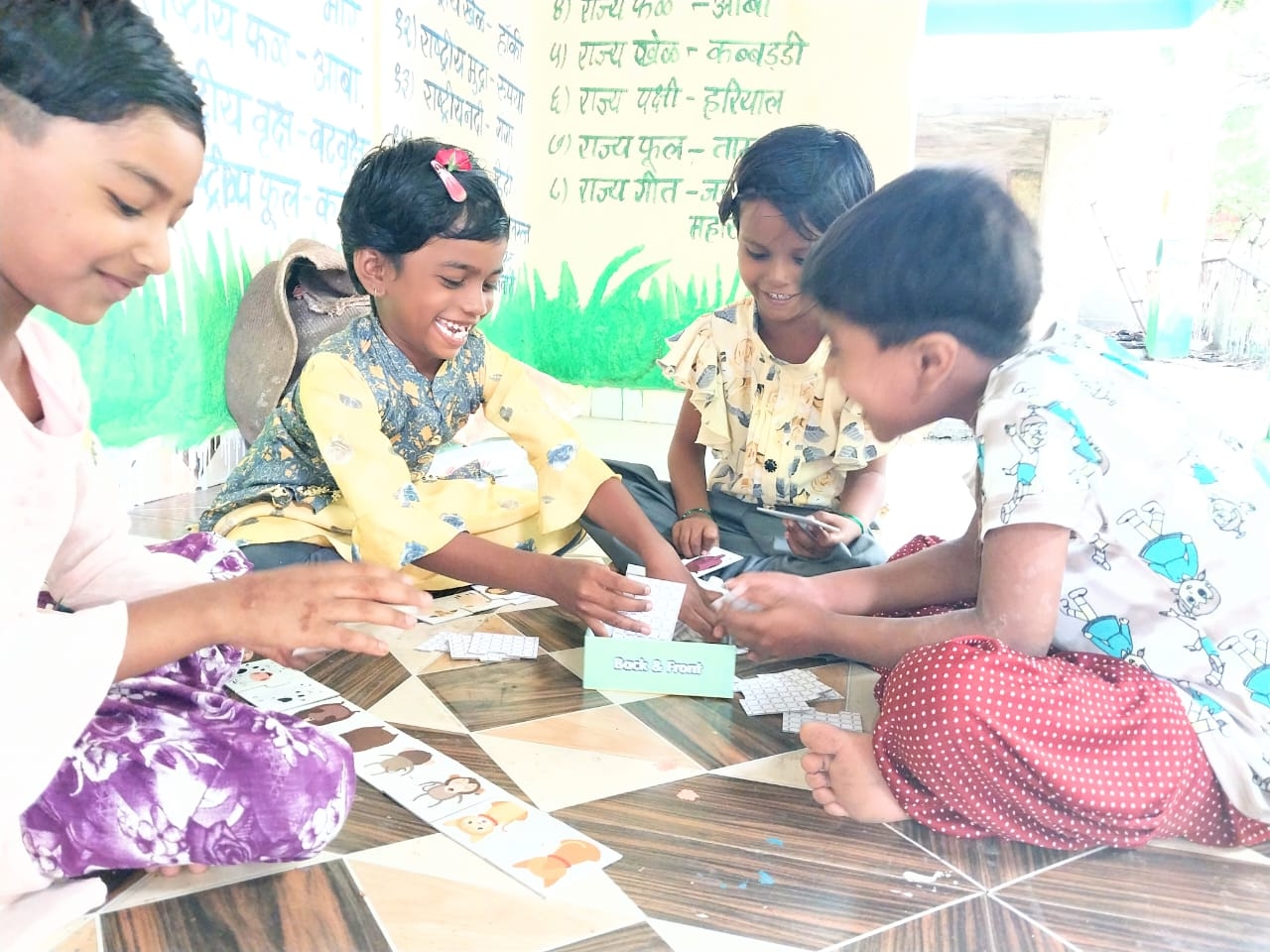
This is why play and play-based learning matters. Counting marbles can build numeracy, a round of carrom can teach patience, role-play can unlock language, and a puzzle can strengthen focus and resilience. For children who struggle with rigid, rote-based schooling, play opens a door back into learning. It turns fear of failure into curiosity, and disengagement into active participation.

The Opentree Foundation brings Conscious Play® into classrooms and communities where play is missing. Their Life Skills Play Programmes are not just about games, they are carefully curated spaces where children feel safe, supported, and encouraged. Volunteers like me and teachers guide children through games and activities that build both life skills and emotional wellbeing. Over time, we see children not only laughing and playing, but also showing more confidence in school, stronger friendships, and healthier ways of coping with stress.

I remember this one child would always sit in the corner, arms folded, refusing to join. Week after week, we kept inviting him in. One day, he quietly picked up a puzzle. By the end of the session, he wasn’t just playing, he was showing others how to solve it. That small shift says everything about the power of play.

I’ve seen it myself. One mischievous boy resisted for weeks, until we found the game that lit him up. Suddenly, he was laughing, engaging, even teaching others. At first, I used to watch the clock during sessions. Now, I dread the end, seeing the children’s faces fall when we pack up. That’s when I realised: what TOF offers is not just play. It is a relief. It is childhood, protected for just a little while longer.

In underserved communities, children often grow up faster than they should. Household chores, sibling care, and financial struggles leave little room for play. Schools too can be rigid, with their focus on exam results. By embedding play in these spaces, TOF ensures that children do not lose out on the joy and developmental benefits of play simply because of where they are born. Their work levels the playing field, giving every child, no matter their background, the right to play and learn.

Play is not a luxury. It is a lifeline. It gives children space to process big feelings, to connect with others, to imagine new possibilities. In cities that often ask children to grow up too soon, play lets them hold onto the magic of being young, if only for a while.

This article is written by our long-term student volunteer Rihan Shetty. 

IMPORTANCE OF PLAYPLAY2LEARN

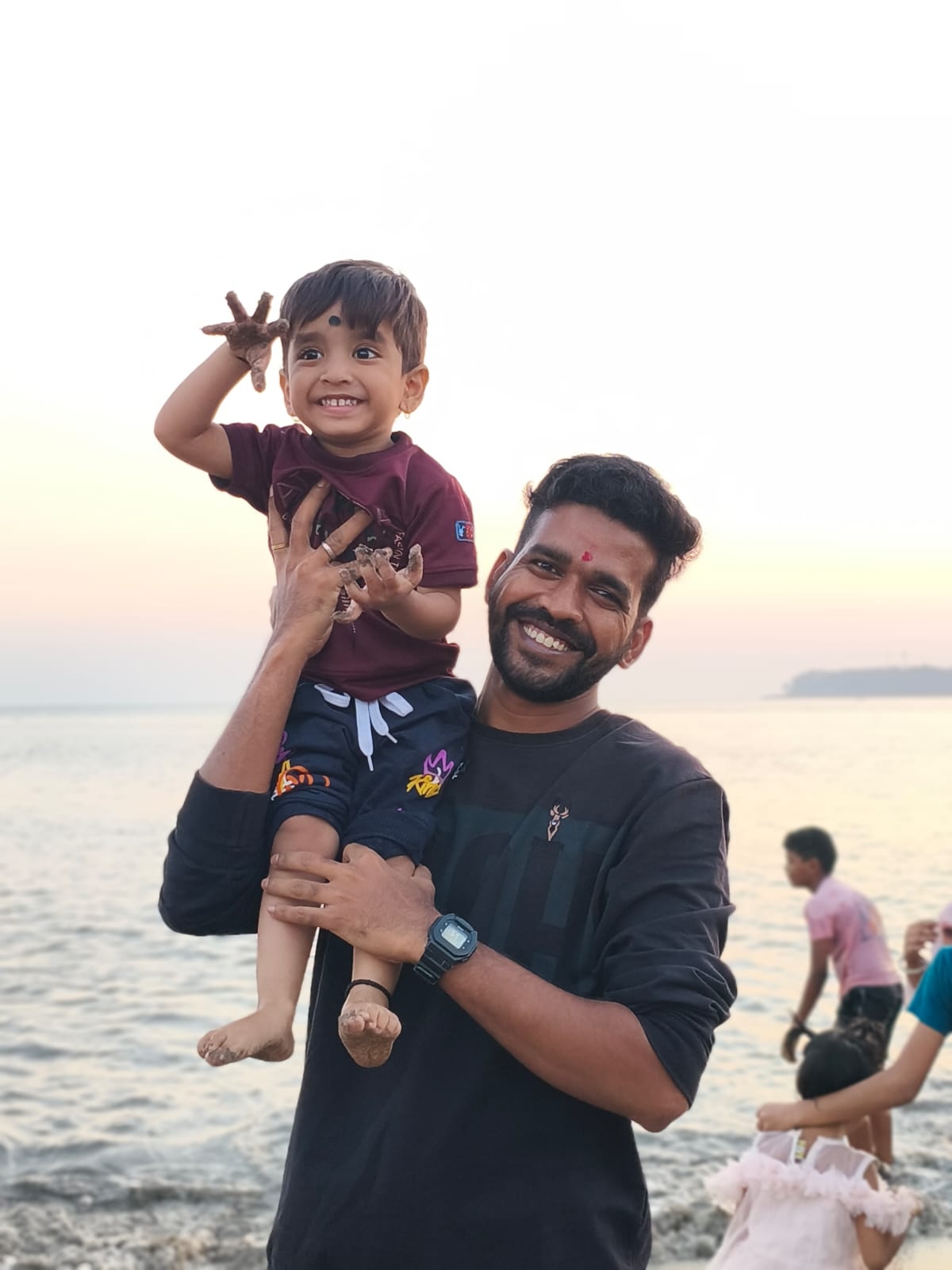
Like Father, Like Son: From TOF’s Inventory to Everyday Play and Learning

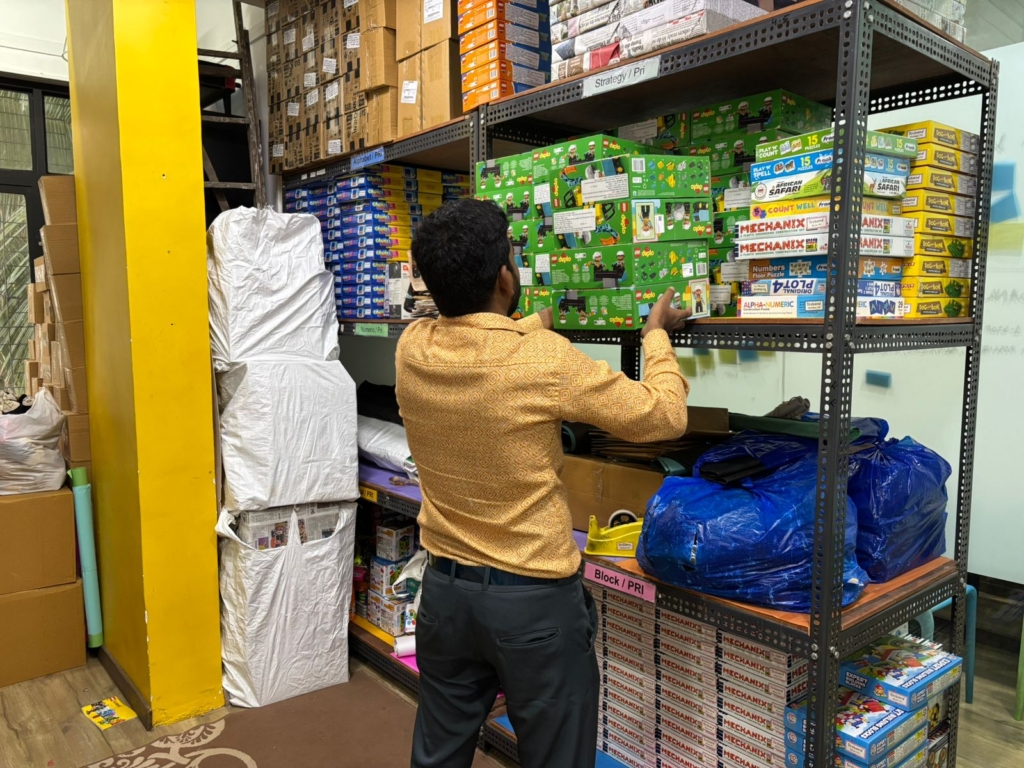
At The Opentree Foundation (TOF), play doesn’t just live in classrooms and play centres, it also finds its way into homes, into homes of its team members, shaping families and children in powerful ways. For Amol Kedase, who has been part of TOF’s inventory team since 2021, work is more than packing, dispatching, and tracking games. It is about absorbing the world of play so deeply that it naturally becomes part of his parenting. At TOF, the Inventory team looks after every aspect of the games: from sorting, coding, and packing them, to dispatching them across schools and communities. 

From Sports to Board Games

Amol has always been a lover of play. Growing up, most of his play was outdoors: running, competing, inventing games with friends. One of his fondest childhood memories is of Chalas, a self-invented game inspired by Snakes and Ladders, played with tamarind seeds. But when he joined TOF, a whole new world of board games opened up to him.

“I didn’t know board games had so much depth,” he says. “Rather, I didn’t know that play had so much depth. When I first saw the inventory room, it amazed me to see so many ways of playing and learning packed inside boxes.”

Over the years, he has become an expert in every rule, strategy, and variation of the hundreds of games TOF uses. This knowledge, he realised, could also enrich his own home and his three-year-old son. 

Play Meets Parenthood

Soon after joining TOF, Amol became a father. The timing was perfect. His professional exposure to play equipped him with new tools for raising his son, Aansh.

“The first toy I brought home was a rattler,” he recalls. “My son was barely a year old, but the sound and movement caught his attention. It helped sharpen his sensory skills.”

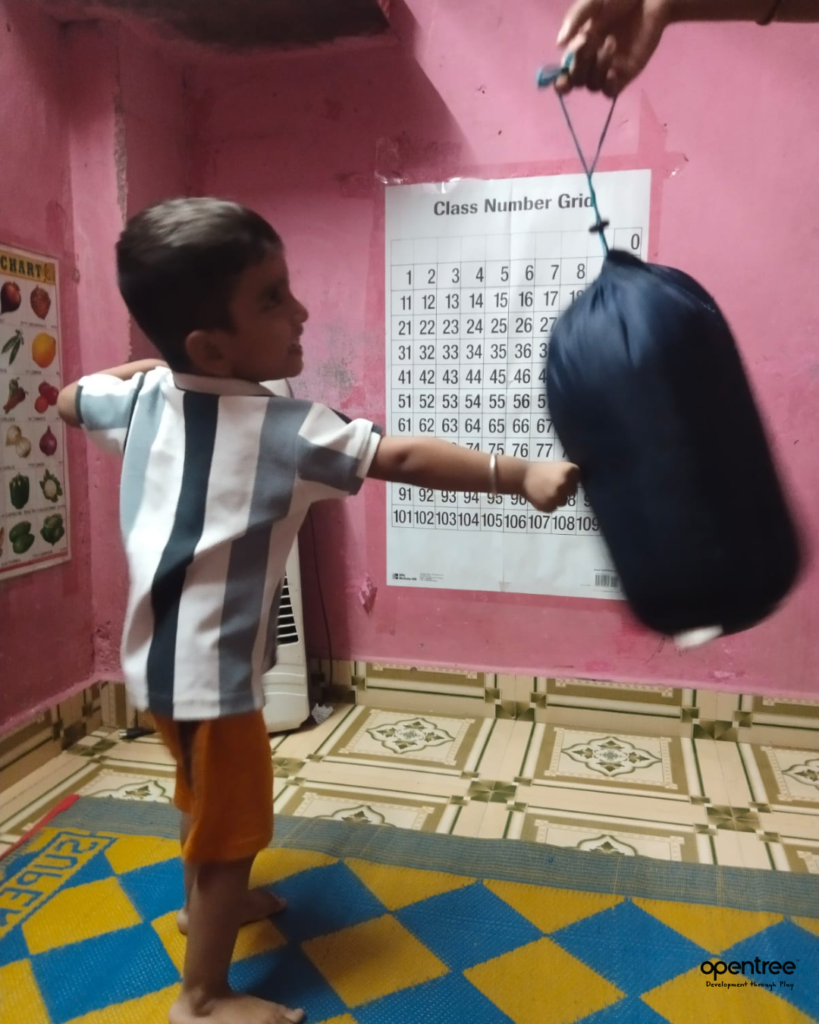
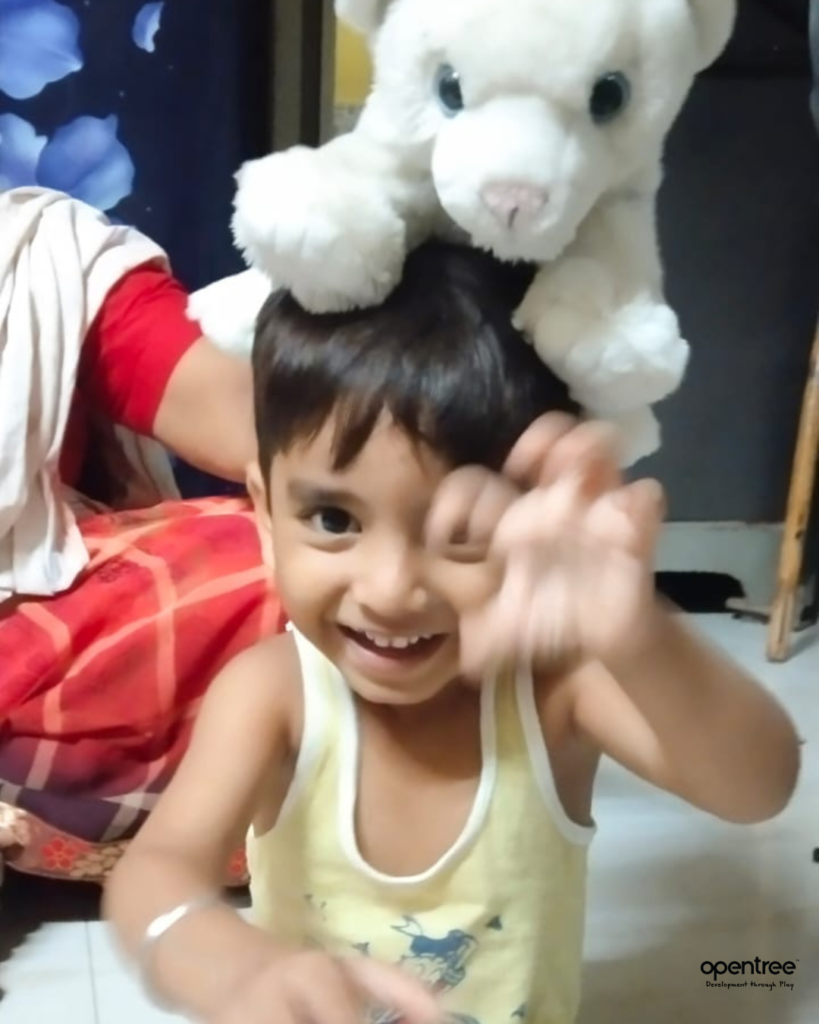
From there, Amol started introducing age-appropriate games to Aansh, sometimes directly from the TOF inventory, sometimes by improvising. At just 2.5 years old, Aansh surprised his father by reimagining a bowling game: “I had mistakenly lined up all six bottles in a straight row, so they wouldn’t fall properly. Aansh suggested placing them in rows of two. He kept changing the formation to make the game more fun. That was the first time I realised how play could build problem-solving skills at such a young age.”

Play helps Aansh lead, learn, grow

For Aansh, play is more than fun, it’s a way of learning about the world. He quickly picked up numbers, alphabets, and shapes through puzzles and sorting games. With a map puzzle, he began recognising states and capitals. He even memorised the names of social leaders like Dr BR Ambedkar, proudly identifying them from photos his father pinned up at home.

But beyond academics, Amol noticed deeper social and emotional growth. “He plays the role of a teacher with younger children in our neighbourhood,” Amol shares. “He talks politely, helps them when they get stuck, and even teaches them to say thank you.”

In moments of frustration too, play taught resilience. “Sometimes he gets bored or upset with a game. Instead of forcing him, I change the rules to make it interesting again. Play gives children agency, and it’s important to let them own that.”

A Child Who Waits for Games Every Day

For Aansh, games are now a part of daily life. The moment Amol steps home, his son’s first question is: “What game have you brought today?” Whether it’s a brand-new puzzle, blocks, or even preloved donated books and toys, the excitement is the same.

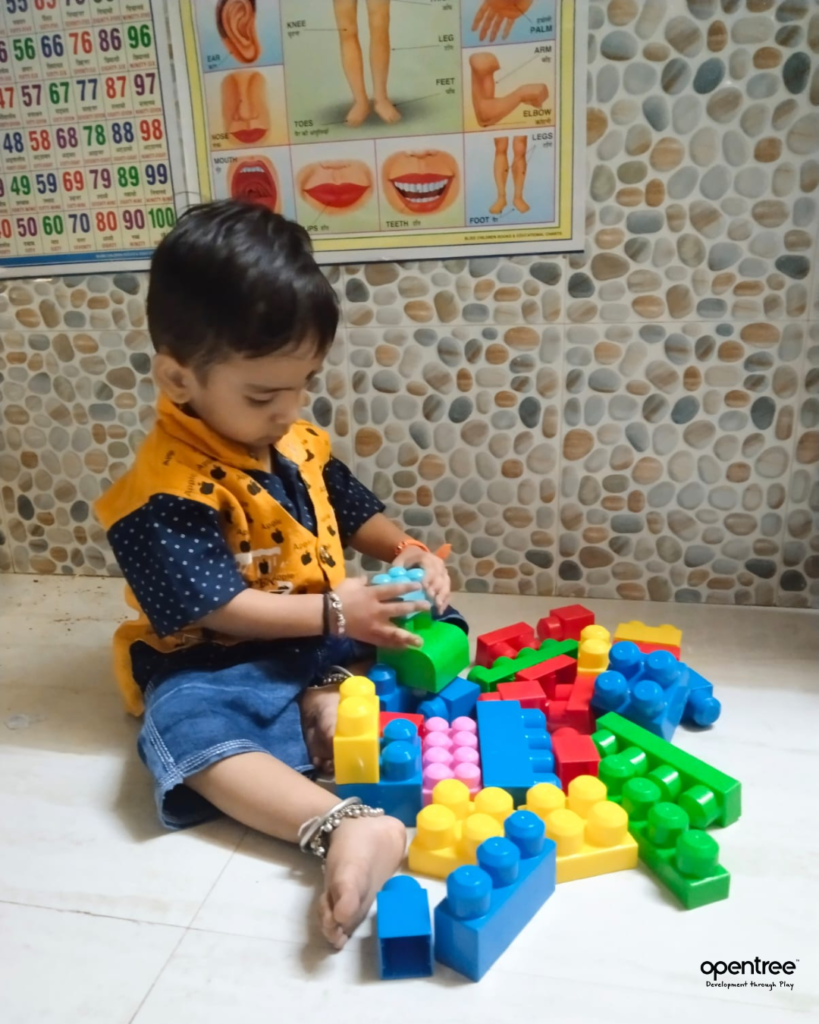
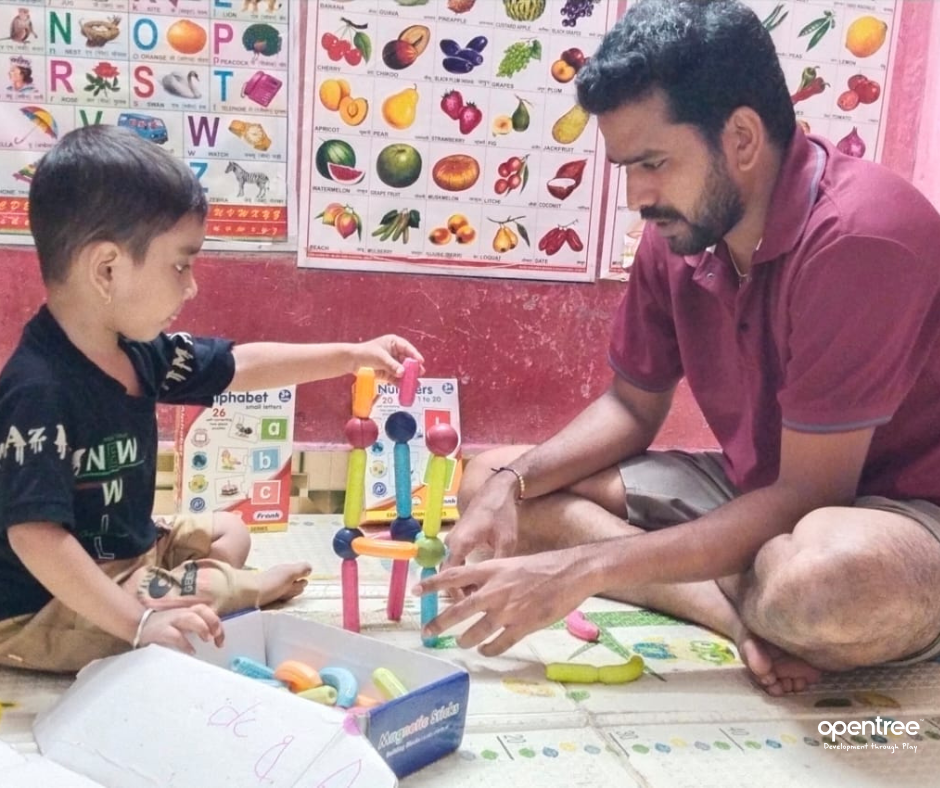
Interestingly, his creativity isn’t limited to ready-made games. Building things is his favourite way to play. Soap bars and biscuit packets at home often turn into blocks for towers and bridges. “He once made a three-storey building out of soap,” Amol laughs. 

Lessons Beyond the Inventory

Amol believes that play has given his son a faster grasp of concepts compared to traditional teaching methods. “In school, when other parents asked why my younger son was admitted early, the teacher explained that he was already comfortable with rules, packing away games, and answering questions, skills children usually learn much later. That was all thanks to the exposure he got through play at home.”

For Amol, this blend of work and fatherhood has created a unique bond. Whether it’s fishing out toy fishes faster than the rest of the family, or confidently narrating the rules of a new game, every shared moment strengthens their connection.

When Play Becomes a Way of Life

Today, Amol sees play not just as an activity, but as a foundation for any child, something that keeps children curious, teaches resilience, and strengthens family bonds. “Children mirror us,” he reflects. “Even on tired days, I make time for play because I know it shapes how my son grows up. Play has truly become a way of life in our home.”

At TOF, stories like Amol’s remind us that play is not just for the children we work with, it transforms our team members and their families too. When play comes home, learning never stops.

EVENTSIMPORTANCE OF PLAYPLAY2LEARNSAFE SPACE

Building Childhoods Through Play: Celebrating 21 Years Together

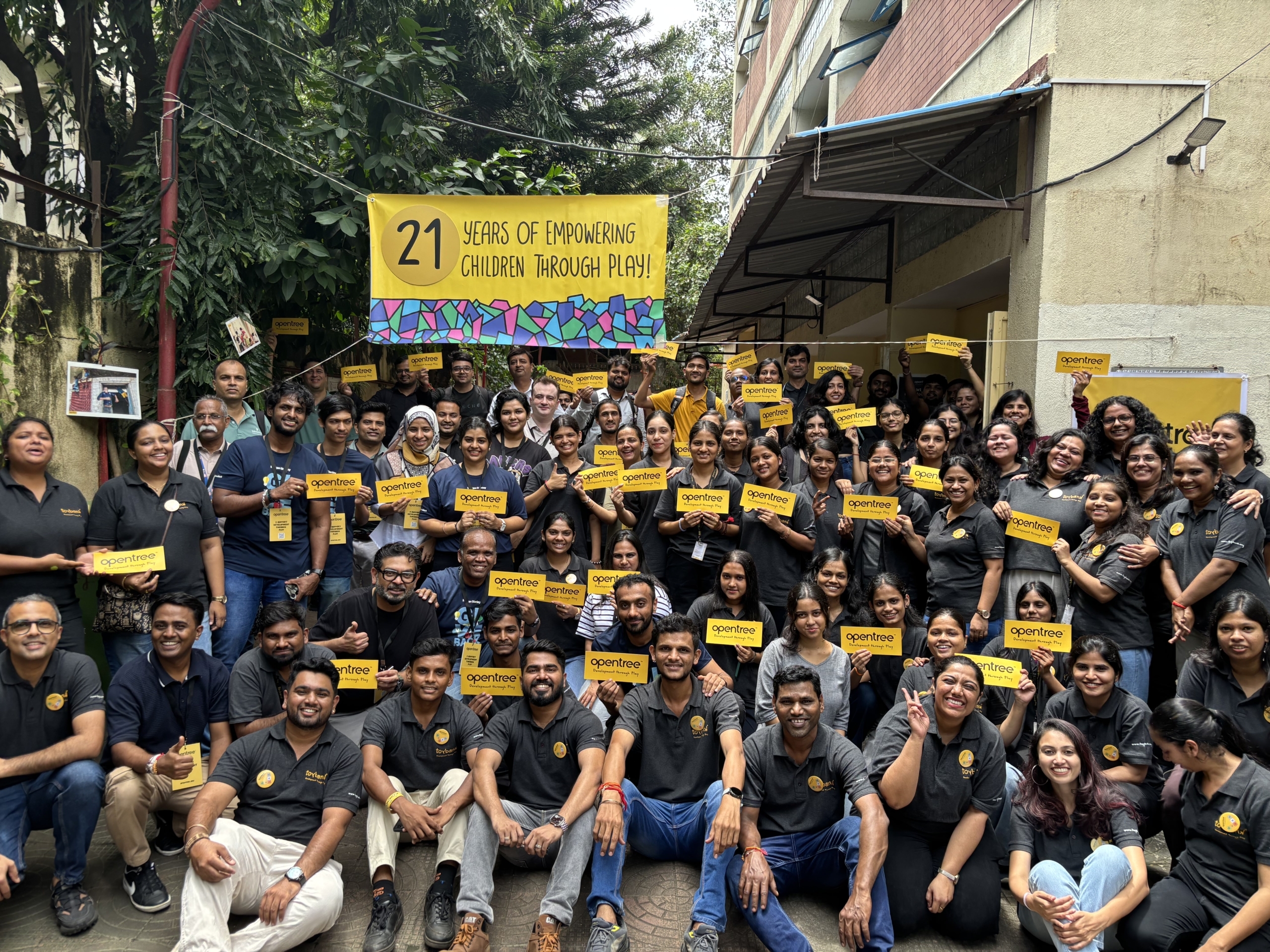
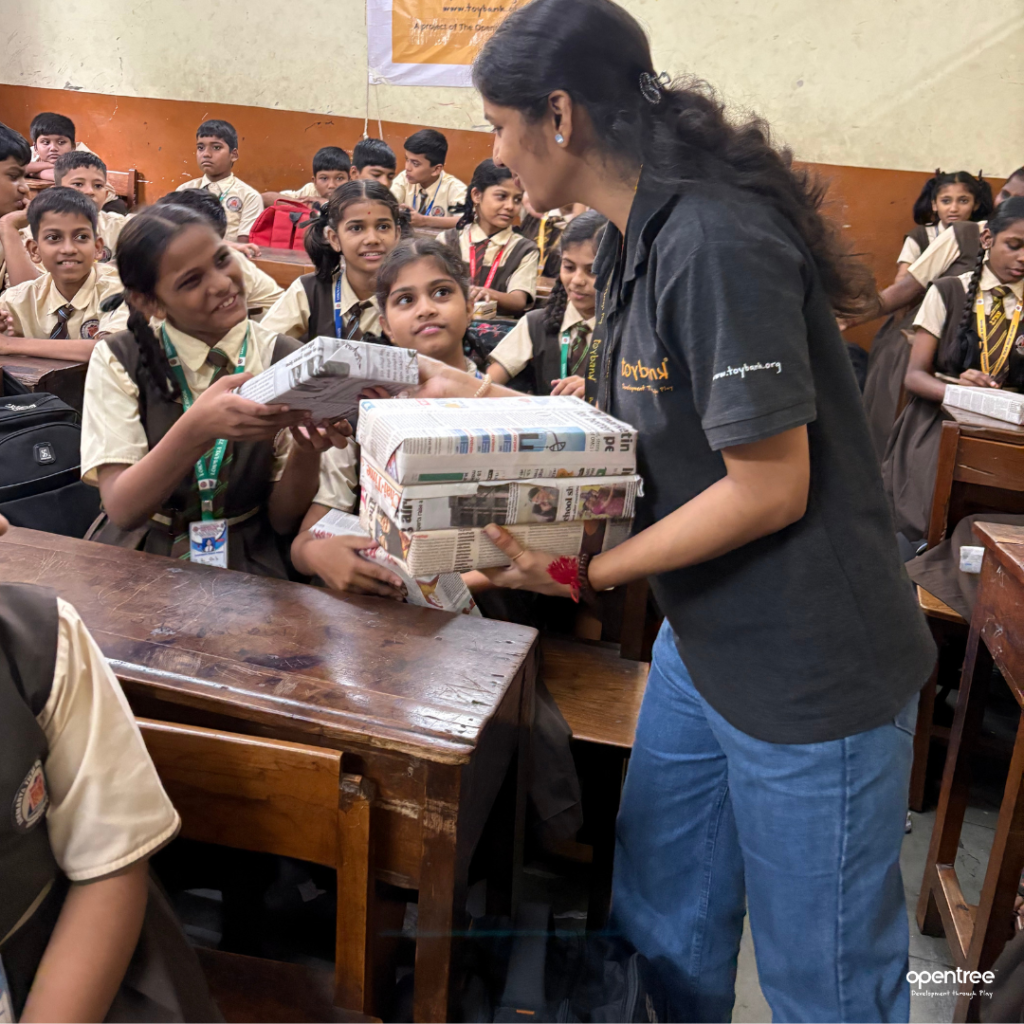
On August 23, 2025, The Opentree Foundation’s flagship project, Toybank, celebrated its 21st Foundation Day, at SS Sahney School, Khar, marking over two decades of championing play as an essential part of every child’s life. The milestone was celebrated in the most fitting way possible: by bringing the joy of games, stories, and creativity to more than 1,000 children, with the support of our incredible volunteers.

This year’s celebration was not just about distributing games, but about immersing our volunteers in the true essence of our mission: using play and play-based learning to build life skills that prepare children for life.

A Day of Play, Learning, and Fun

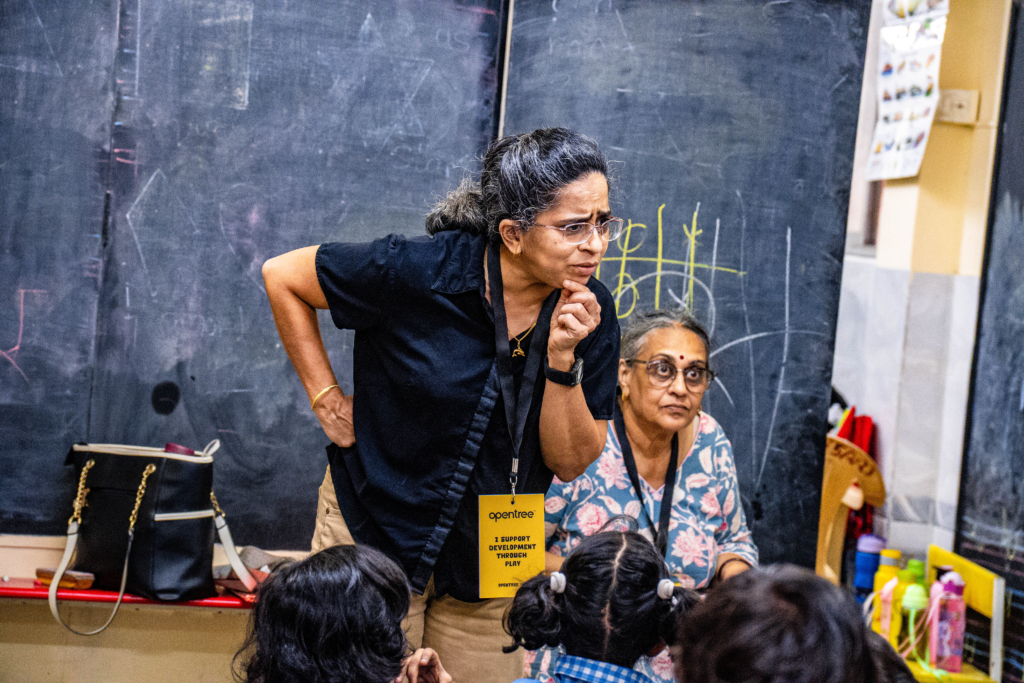
The day began with a special pep-up session for all volunteers. This wasn’t just an orientation, but an opportunity for them to experience what our play sessions with children feel like. Through interactive activities, volunteers got a glimpse into the power of play and why it is not just about fun, but about creating safe, nurturing spaces where children can express themselves freely.

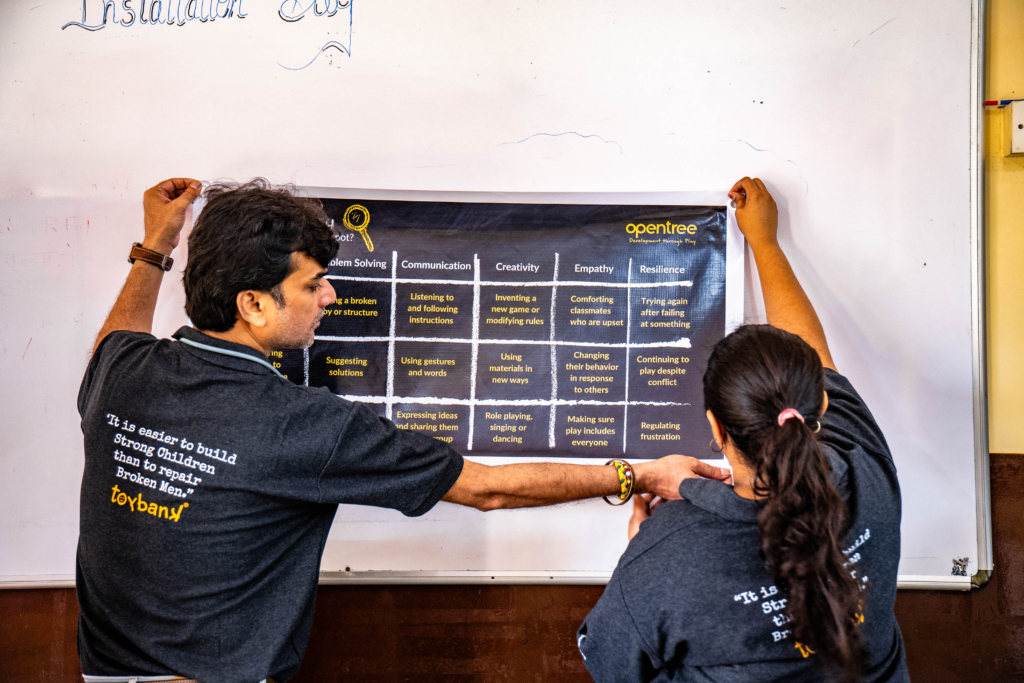
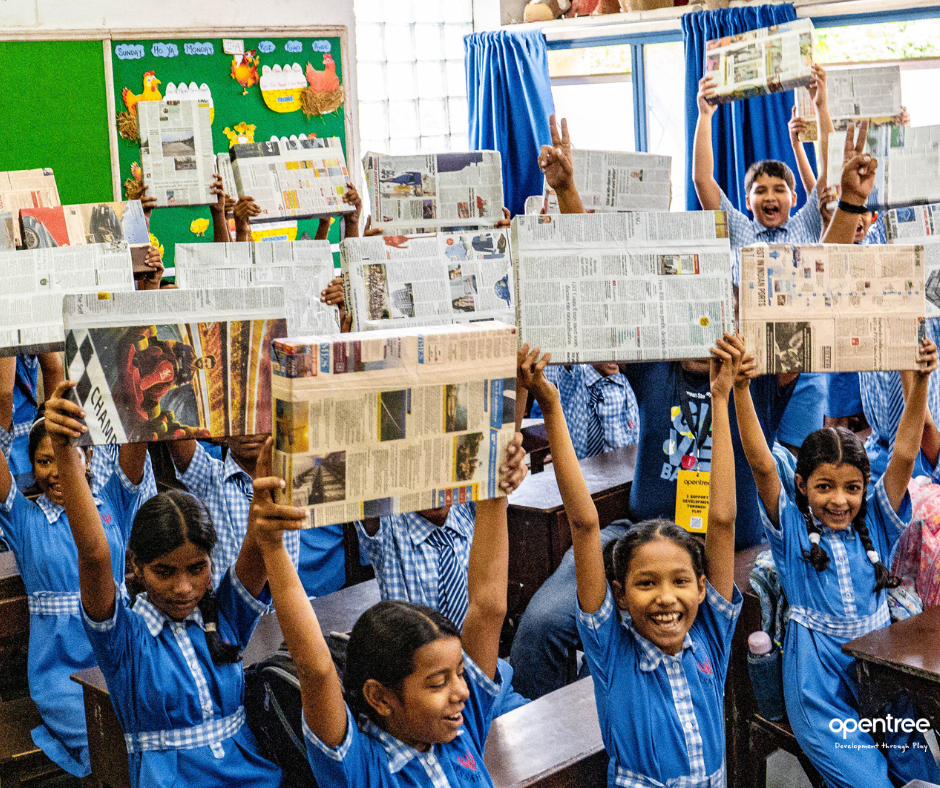
After this, the volunteers were divided into groups and sent into classrooms to assist our play workers in play sessions. These sessions are part of our Life Skills Play Programme, which carefully curates games based on the age, interests, and competence levels of children. Each game is thoughtfully selected to strengthen skills such as communication, problem-solving, resilience, empathy, and teamwork. What may appear as a simple board game or group activity to an outsider, is in fact a tool for building critical life skills that shape confident, empathetic, and curious learners.

Storytelling and Origami: Play in Many Forms

Play takes many forms, and the Foundation Day celebrated this diversity beautifully. In one class, our long-time volunteers Nutan and Jyoti conducted a storytelling session for Senior KG students.

For the children, it was an hour of imagination and wonder, but for us, it was also a reminder of how stories spark creativity, build language, and nurture empathy. Jyoti, who has been a steadfast volunteer with us for years, exemplifies what it means to be a play champion, someone who understands that play is serious, transformative work.

In another classroom, Ranjana and her daughter Sailee, both regular volunteers at our Foundation Days, conducted an engaging origami session with Class 4 students.

Beyond the joy of folding paper into animals and shapes, origami helps children develop patience, focus, and fine motor skills. Volunteers like Ranjana and Sailee remind us how play is not bound by age, and how generations can come together to celebrate creativity.
Interactive Spaces of Reflection

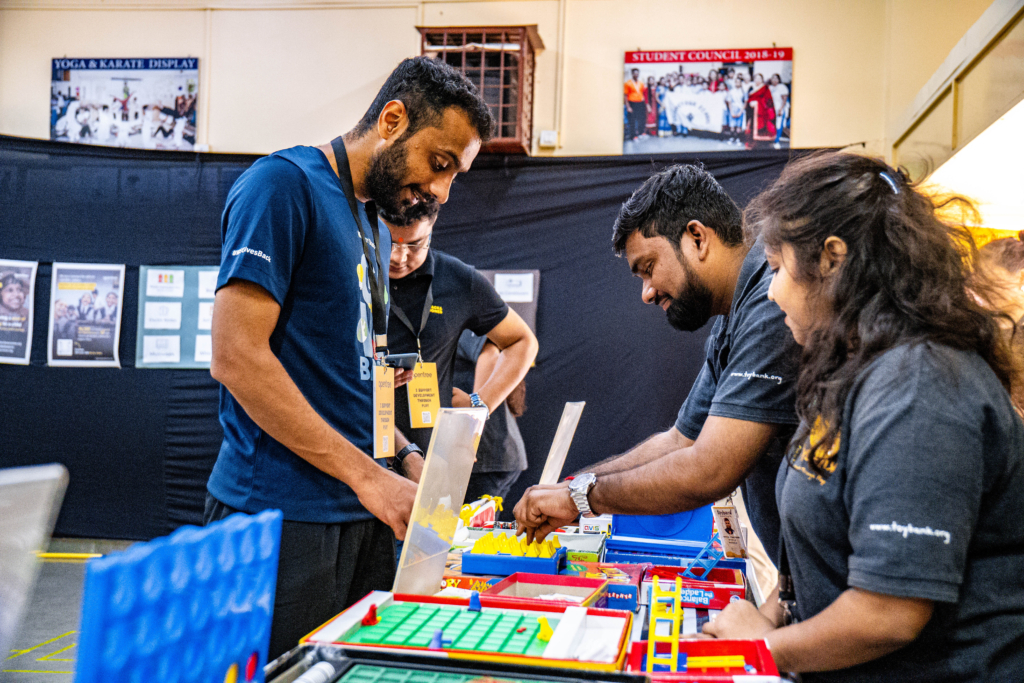
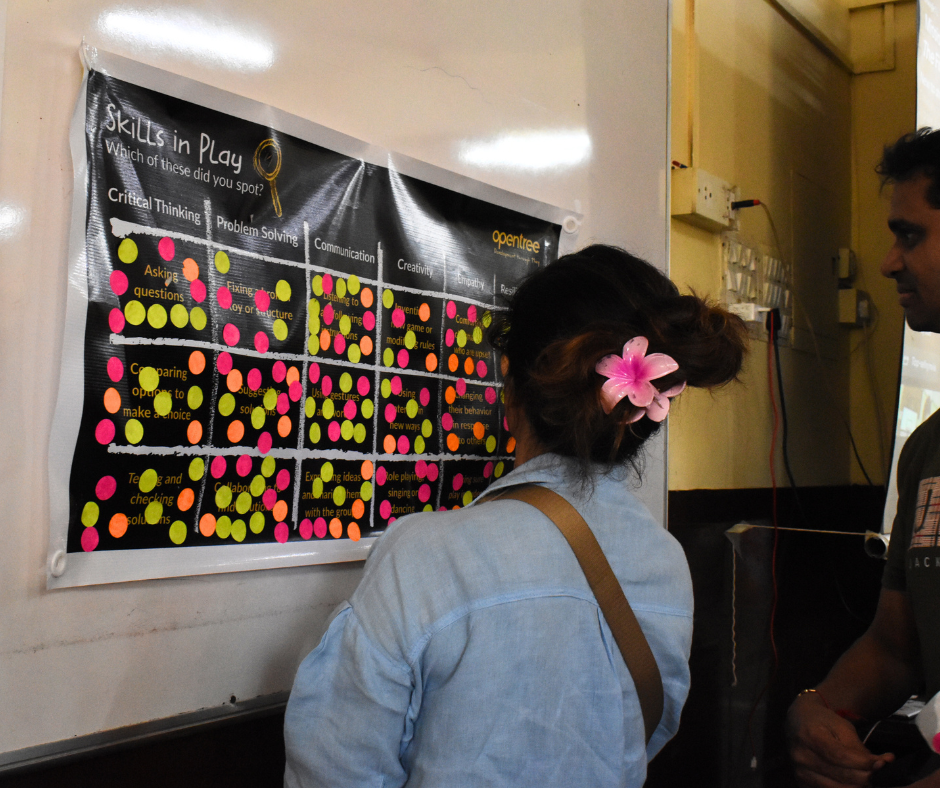
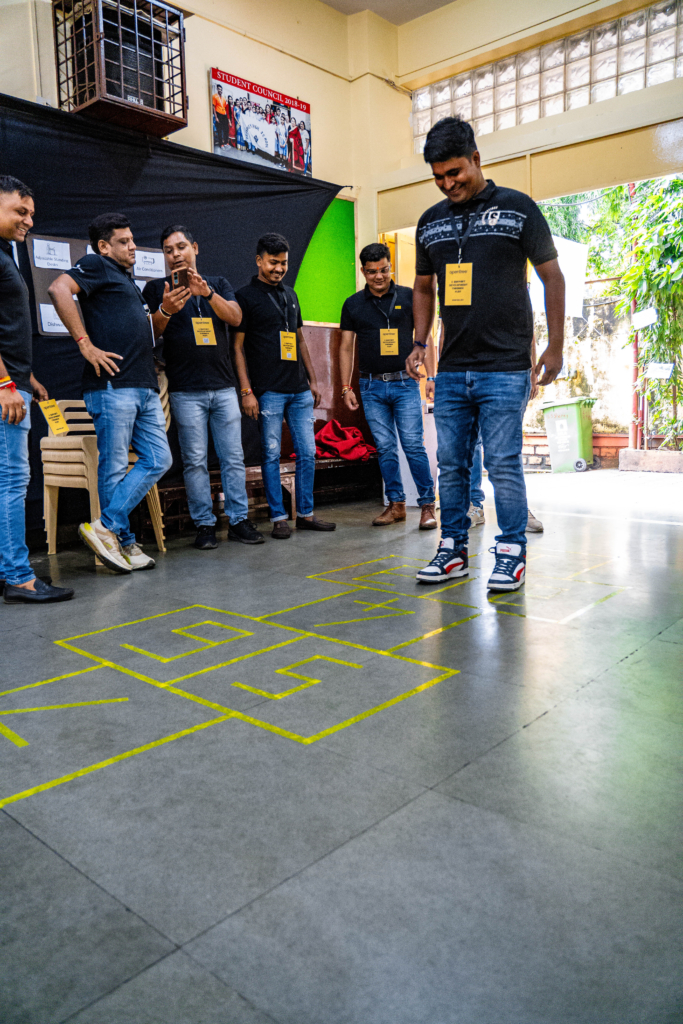
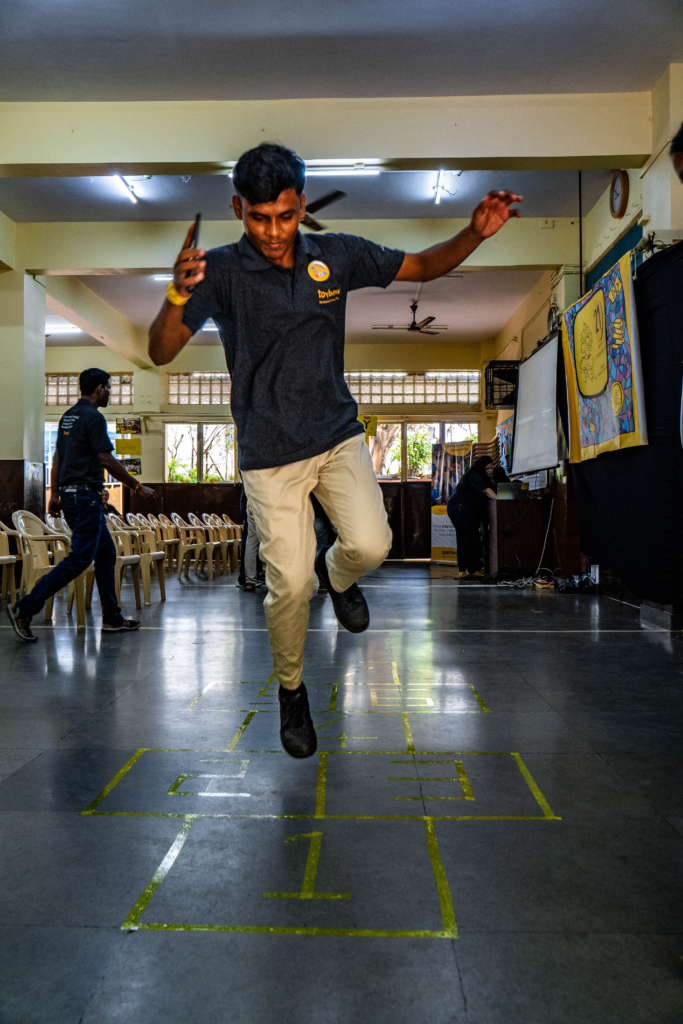
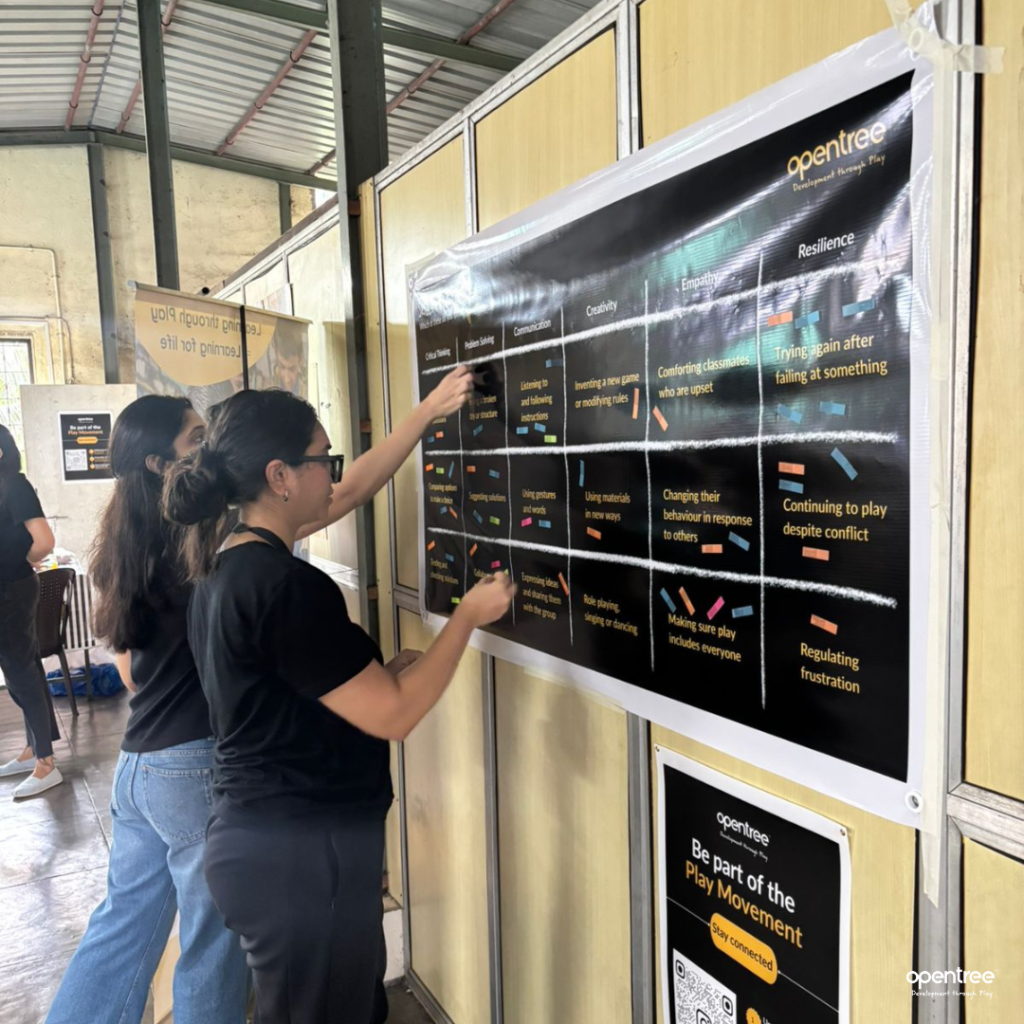
The celebration wasn’t limited to the classrooms. The hall was alive with interactive activities designed to make volunteers reflect on the skills that play builds. A specially created Play Bingo wall encouraged participants to spot and mark the different life skills they witnessed during the sessions. Another corner featured a hopscotch grid, inviting adults to travel back to their own childhood and rediscover the pure, unstructured joy of play.
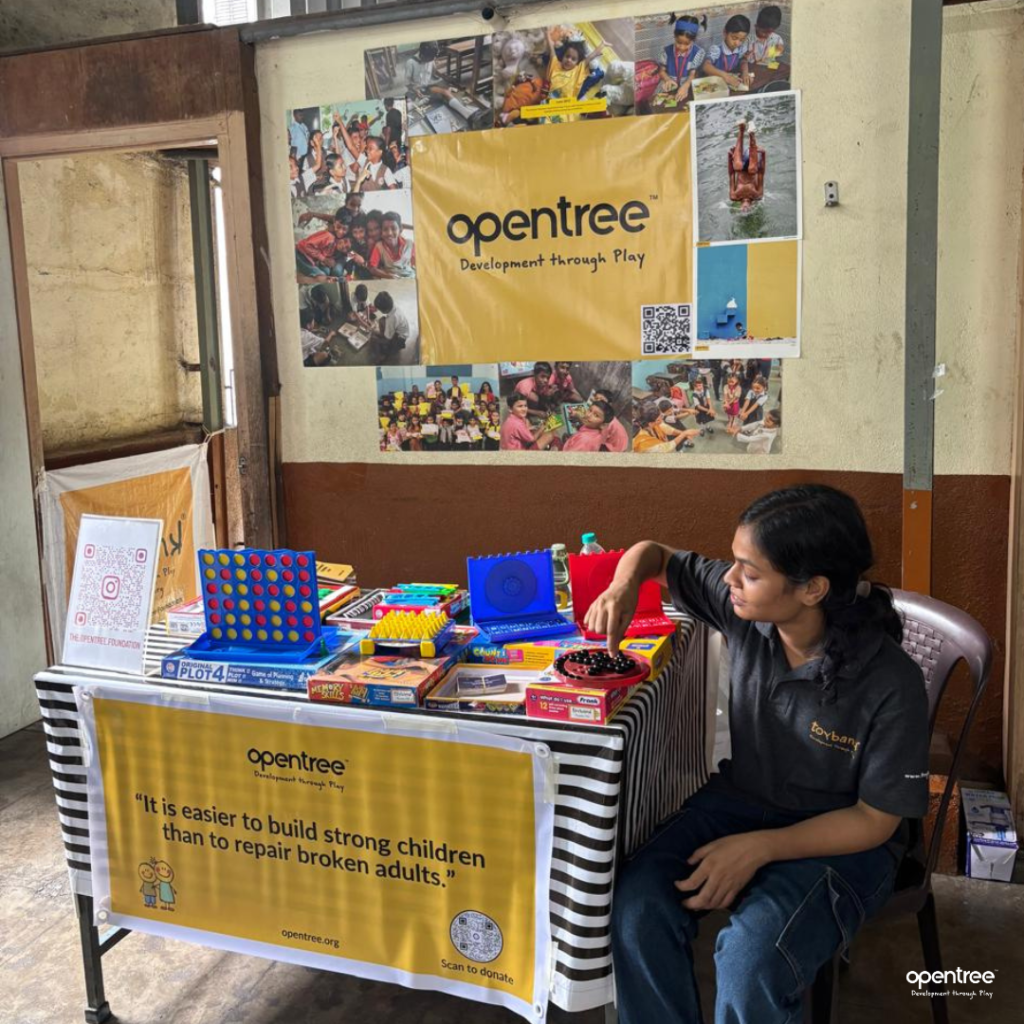
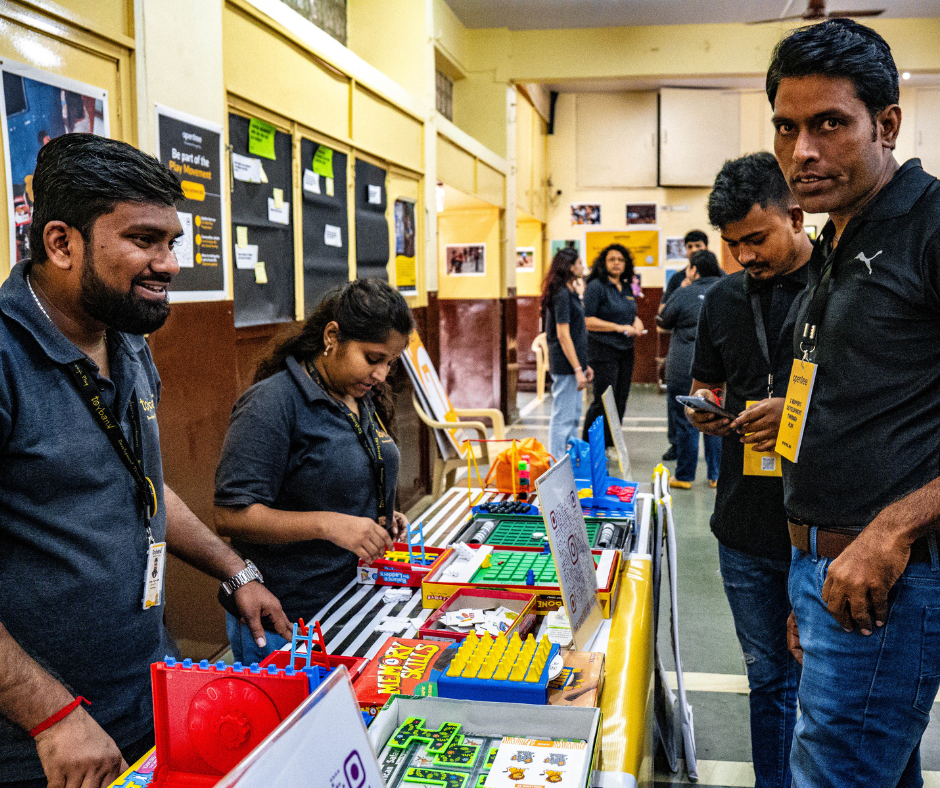
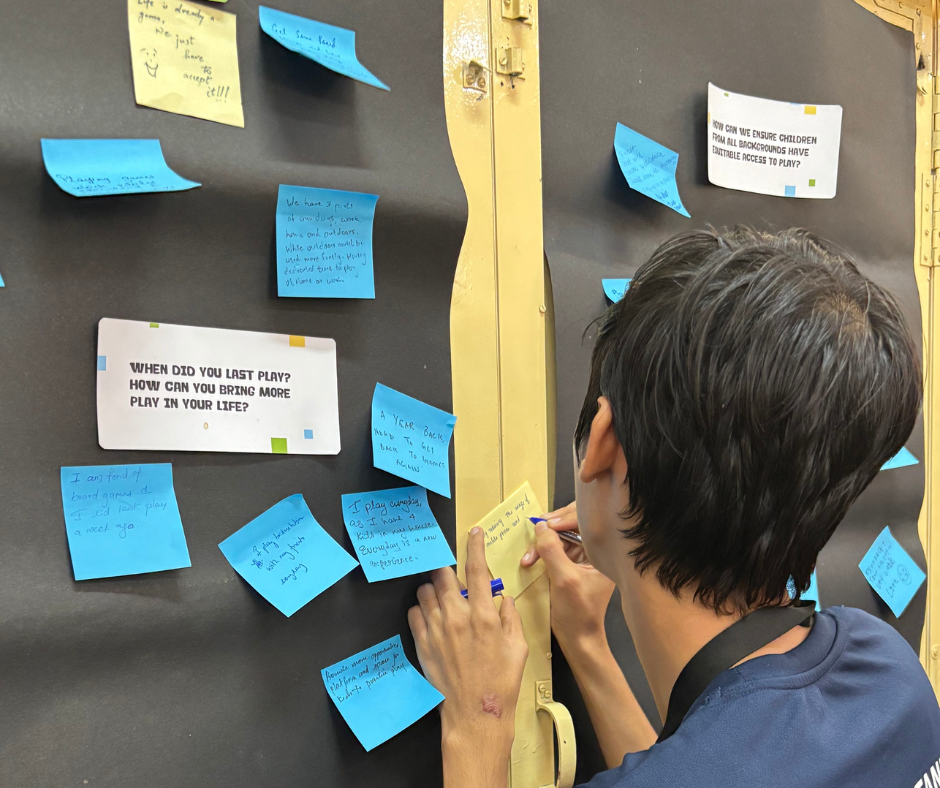
We also had a wall where participants could share their favourite childhood memory or a game they loved most as children. Reading through these notes reminded everyone of a simple truth: play is universal, timeless, and essential. At our kiosk, we displayed the very games we use in our Life Skills Play Programme, allowing volunteers to explore how each game connects to specific skills children need to thrive.
Voices of Play

One of the highlights of the day was hearing from our volunteers themselves. Many spoke about how their understanding of play had shifted through their time with The Opentree Foundation. “I never saw play from this perspective,” shared one volunteer. “I always saw it as an afterthought. I didn’t know that play helps build these life skills and volunteering today with TOF allowed me to see that.” 

These reflections capture exactly why TOF exists: to change the way the world sees play, from something ‘extra’ to something fundamental.

Our founder, Shweta Chari, summed it up perfectly: “We use play and play-based learning to transform classrooms into safe spaces for children to express themselves and be themselves, to build the teacher-student bond, to get children to be curious, to ask more questions, and to be uninhibited. Play transforms childhoods.”

We were honoured to have esteemed guests including Rizwana Shaikh, Principal of SS Sahney School, Khar, and Dr. Sanjay Chavan, Principal of Rajawadi School, among others. Their presence and encouragement highlight the importance of embedding play in education systems and policies.

But above all, this day belonged to our volunteers, our true play champions. From leading activities in classrooms to sharing their own stories of why they support play, their energy and commitment made this milestone celebration possible.

IMPORTANCE OF PLAYPLAY2LEARN

From Conversations to Connection: Fueling Our Playful Vision

At The Opentree Foundation (TOF), we’ve always believed that the work of building happier, healthier childhoods cannot be done alone. It takes deep partnerships, collective vision, and people who believe, not just from afar, but who show up, sit beside us, and walk the journey with us. One such person is David Millary.

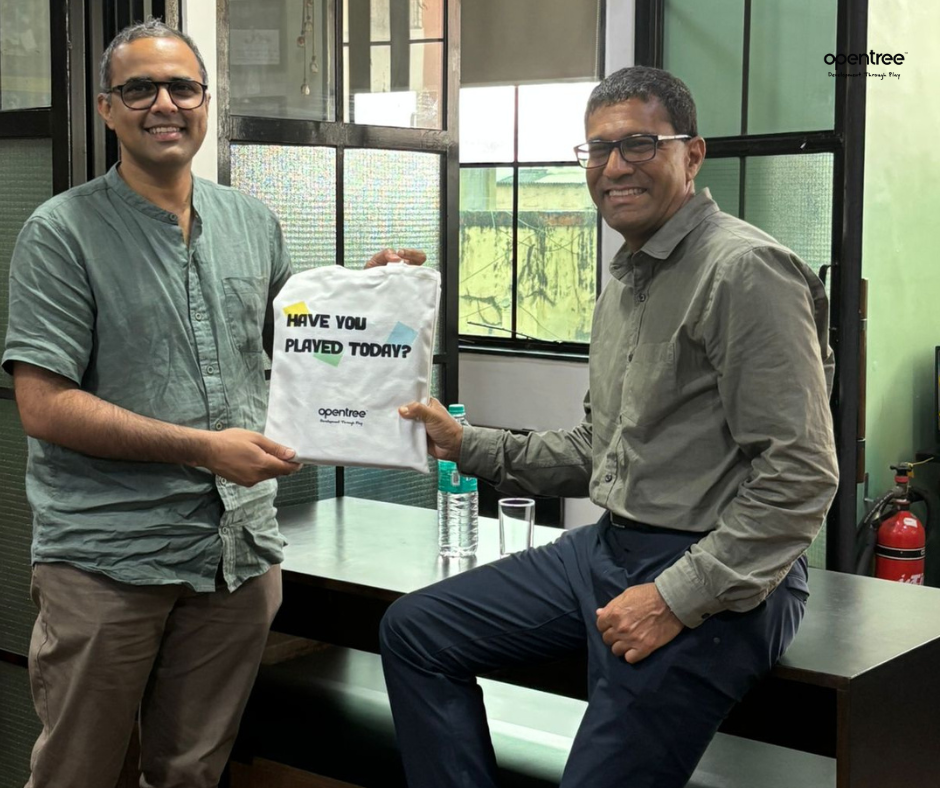
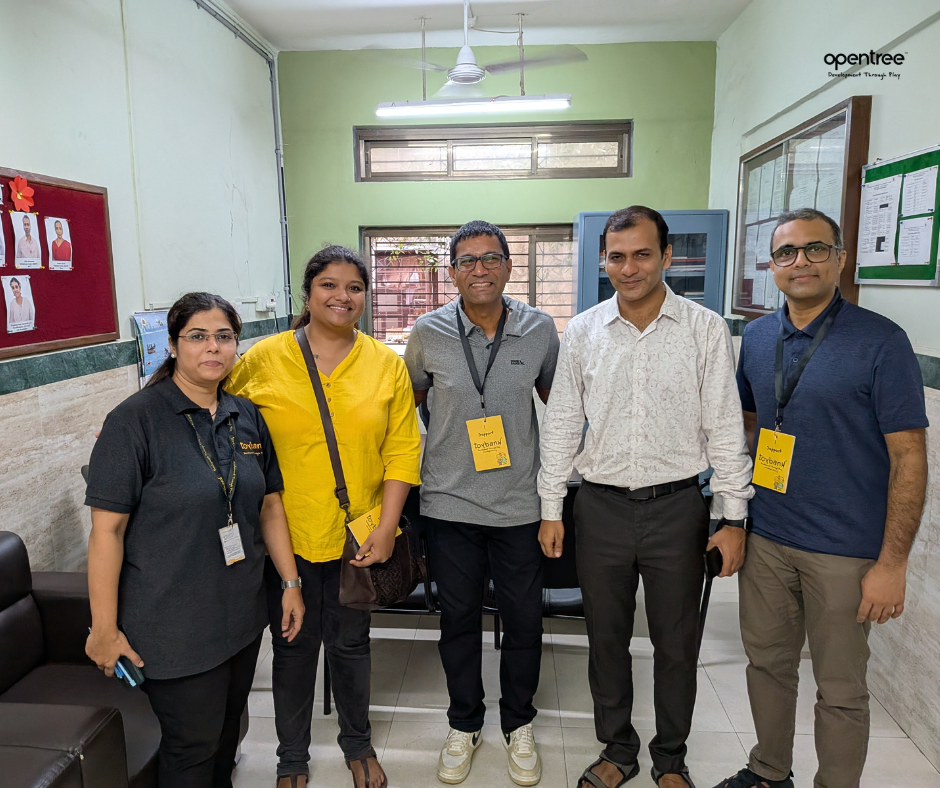
David has been a long-time friend and supporter of TOF for over six years. Earlier this month, he made a special three-day visit to India with a focused goal: to co-work with our team and help us plan more effectively, as we scale our work to reach 1 million children with play by 2030.

From day one, David’s energy was rooted in genuine connection. At our office in Mumbai, he spent time co-working with the team, not just advising, but actively engaging with the realities, ideas, and systems behind our work. He spoke to the larger team about why play matters and why what TOF does is critical. “Children never start from zero,” he shared. “Every child has a spark in them. Children TOF is working with, every one of them has something unique to offer the world.”

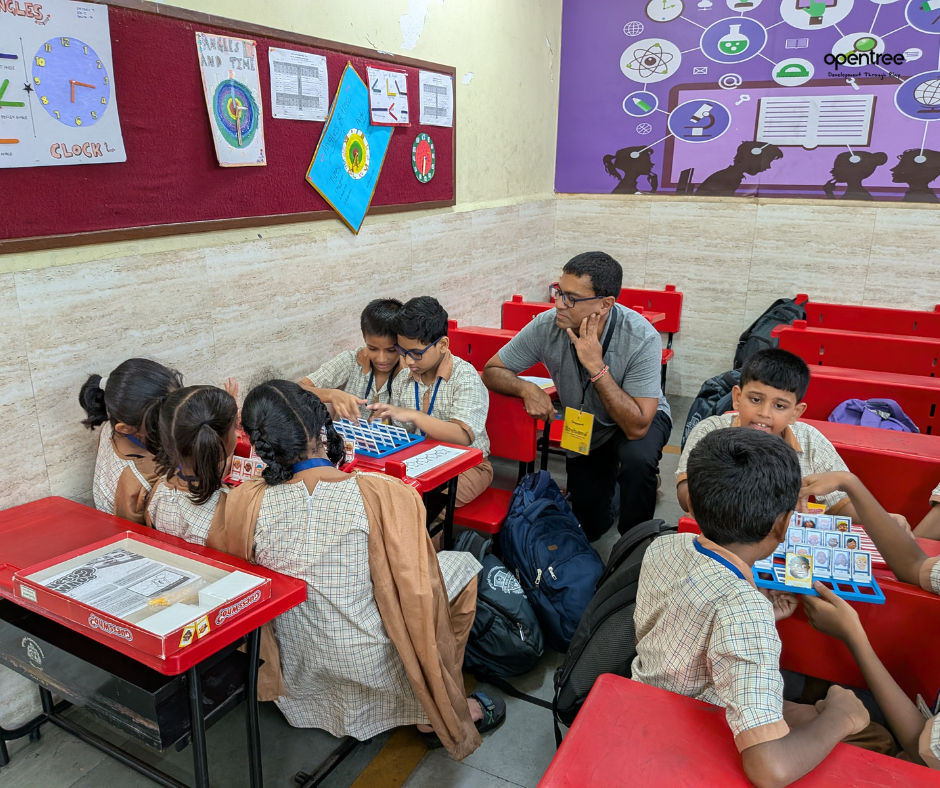
David also visited a play session at the Mumbai Public School, where Class 5 students were playing games that help build skills of communication and critical thinking. He joined the children in a round of Guess Who, admiring the strategies they used and the joy with which they played. He later spoke with the class teacher, who shared how useful TOF’s play sessions are, especially on busier days. The school’s principal echoed her thoughts, saying that in the past three years of partnering with TOF, the presence of play has built visible camaraderie and teamwork among the students, even when TOF facilitators aren’t around.

The visit culminated in our TOF Circle: Vision and Connection evening, an intimate gathering of our long-time supporters. Together, we reflected on our journey so far and discussed where we hope to take the power of play in the years ahead. David’s voice in the room grounded us, reminding everyone of the human connections behind the mission.

We are deeply grateful to David for taking the time to visit us, for working alongside us, listening to us, and cheering us on. In a world where many causes compete for attention, it means so much when someone chooses to stand with you, not just in words, but in presence.

David’s visit was a moment of reflection, motivation, and alignment. It reminded us that we are not alone in this mission to make play a right, not a privilege. And for that, we are truly thankful.

IMPORTANCE OF PLAYPLAY2LEARN

IDOP 2025: Choosing Play, Every Day to Reclaim Childhood

This International Day of Play, The Opentree Foundation hosted a powerful roundtable discussion titled ‘Choose Play, Everyday’, bringing together global voices to tackle a quiet crisis: the disappearance of play from children’s lives.

Moderated by Smarinita Shetty (India Development Review), the panel featured Dr Sarah Aiono (Longworth Education), Tia Mathisen (Playworks), Ingrid Srinath (Resource Alliance), and our very own Shweta Chari (The Opentree Foundation). The session explored how play, a natural right of every child, has been sidelined in classrooms, homes, and policy conversations.

Panelists emphasised that play is not a luxury but a foundational element of childhood. Dr Aiono shared insights on how educators can bridge the gap between knowledge and practice, ensuring play is not reduced to a token activity, but embedded meaningfully in curricula. Tia Mathisen spoke about the power of adults rediscovering play for themselves, creating joyful moments that lead to lasting mindset shifts.

Ingrid Srinath reminded us that systemic change won’t happen until we redefine success, moving beyond grades to include creativity, wellbeing, and joy. And Shweta Chari brought the message home: “It’s so obvious. But still not understood.”

The way forward is clear: we need more data, yes, but we also need more demonstration. We need to let funders, policymakers, and educators feel the power of play. 

At The Opentree Foundation, we remain rooted in our belief: it’s easier to build strong children than to repair broken adults. And in a world that desperately needs healing, choosing play every day might just be the most radical, hopeful act of all.