


Contacts

92 Bowery St., NY 10013

thepascal@mail.com

+1 800 123 456 789

DONATIONREPORT

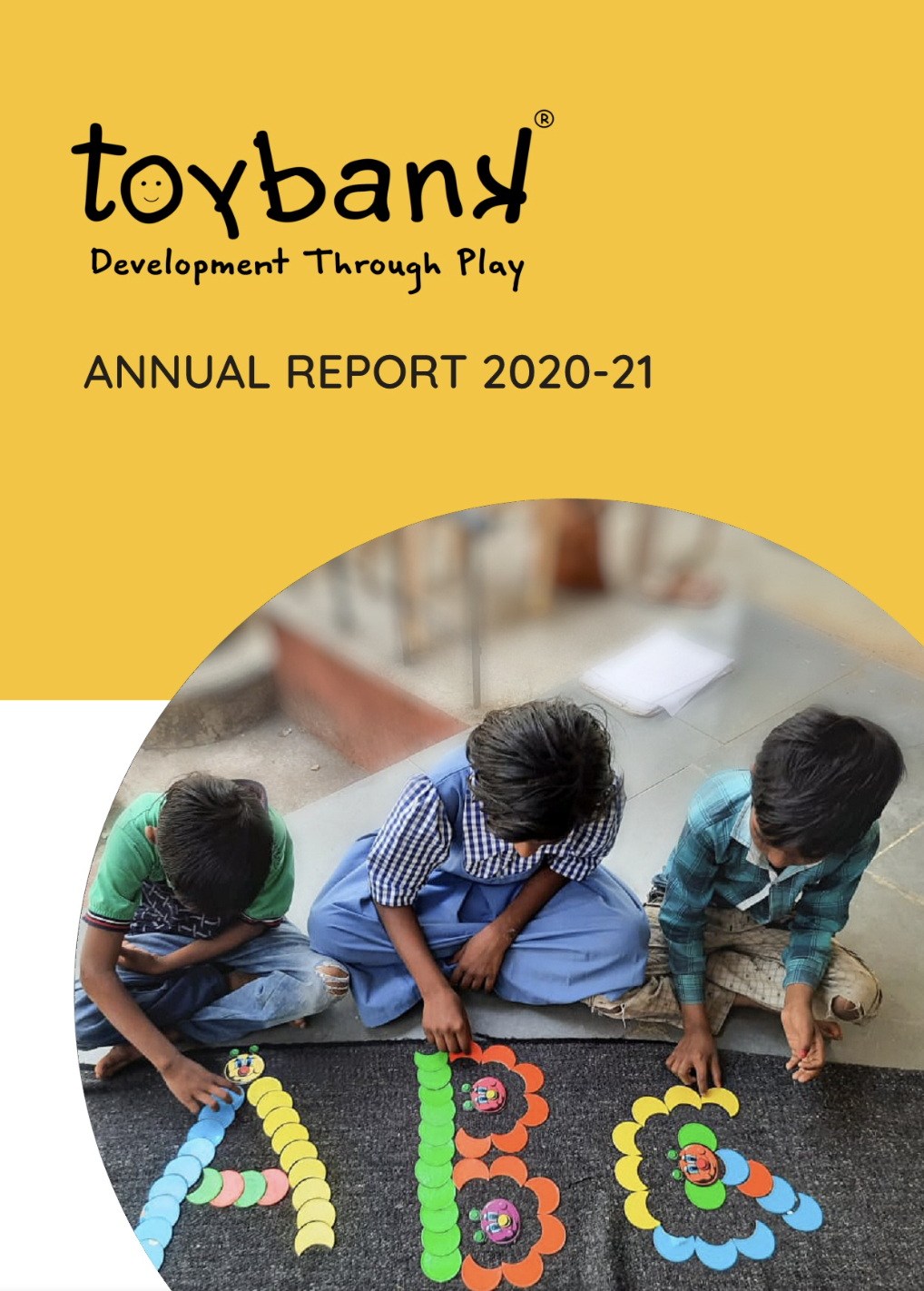
Annual Report 2020-21: COVID-19 response

Mainstreaming Play requires concerted efforts. And our partners, collaborators and volunteers have held us in good stead in our endeavour. If we deny children their Right to Play, we deny them their right to understand the world.
IMPORTANCE OF PLAY

Positive mental health through the power of play

A scelerisque purus semper eget duis at tellus. Lobortis scelerisque fermentum dui faucibus in ornare quam viverra orci. Elementum sagittis vitae et leo duis ut diam quam nulla.

IMPORTANCE OF PLAYPLAY2LEARN

The Sibling Paradox: To Play or not to Play?

Siblings are best friends that you are blessed with and most likely spend the most time playing with growing up. These relationships span unmatched rivalry to late-night bonding sessions discussing life and challenges on each other’s bed. However, one thing you can count on siblings to do is to create unforgettable memories made during play-time—from lucky breaks and intense strategies to striking the winning moves. Here are some games that bring back the nostalgia of staying home and playing with siblings.

Monopoly
This game helped us learn a bit about how real estate works. Children learn how to make decisions on how some spaces are more valuable than others and simultaneously develop their cognitive as well as executive function skills. However, never once has this game ever been completed in peace when played with siblings as someone has amassed more money and property and is close to making the others bankrupt – chaos ensues.

UNO
This colourful card game teaches kids colour and number recognition and observation skills. Especially, when played with siblings it boosts exceptional attention to detail among many other things. Suddenly each sibling is well-aware of how many cards the other has picked or the number of cards one threw down in the pile. Uno has also been tweaked with households having created different rules with the much debated: Can you play a Draw 4 on a Draw 2? Thus UNO helps children build their creativity as they create new challenges and rules for the game, as well as, always keep an eye out for the hidden Draw-4 that could be hiding in their sibling’s hands.

Hide and Seek
While this game developed our gross motor coordination, muscle development and builds strength. It also encourages the children to observe and come up with good hiding spots. However, when played with siblings, this game encourages children to think extra hard about where to hide or to think outside the box- whether it is to go outside the designated area for hiding or camouflaging in the background.

It’s these play-filled moments that build the foundation of support and trust for the rest of our life. While sibling relationships are often affected by family dynamics, age, gender and more, it’s during playtime that children get to interact with each other on an equal footing and connect as individuals. Sibling bonds strengthen and they become our support system through the time spent playing together – whether it is one-on-one or as a team with other members of the family. games played with them that we bond, develop critical thinking and social skills while creating memories that last a lifetime.

Image credits: Pixabay

IMPORTANCE OF PLAYPLAY2LEARN

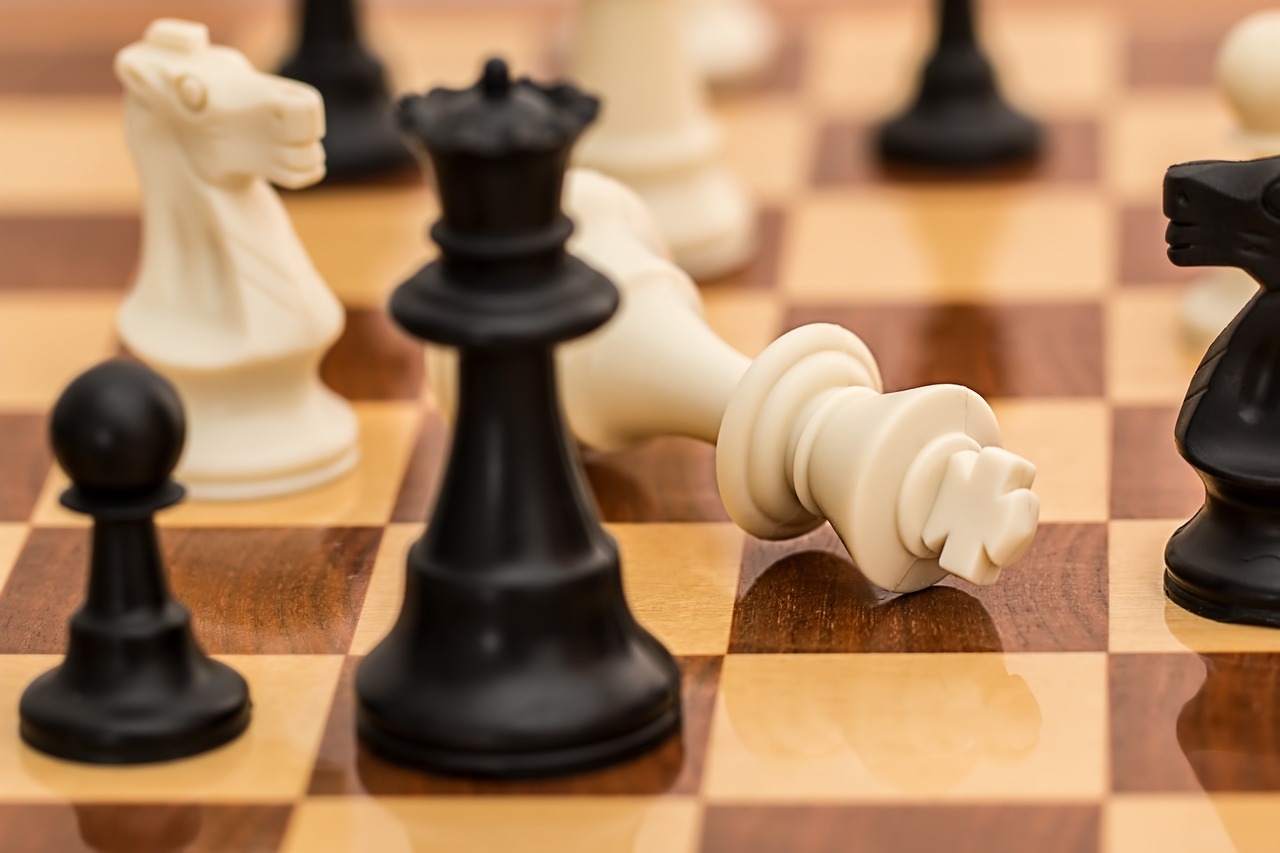
Chess: Of 64 squares and winning moves

Most of us would have tried our hand at a game of chess at some point, but many do not know that children as young as three to five years can benefit from playing the game. They learn to strategise, analyse, and decode while developing foresight and comprehension skills while playing this ancient board game. Created almost 1500 years ago in India, this popular game has shown an increase in concentration, memory, logical thinking, problem-solving skills and creativity. Chess has thrived for centuries and today we have international championships and acclaimed Grandmasters of the game, all under the watchful eyes of the International Chess Federation(FIDE), who have the final word on the rules and regulation of the game.

India Story
With Grandmasters like Vishwanathan Anand and Praggnanandha, Chess is played very widely across India and is especially loved by children. Currently, there are around 40 Grandmasters below the age of 15 years with Gukesh D who took the title of India’s youngest GM at 12 years, 7 months and 17 days, succeeding Praggnanandhaa who held the record at 12 years and 10 months since June of 2018.

Game Play
A game of chess can last from a few seconds, known as blitz or rapid, to hours or even days, when played in its long format. The game can be roughly divided into three stages: Opening, Middlegame and Endgame. While the Openings are more about learning different theories to position one’s chess pieces strategically on the board, the Endgame is mastering the winning moves after most pieces have been exchanged. The Middlegame is where the player can unleash his strategic thinking and creativity and play some signature moves.

Chess is a well-loved board game at Toybank’s Play2Learn centres with children from 10 years onwards getting introduced to the various nuances of this exciting mind game that requires patience as well as stamina. Even our volunteers are active proponents of this game and join our play sessions to teach our kids the ropes of winning.

Photo credit: Pixabay

EVENTSIMPORTANCE OF PLAYPLAY2LEARN

A little drama on World Play Day

There is freedom in being playful and fun and not caring about what people think. This overall freedom adds to the positivity and fun and makes one feel light.

– Shaun Williams, Acting Coach and Toybank workshop curator

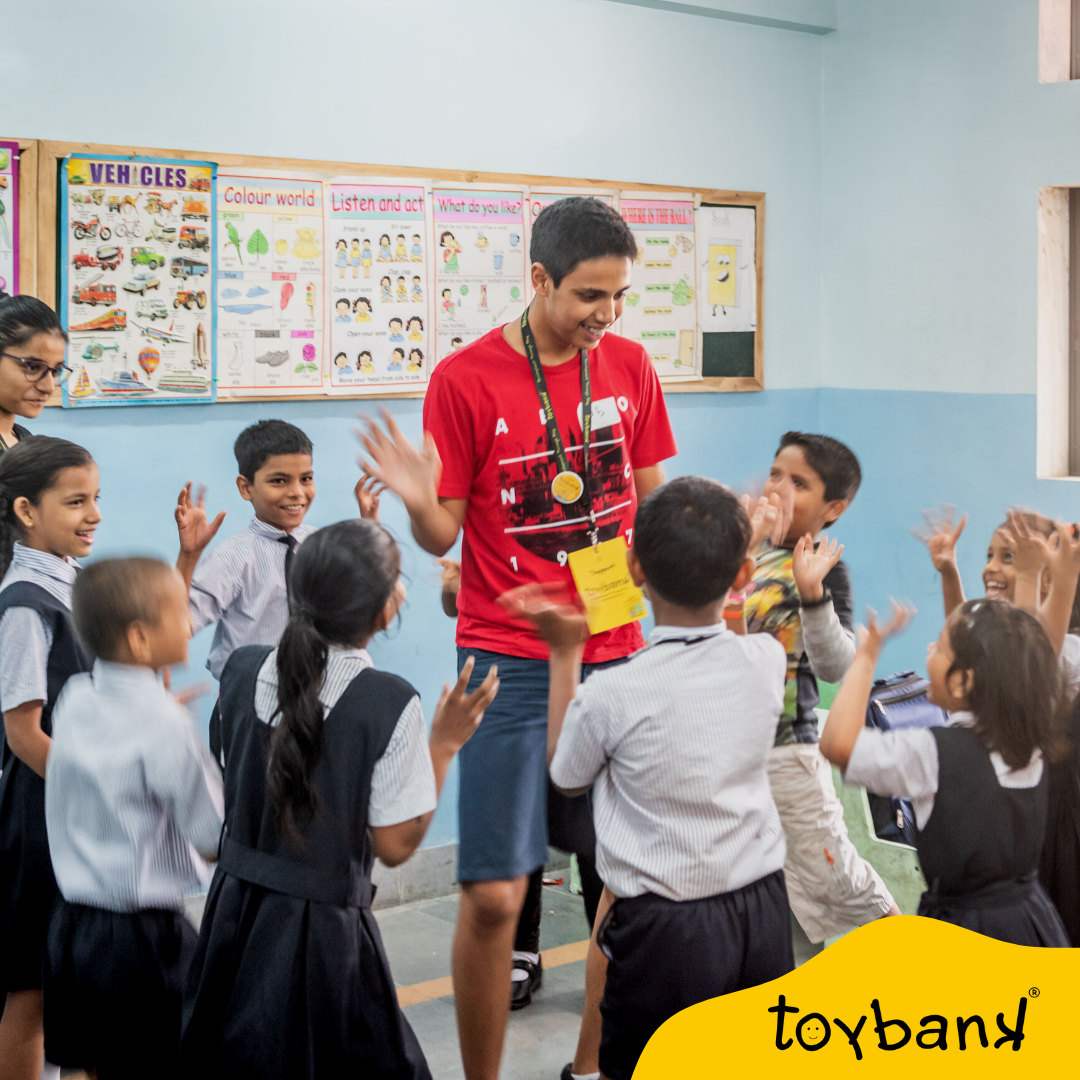
On the hot and humid day of 28th May, amidst the sweltering heat of Mumbai, a palpable sense of excitement filled the air as Team Toybank headed to celebrate World Play Day. The teachers from Toybank’s partner, SHARE, eagerly awaited the children at the community centre located inside the one of the serpentine bylanes of the Golibaar neighbourhood in Santacruz East, Mumbai. Soon, a teeming crowd of children surrounded Shaun Williams, the actor and drama coach, who was leading our curated World Play Day drama workshop.

After brief introductions, Shaun engaged them with questions ranging from pop culture to their favourite songs and games. And so began a round of fun vocal exercises through imitation of animal sounds and enactments of everyday activities like eating a sandwich or an ice cream. The short ice-breaker helped the children overcome their initial hesitation and dive into the ongoing playful engagements. As minutes passed, they could not wait to show their best ghost or lion impressions to Shaun.

The children made a circle as they sat on the floor. They intently focussed their attention as Shaun challenged them to get agile with a quick standing up and sitting down game. He first made a mixed group of all the children and divided the kids into two groups. Each group took turns and walked around the room as Shaun instructed them to double up their pace or lessen it by half the speed. While walking, they enacted eating a chocolate or a sandwich through their gestures. Sometimes they imagined that the floor was flowing with lava. Children were seen jumping around in glee and spontaneously acting out scenarios that evoked a range of emotions, like admiring a flower or reacting to a cockroach near their feet.

They were further divided into smaller groups of six and asked to use their bodies to showcase a flower, a car, a plane, or spell three letter words together. The kids surprised us all with their imaginative depictions. They worked as a team, strategically placing themselves, some pretending as if they were driving cars and bikes.

Even with the sun blazing, the children enthusiastically played in a large, open quadrangle. Shaun taught them many versions of Lock and Key, one remarkably had the catcher tap and ‘lock’’ as many players as they could, while the untapped ‘free’ players would try to ‘unlock’ their fellow mates by crawling through their feet. Another version had kids acting out a zombie apocalypse, where if touched, they would turn into zombies and start turning others one too. The kids loved enacting the dramatic metamorphosis into zombies.

These games invigorated the children, the sweltering heat did not matter, nor did the hot ground – there were only giggles, laughter and some zombie squeals that echoed. After this exhausting exercise, the children went back into the room, still laughing, and were instructed to hydrate and rest for five minutes. But even within those five minutes, they began playing games amongst themselves and the Toybank Team. Shaun then instructed them to lie down and guided them through calming exercises and meditation to soothe them while engaging their imagination.

After the kids seemed rested, they were again asked to sit in a circle and use a dupatta as anything but the dupatta. As an example, Shaun folded the dupatta and used it as a phone. Almost immediately the kids came up with ideas, using the piece of cloth as a steering wheel, a bike handle, headgear, as a skipping rope. Even more fascinatingly, they used it to make jackets which the children laughingly said that they learnt from ‘Five Minutes Craft’ on YouTube. Post this, a group of boys decided to present a play where they showed interactions with the police and a young boy caught speeding.

At the end of the session, this is what our workshop curator Shaun had to say: “I had a good time with the kids because I get to be a kid and be silly with them. There is freedom in being playful and fun and not caring (about what people think). This overall freedom adds to the positivity and the fun and makes one feel light. Play makes life a little more bearable and you become happy. You can be nice to other people that would make them happy and this chain reaction would cause everyone in the world, in theory, to be happy.”

It was great to see how the kids enjoyed the session and promised to not only come for more sessions but also get all their friends to join in too. This session highlighted the importance of physical play sessions. During this workshop, there were no electronics used showing the children that they can have fun and creatively express themselves through physical play sessions. The workshop made them think out of the box. In fact, the kids were sad as the session came to an end.

In today’s time when children’s favourite games are played mostly on phones, it is important to show how playing with each other without glaring at screens can be even more fun. This drama workshop helped them to develop their social and creative skills through play.

By Shanaya Dastoor

EVENTS

Football Tournament at Changtang, Ladakh

A scelerisque purus semper eget duis at tellus. Lobortis scelerisque fermentum dui faucibus in ornare quam viverra orci. Elementum sagittis vitae et leo duis ut diam quam nulla.

IMPORTANCE OF PLAY

5 games to build empathy through play

Tellus mauris a diam maecenas sed enim ut sem. Viverra accumsan in nisl nisi scelerisque eu ultrices vitae. Pellentesque eu tincidunt tortor aliquam.

IMPORTANCE OF PLAYPLAY2LEARN

Manipulating games into teachings: Workshop by Anu Advani

We are limited only by our own imagination. Who would have thought a game like Snakes & Ladders could be used to teach various other things to children?

Make way for Manipulative Training! Anu Advani — a teacher from Brooklyn, US — introduced Toybank’s Program Officers(POs) to unique ways of playing. During this cross-learning session, she shared ‘manipulative’ techniques she applied in her teaching and how she uses Play as a pedagogy. Alongside, the POs shared how Play is used in their profession as a Program Officer which reinforced the Power of Play for Anu.

Manipulation of Games
During the session, Anu asked the POs about how they would use Snakes & Ladders (a game ideally designed for age 8 and above) with all age groups pre-primary, primary and secondary. She encouraged them to think inventively and give their different inputs. Through this, the idea of manipulating an existing game to cater to the children being engaged was established.

Snakes & Ladder for the pre-primary section could be used to teach them two prime elements — numbers up to 20 and colors. For the primary section, Anu recommended using two dices instead of one and ask the children to add and subtract the two numbers to move ahead on the board. Similarly, for the secondary section, multiply or divide the numbers.

In the above example, the extra die added to the game was the manipulative part to make the game more interesting. In the same manner, discarded game coins, dice with colors, Tangram pieces and so on can be used to make any game interesting, engaging and curated to children of various developmental and learning levels.

Team Building Activity
Anu also conducted a Team Building activity where she provided straws, index cards, hand cream, tape and a pair of scissors to the teams and asked them to make the tallest structure that can stand without any support. Two minutes were given for the team to discuss strategies and approaches of constructing the tallest structure. Post which, 10 minutes were allocated to make it.

Each team had a unique solution, no two groups made the same thing. There was a clear team effort.

What next?
After a fun learning session, Anu promised to come back to India for another workshop, with games relevant to the children in India through which she will demonstrate the magic of manipulation. She also suggested that each PO identifies two games and figures ways to use it for all sections of children and try to find manipulatives to enhance them. We can’t wait for the session, which will be a powerhouse of learning!

IMPORTANCE OF PLAYPLAY2LEARN

Play away. No preparations, no supplies needed

On the off chance that you have neither the board games nor playing cards at home, here are some indoor games you can play that need no prep, no supplies and little to no materials. These simple yet fun games can be played with things lying around at home.

Charades
This is an oldie but a goodie! It never gets boring. We’re sure you know the drill. In case you don’t, form teams. Whisper a movie or series name to a player from the opposite team. As they enact it out, their team guesses the film. With the influx of series on OTT platforms, you won’t be struggling for names.

Dancing Chain
Bust a move and become a choreographer. Stand in a circle and play music. Choose one person to start the game and ask them to make a dance move. A simple action like throwing your hands in the hair, bobbing your head, etc. Everyone imitates the move. The next person then imitates this move and adds their own. Keep at it till the song plays.

Guess the Sound
If you have little kids, this would be easy enough for them to play. Gather things lying around. Blindfold the player, make a sound with the object(s) and ask the child to guess what the object is. Spoon or/and pot (bang them together), stapler (staple a paper), wooden blocks and so on.

Freeze!
Another game that children, especially young kids, enjoy but can be played by anyone. The only thing you need for this is music. Play your child’s favorite song and ask them to dance. Stop the song and ask them to freeze in whatever position they are — with a leg up in the air, hands up, etc. Add another element and ask them to freeze in a specific position, like an animal or a shape.

Drama Queen
This is like Charades. Only more fun. You need to enact an entire scenario as the other player guesses what’s happening. Divide yourselves into teams and write down scenarios on pieces of papers — shopping at a supermarket but forgetting the wallet at home, your car was stolen, waking up in the morning and finding out you’re a dog… as crazy as you can get. Exchange the chits with the opponents and pick out a paper to enact.

EVENTSIMPORTANCE OF PLAYPLAY2LEARN

Joining the dots of Play at Kala Ghoda Arts Festival 2020

Toybank’s workshop was dotted with fun activities and games at the Kala Ghoda Arts Festival 2020. As we promoted the importance of play, sticking to this year’s theme of ‘Dots’, children indulged in ‘Join the Dots’, card making and ‘Dots and Boxes’. Preparations for the event jump back a few weeks, as team Toybank created activities that would be enjoyable, give the kids something to take back home and lead to learning something new.

Our first activity was Joining the Dots to complete a picture and filling it in with crepe paper pellets for color. Each child spent time selecting shades to use and patterns to design. The arena was filled with laughter and squeals. Little Vanshika pointed to her design and exclaimed, “Me and my friend that I play with!”

One of the upshots of play is self-expression and confidence to share your feelings. The second part of this activity was making a card and writing a letter to the person we enjoy playing with. While most tots wrote to their friends from school or parents, a girl wrote a letter to her pets for playing with her and another to herself because she likes to play alone. Turns out, this activity served a deeper purpose when one of the kids wrote a letter to say sorry to her ‘bestest’ friend — and favorite person to play hide-and-seek with — as they had fought. This proves that play evokes accepting one’s mistake. We do hope they’ve made up and start playing together again.

Here’s also a shout-out to the kiddo who chose all shades of pink to color his drawing! We love gender stereotypes being shattered and play being the medium. But we were thrilled to learn that the colour was an unusual choice only for us and not him, as his favourite hues are red and pink.

The children also played ‘Dots and Boxes’, with 4 children in each group. Interestingly, kids reacted differently to the same game. Play invoked a sense of healthy competition as well as fostering a bond where you allow a complete stranger to win so that you are better friends at the end of the experience.

Not just the children but we also made merry. The little ones kept us pumped up with their mad energies. So much so that one kid didn’t want to leave because he was having so much fun!