



Contacts

92 Bowery St., NY 10013

thepascal@mail.com

+1 800 123 456 789

Tag: teachers

EVENTSIMPORTANCE OF PLAYPOLICY

Protect Play, Protect Childhood — District-Level Roundtable, Ahilyanagar

12  years of on-ground work reflected in a landmark decision by the Ahilyanagar Zilla Parishad: all schools across the district began the new academic year with an Hour of Play—and why this marks an important milestone for play-integrated education in Maharashtra.

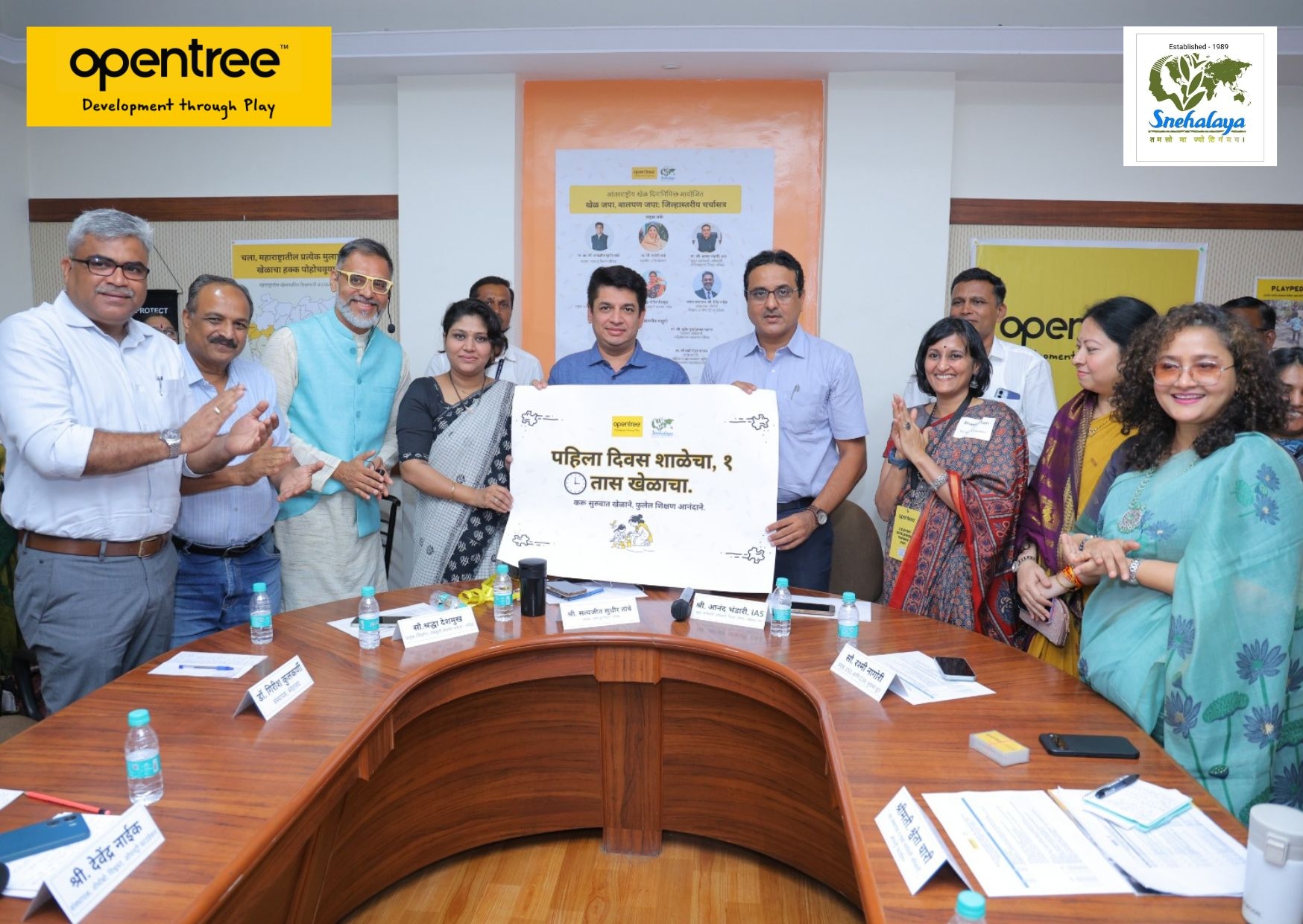
On  11 June 2026, the International Day of Play, we convened  Protect Play, Protect Childhood, a district-level roundtable with our partner, Snehalaya at the Ahilyanagar Gymkhana. The conversation brought together government leaders, educators, civil society organisations and CSR partners around a shared question: 

What would it take for every child to experience play as part of school?
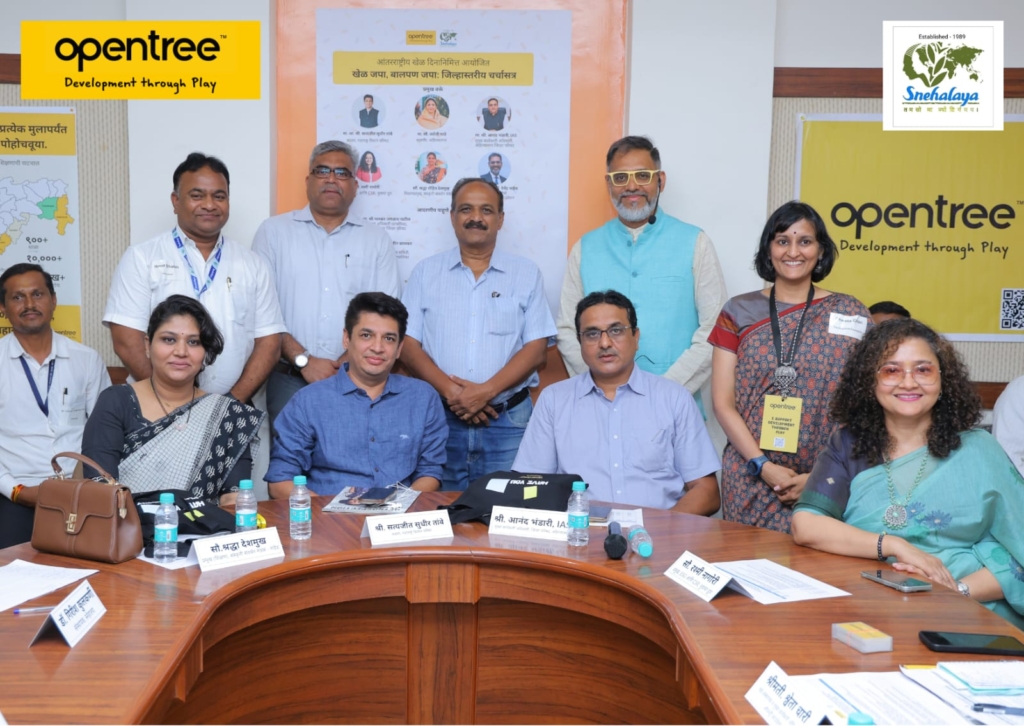
The room included Shri. Anand Bhandari, IAS, CEO, Ahilyanagar Zilla Parishad, Shri. Satyajeet Sudhir Tambe (Member of Legislative Council, Maharashtra), Ms. Rashmi Nagori (Head, ESG and CSR, Nuvama Group), Mrs. Shraddha Deshmukh and Mr. Rohit Deshmukh (Sanskriti Samvardhan Mandal, Nanded), Ms Shweta Chari (Co-founder and CEO, TOF), Dr. Girish Kulkarni (Founder, Snehalaya), and Mr. Devendra Naik (Founder, NoMoBo, and Trustee, TOF), who moderated the discussion.

Rather than focusing on a single programme or intervention, the roundtable built the case for play-based learning from four complementary directions: what children need to thrive, how rapidly childhood is changing, what schools are meant to offer beyond academics, and what it takes for change to last inside public systems.

The discussion culminated in the declaration of a district-wide initiative by Shri Anand Bhandari, IAS, CEO, Zilla Parishad, Ahilyanagar.

पहिला दिवस शाळेचा, एक तास खेळाचा. (Day 1 of school, 1 Hour of Play)
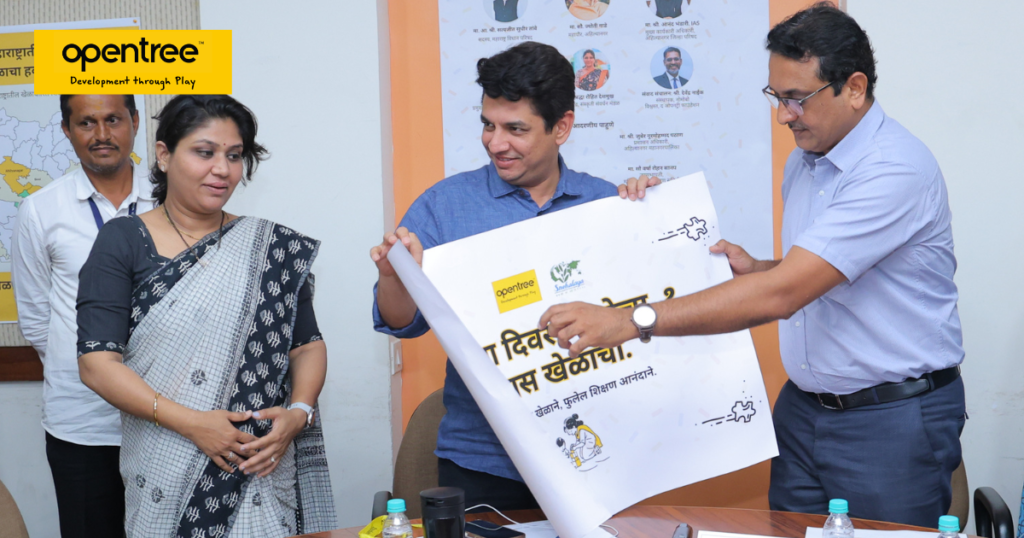
With that announcement, every government school in Ahilyanagar was mandated to celebrate the new academic year with an hour of play.

On 15 June 2026, children across 1000+ Zilla Parishad schools in Ahilyanagar were welcomed to school with a joyful hour of Play, a day they will cherish for a long time to come. Principals, teachers and school staff enthusiastically planned games and activities, decorating classrooms with posters and banners. 
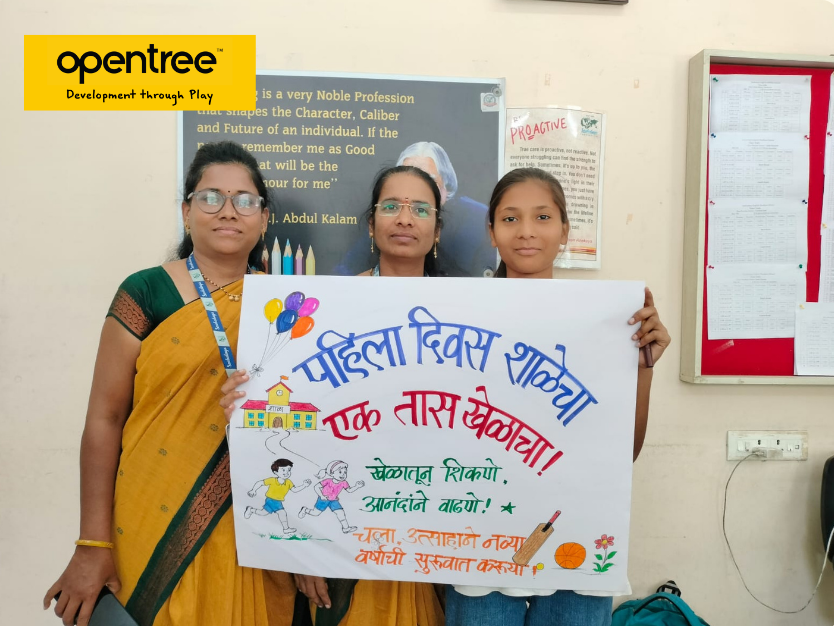
TOF’s team collaborated with all Block Education and Block Development Officers across all 14 blocks to support implementation, drawing on more than 350 free activities from Playpedia.in, TOF’s open-source library of low-resource play ideas. Following the success of the initiative, Shri Bhandari also directed that schools across the district undergo Playpedia sensitisation sessions led by TOF.

For The Opentree Foundation (TOF), the roundtable and the पहिला दिवस शाळेचा, एक तास खेळाचा initiative (Day 1 of school, 1 Hour of Play) represent a powerful, significant step in its journey towards realising the Right to Play in India. This was a historic moment –  the first time a government institution in Maharashtra  had taken ownership towards integrating Play-based learning into schools at a scale — the systemic shift TOF has been working towards for over two decades, reflected in the room through voices across the system.

The roundtable began with a welcome by children from Snehalaya’s Balbhavans, setting the tone for a discussion centred on children’s voices and experiences.

Shweta Chari, Co-founder and CEO of TOF, argued that play is not an extracurricular activity, but the foundation on which children develop the creativity, empathy and problem-solving skills needed to become thriving adults as well as contributing citizens. 

Shri. Satyajeet Sudhir Tambe reflected on the rapidly changing nature of childhood, emphasising that schools must intentionally nurture these abilities, while Shri Anand Bhandari shared his vision of schools as places of joy, creativity and confidence.

Shri Satyajeet Sudhir Tambe spoke about the speed at which childhood is changing, arguing that schools must evolve just as quickly.

“Any muscle you don’t use stops working. If we don’t give children regular opportunities to use their cognitive and creative skills, those skills will disappear.”

-Shri. Satyajeet Sudhir Tambe

“Schools should be the heart of a child’s happiness—spaces of joy, creativity and confidence, where every child grows up with a teacher they remember all their life.”

– Shri. Anand Bhandari, IAS, CEO, Ahilyanagar Zilla Parishad


Rashmi Nagori, Head of ESG and CSR at Nuvama Group, challenged the false divide between play and education. She called for play to be recognised as an essential investment in children’s learning and development, reminding the room that “Play is learning.”

Bringing these ideas into practice, TOF’s long-standing partners, Snehalaya and Sanskriti Samvardhan Mandal, shared how Play2Learn had transformed classrooms by replacing fear with trust, strengthening teacher-child relationships, and helping children engage more confidently in learning. As Dr. Girish Kulkarni, Founder of Snehalaya, reflected, “Nothing we tried worked until Play reached these children—it was as though Play helped us find a way to connect with them.”

The roundtable was also the first ever felicitation of Ahilyanagar’s Play champions and Leaders – teachers and principals from our  partner schools who have embedded Play-based learning in classrooms across Ahilyanagar.

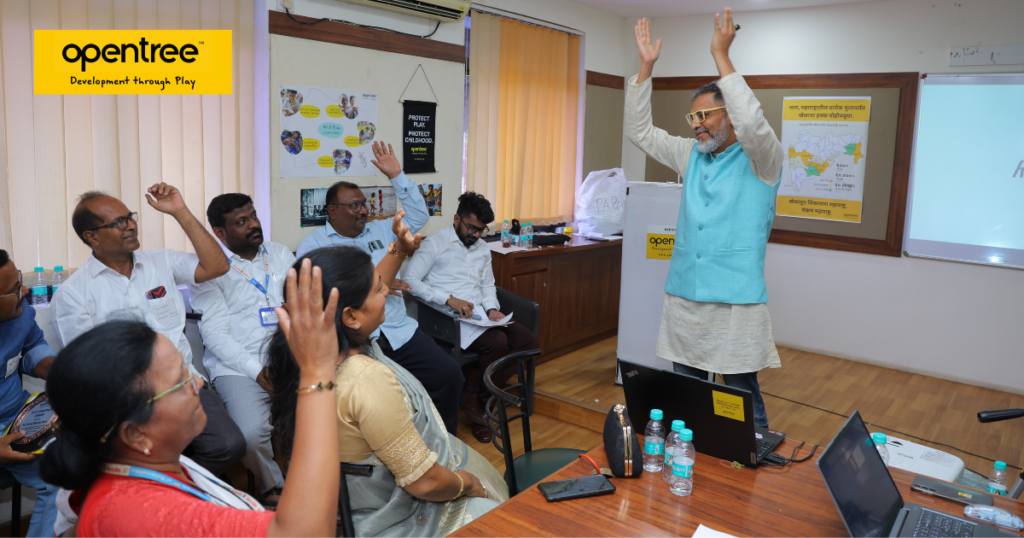
The session concluded with an interactive Play reflection led by TOF Trustee Devendra Naik, inviting participants to collectively envision the future of Play-based learning in Maharashtra.
The roundtable also opened new systemic pathways at a district and state level:

  • Expanding the Play2Learn programme  Municipal Council schools in Sangamner
  • Embedding play-based learning into the district’s School Development Plans
  • Introducing TOF’s School Readiness Play Programme into Anganwadis and expanding Play2Learn into secondary schools in the district
  • Deepening partnerships with Gram Panchayats and School Management Committees.
  • Possible alignment with  Maharashtra’s proposed Future Generations Wellbeing Bill with evidence on play and child wellbeing.

Each of these pathways represents an opportunity to move closer to institutionalising Play-based learning in government systems, and towards making Maharashtra the first state in India to have a government-adopted, scalable model for Play-integrated schools. 

For over two decades, The Opentree Foundation has worked to demonstrate that Play is fundamental to how children learn, grow and thrive. The roundtable and declaration in Ahilyanagar represent a district where years of evidence, partnerships and trust have translated into system-wide action.

The vision has always been larger than a single programme or district. It is to build a future where every child in India, regardless of where they are born or which school they attend, experience learning that allows them to be themselves, feel joyful, curious, excited, and prepares them to thrive as adults in their future. 

Ahilyanagar has shown that this future is possible. Now, the work begins to make it the norm, across Maharashtra, and India. 

EVENTSIMPORTANCE OF PLAYPLAY SUMMITPLAY2LEARN

Play Summit 2025: Finding Play

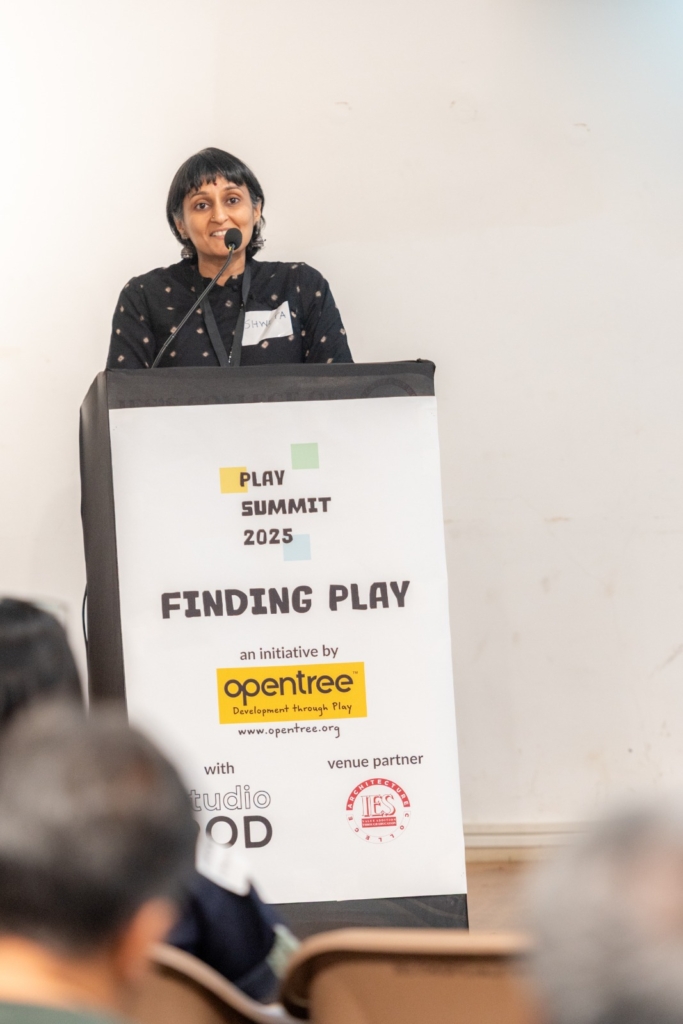
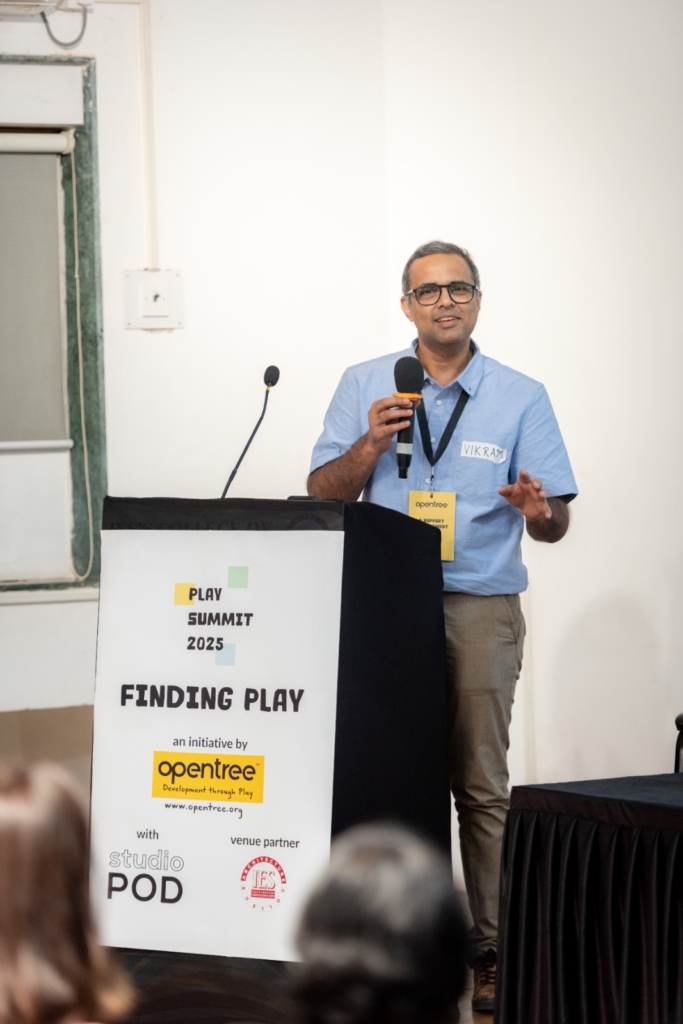
Why the Play Summit Matters: A Note from Our Co-Founders, Shweta Chari and Vikram Nerurkar

The Opentree Foundation’s Play Summit was born from a question that has followed us for over two decades: what happens when Play is kept out of children’s lives — and what becomes possible when we choose to bring it back in?

For more than 21 years, our work at The Opentree Foundation has taken us into 900+ classrooms, schools, and communities, impacting 1 million+children across 12 districts of Maharashtra. Again and again, we have seen how deeply children need Play — not as a reward or a break, but as the way they make sense of the world, build relationships, learn with joy, and discover their own agency.

We have also seen how easily Play disappears when systems prioritise efficiency over curiosity, control over trust, and outcomes over experience. Over time, we have come to understand this not as a failure of intent, but as a failure of design. 

This year’s Play Summit, Finding Play, was our attempt to bring this idea to life. Along with our collaborators at StudioPOD, we wanted participants to pause and notice where Play already exists, often in overlooked corners. To name where it has been constrained by design choices and power structures. 

Play Summit 2025 brought together more than 300 people – children, educators, students designers, funders, and system leaders to build shared language and responsibility around Play, and to ask — honestly and collectively — what does it take to create conditions where Play can thrive with intention, dignity, and equity?

Designing for Play: A Day of Ideas and Action

Play Summit 2025 unfolded as a day where thinking about Play, and experiencing it was woven into every minute. 

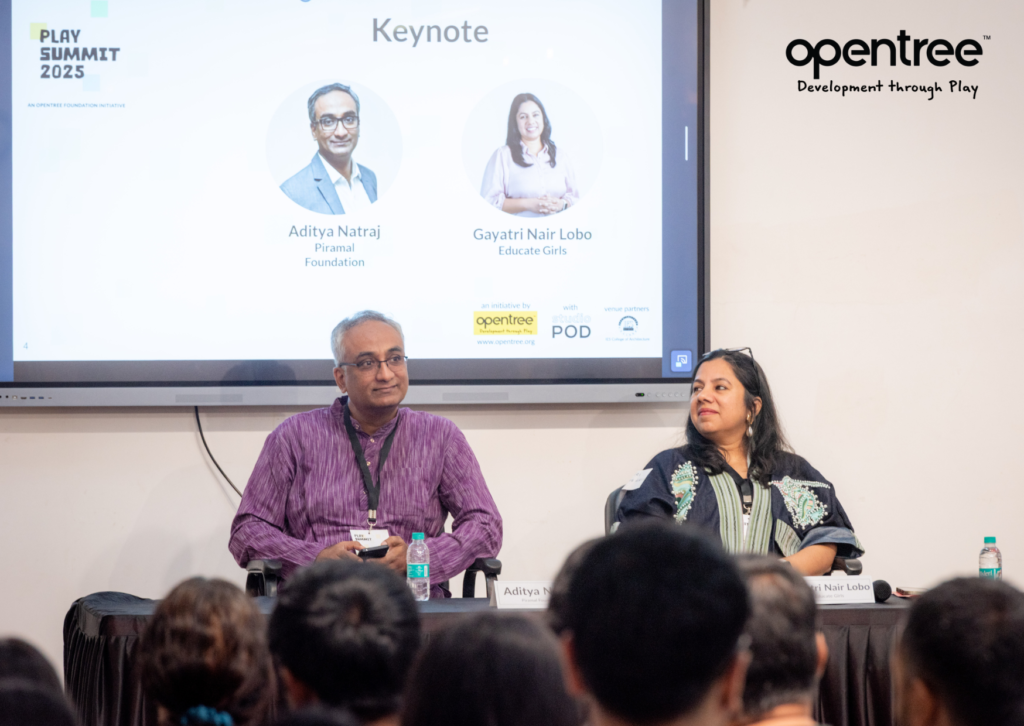
The opening keynotes set the tone. Aditya Natraj, CEO of the Piramal Foundation, reflected on the role Play can play in building learning environments rooted in dignity, leadership, and possibility. Gayatri Nair Lobo, CEO of Educate Girls, the first Indian organisation to receive the 2025 Ramon Magsaysay Award, grounded the conversation in equity, asking what children across contexts truly need to thrive as confident, empathetic human beings.

Together, they positioned Play not as enrichment, but as essential infrastructure.

Alongside the keynotes, we also launched Playpedia.in — TOF’s open-source repository of Play ideas. Co-created by teachers, facilitators, and children across contexts, Playpedia brings together practices rooted in everyday realities, making Play possible and accessible everywhere.

A powerful shift followed when children from TOF’s partner schools in Ahilyanagar and Mumbai took the stage as Play Experts. Speaking from their lived experiences in classrooms, streets, and neighbourhoods, they made one thing clear: children are not passive recipients of design decisions. They are active creators of Play, even when systems make it difficult.

The Summit created space not just to talk about Play, but to practice it.


 Across the day, conversations expanded to explore Play through multiple lenses.

Health & Play examined why Play is central to holistic wellbeing, and how the spaces we inhabit — schools, playgrounds, neighbourhoods — can nurture connection, comfort, and resilience.

Collective Action for Play highlighted the importance of shared vision and collaboration, especially if Play is to become a real priority within India’s development agenda. The message was consistent: change does not happen in isolation, and Play is no different.

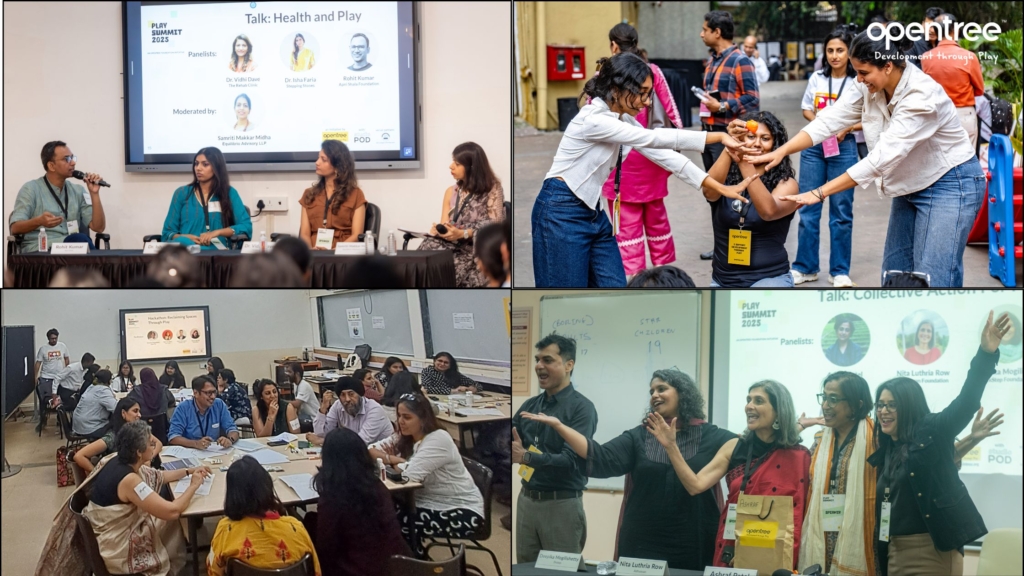
Through workshops and hackathons, participants reimagined Play in the everyday — as simple, replicable practices; as everyday spaces redesigned for Playfulness; and as ordinary objects transformed to spark joy, curiosity, and connection, making Play tangible, practical, and grounded in real-world contexts.

Clockwise from top left: Talk: Health & Play, Participants at the Loose Parts workshop, Talk: Collective Action for Play, Participants at the Hackathon on Reclaiming Spaces through Play
Building the Case for Play

A pivotal moment in the day was the launch of Play in Practice, The Opentree Foundation’s latest Play research.

Rooted in over two decades of TOF’s work, the study examines how Play shows up in children’s everyday lives — what enables it, what constrains it, and what this means for how we design systems around children.

For years, one challenge has surfaced again and again in our work: the absence of strong, locally grounded evidence that reflects how Play actually unfolds in Indian realities — and why it matters. Without this evidence, Play continues to be undervalued in policy, planning, and practice.

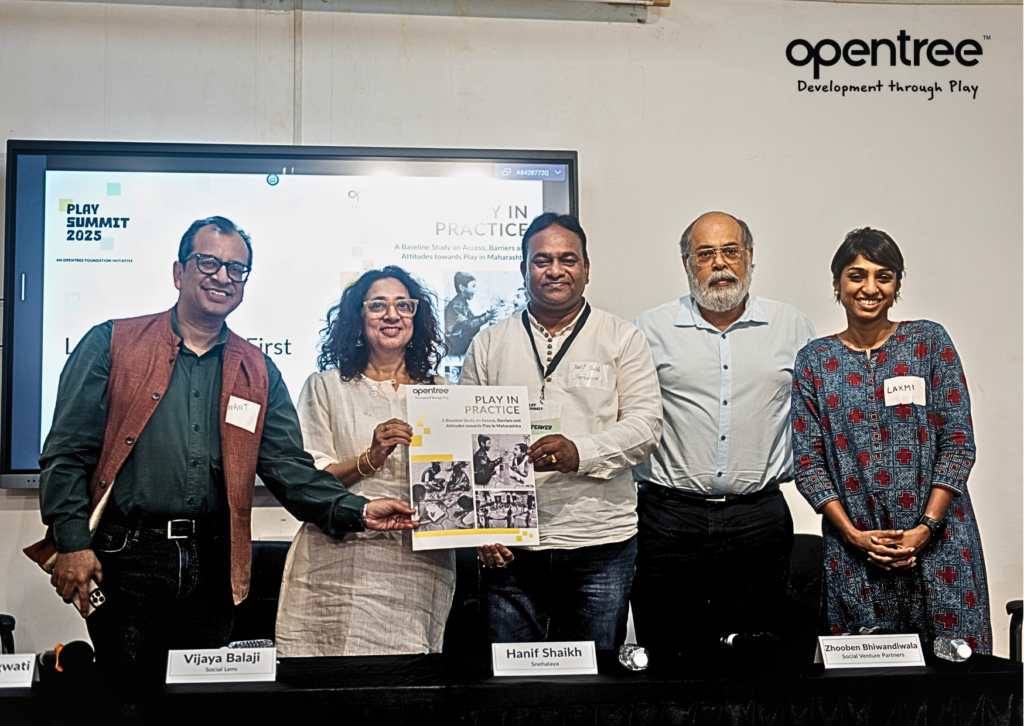
L-R: Anant Bhagwati (Bridgespan), Vijaya Balaji (Social Lens), Hanif Shaikh (Snehalaya), and Zhooben Bhiwandiwala (Social Venture Partners) launch the Play in Practice Research along with Laxmi Nair, Director, Programme Development, TOF

 The research was launched by Vijaya Balaji (Social Lens)Anant Bhagwati (Bridgespan)Hanif Shaikh (Snehalaya), and Zhooben Bhiwandiwala (Social Venture Partners) — leaders who deeply understand both the evidence gap and its implications.

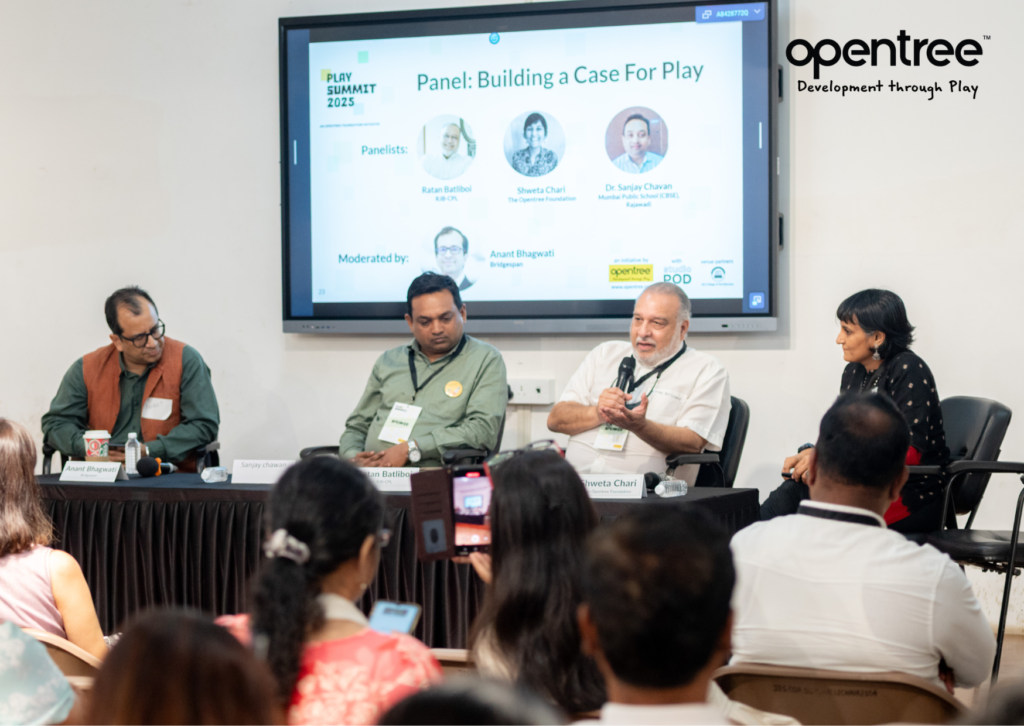
This was followed by a panel discussion, Building a Case for Play, featuring Shweta ChariRatan Batliboi, and Dr. Sanjay Chavan, Principal of Rajawadi MPS School. Each reflected on what transformative Play looks like, and how it can be made accessible within real systems.

L-R: Anant Bhagwati (Bridgespan) moderates a panel 'Building A Case for Play' with Dr. Sanjay Chavan, principal, Rajawadi Mumbai Public School (CBSE), Ratan Batliboi, acclaimed architect, and Shweta Chari, Co-founder & CEO, The Opentree Foundation


Hearing Dr. Chavan speak about the impact of Play on his students, teachers, and school community was a powerful testament to what long-term, trust-based partnerships can make possible.

The panel returned to a central truth: evidence matters, but so do narrative, collaboration, and the courage to challenge long-held assumptions. If Play is to shape the future of childhood and community, it must move from the margins to the centre of how decisions are made.

Experiencing Play and Its Many Possibilities

Alongside these conversations, the Summit was also a space to experience Play in all its richness.

Courtyards filled with blocks, loose parts, and everyday objects became sites of invention and imagination. StudioPOD’s POD Parks invited people to pause, connect, and Play. In the children’s library and Playpedia spaces, stories and games travelled across generations, with adults and children playing side by side.

Exhibits showcased children’s drawings of Play in their schools and cities, alongside designers’ visions of joyful, child-friendly spaces — offering glimpses of what could be possible when Play leads the way.

Finding Play, Designing Forward
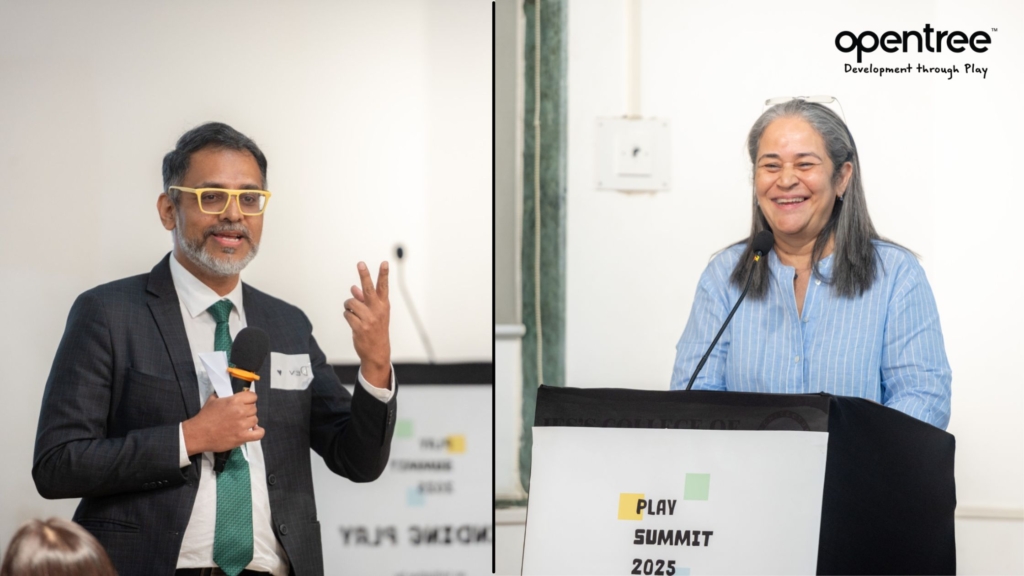
TOF's trustee, Devendra Naik (NoMoBo), and advisor Ingrid Srinath (Resource Alliance) brought Play Summit 2025 to a close, with powerful messages for Play to become a collective priority.

The day closed with a guided Play reflection by Devendra Naik, inviting participants to experience Play not as nostalgia, but as something deeply connected to how we learn, connect, and make meaning at any age.

In her closing note, Ingrid Srinath reflected on the day and on TOF’s journey, reminding everyone that sustaining Play requires commitment beyond moments like these.

Play Summit 2025 offered shared language, new relationships, and renewed responsibility — for each of us, as educators, practitioners, funders, policymakers, and caregivers.

Because Play does not survive by accident.
It survives when we choose to design for it.

Click here to read

IMPORTANCE OF PLAYPLAY2LEARN

Mothers, play and participation: A story from rural Maharashtra

This competition was a reminder to not let play disappear from our lives.

Parents play a pivotal role in children’s development. Yet, not many parents have the leisure of playing, in particular Mothers, given the burden of domestic responsibilities and gendered social norms.

However, play is and should be for everyone. From improving parent-child and teacher-student bonds, creating fear-free, safe spaces for conversation to bringing respite from the stress of everyday life, there are endless benefits of play for adults and children. Earlier in March, the United Nations declared June 11 as the International Day of Play in efforts to preserve, promote, and prioritise play so that all people, especially children, can reap the rewards and thrive to their full potential. 

To celebrate this, on June 20, a school in Sagroli village, near Maharashtra’s Nanded district decided to use play to create a safe, joyful and empowering space for Mothers, who are often hesitant to participate in parent-teacher meetings. The teachers of the primary school invited their students’ mothers to a day of play. 


The Opentree Foundation’s flagship project, Toybank – Development through Play, has had a play centre at this school for years, as part of our long-standing partnership with the Sanskriti Samvardhan Mandal (SSM), an organisation dedicated to the holistic development of rural communities through impactful interventions in Education, Skill & Livelihood, Agriculture, and Environmental Conservation.

The school organised a competition for Mothers using some of the games from Toybank’s play programmes. While some Mothers enjoyed competing with one another to see who would complete the puzzles first, the others used their creativity and imagination to build different things using blocks. There was a sense of excitement, curiosity, joy and community, as these mothers played with child-like excitement, participated with enthusiasm, and for a few hours, forgot about chores and responsibilities.

The day ended with all Mothers receiving a sapling as a prize for their enthusiasm and participation, and a request to the school’s parent-teacher committee to organise such play sessions regularly, for both mothers and fathers. As one of the parents put it, “this competition was a reminder to not let play disappear from our lives”, which truly underscores just how important play is in this world, for both adults and children. 

Experiences like these are a powerful testimony to the transformative Power of Play.  When educators and parents are empowered with play, they use it to make this world a better place for themselves, and for children, something we have strived to do for the past 20 years.