



Protect Play, Protect Childhood — District-Level Roundtable, Ahilyanagar
12 years of on-ground work reflected in a landmark decision by the Ahilyanagar Zilla Parishad: all schools across the district began the new academic year with an Hour of Play—and why this marks an important milestone for play-integrated education in Maharashtra.
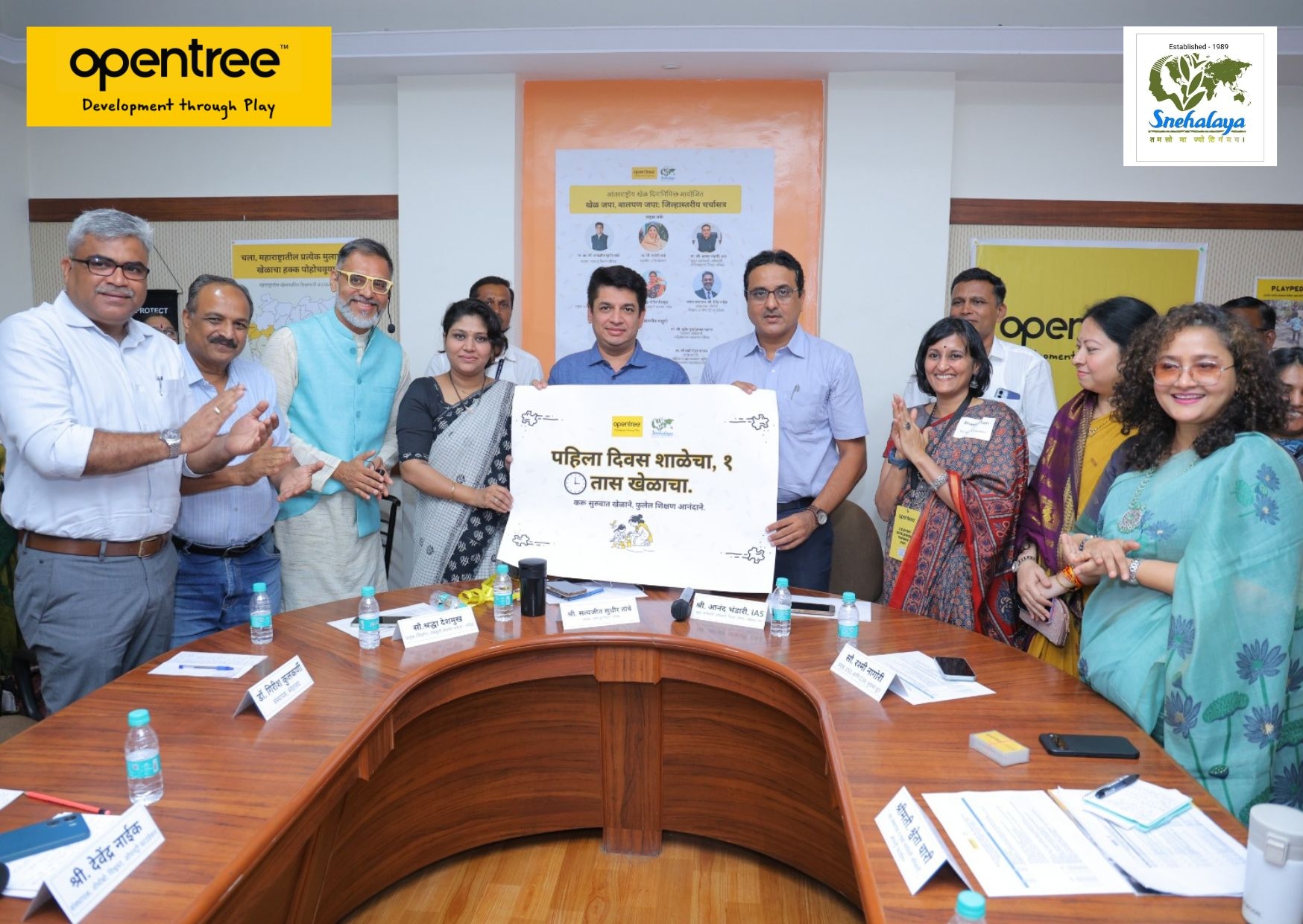
On 11 June 2026, the International Day of Play, we convened Protect Play, Protect Childhood, a district-level roundtable with our partner, Snehalaya at the Ahilyanagar Gymkhana. The conversation brought together government leaders, educators, civil society organisations and CSR partners around a shared question:
What would it take for every child to experience play as part of school?
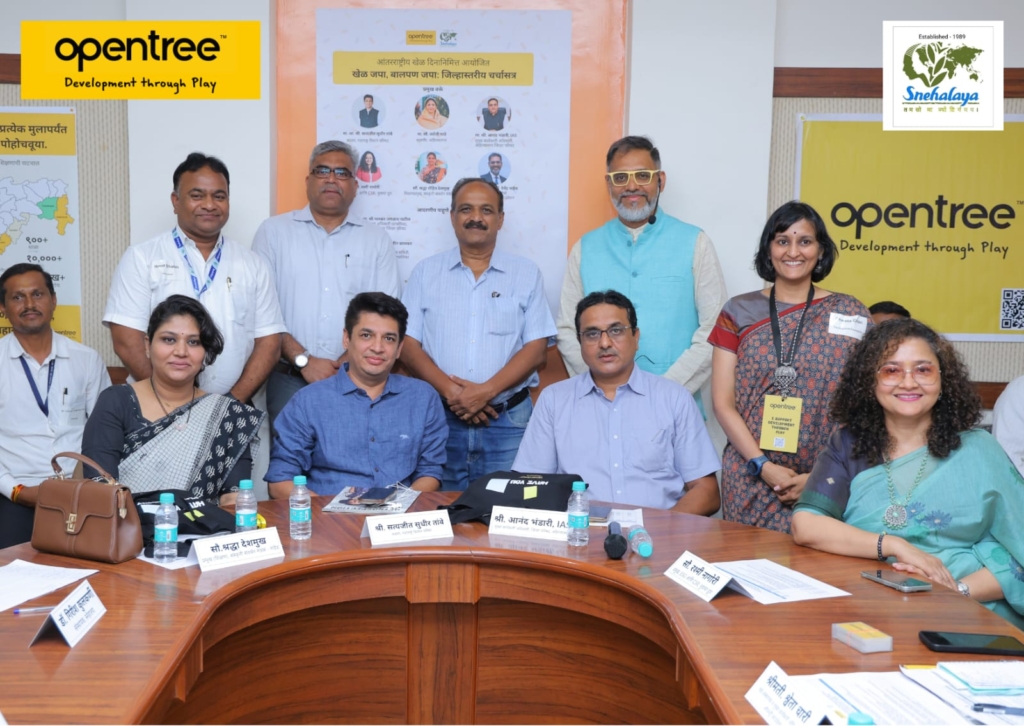
The room included Shri. Anand Bhandari, IAS, CEO, Ahilyanagar Zilla Parishad, Shri. Satyajeet Sudhir Tambe (Member of Legislative Council, Maharashtra), Ms. Rashmi Nagori (Head, ESG and CSR, Nuvama Group), Mrs. Shraddha Deshmukh and Mr. Rohit Deshmukh (Sanskriti Samvardhan Mandal, Nanded), Ms Shweta Chari (Co-founder and CEO, TOF), Dr. Girish Kulkarni (Founder, Snehalaya), and Mr. Devendra Naik (Founder, NoMoBo, and Trustee, TOF), who moderated the discussion.
Rather than focusing on a single programme or intervention, the roundtable built the case for play-based learning from four complementary directions: what children need to thrive, how rapidly childhood is changing, what schools are meant to offer beyond academics, and what it takes for change to last inside public systems.
The discussion culminated in the declaration of a district-wide initiative by Shri Anand Bhandari, IAS, CEO, Zilla Parishad, Ahilyanagar.
पहिला दिवस शाळेचा, एक तास खेळाचा. (Day 1 of school, 1 Hour of Play)
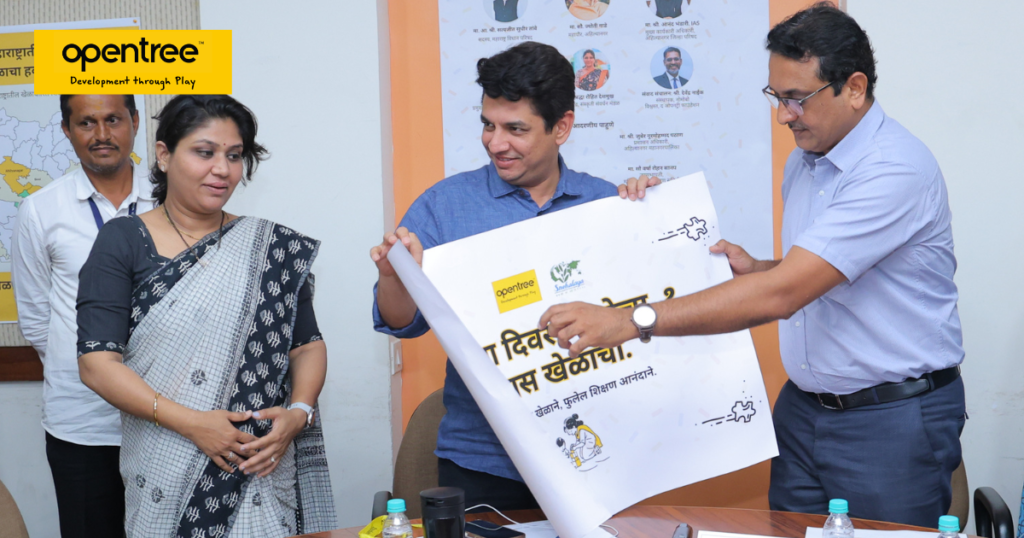
With that announcement, every government school in Ahilyanagar was mandated to celebrate the new academic year with an hour of play.
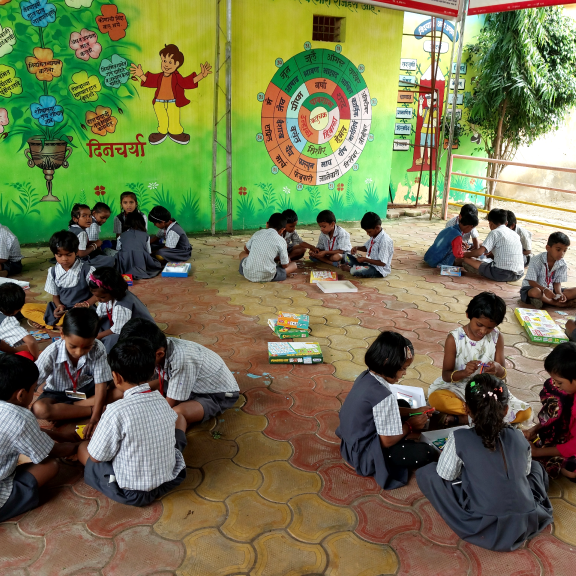
On 15 June 2026, children across 1000+ Zilla Parishad schools in Ahilyanagar were welcomed to school with a joyful hour of Play, a day they will cherish for a long time to come. Principals, teachers and school staff enthusiastically planned games and activities, decorating classrooms with posters and banners.
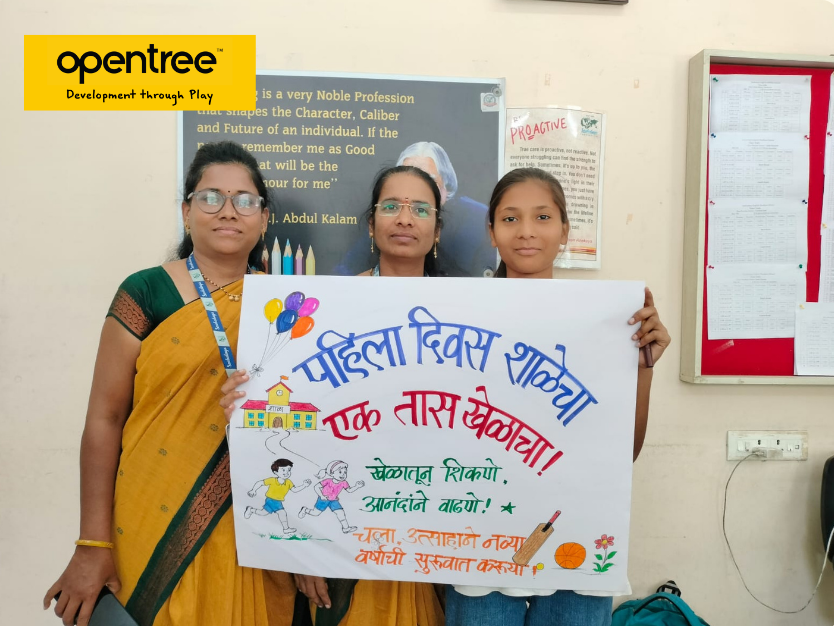
TOF’s team collaborated with all Block Education and Block Development Officers across all 14 blocks to support implementation, drawing on more than 350 free activities from Playpedia.in, TOF’s open-source library of low-resource play ideas. Following the success of the initiative, Shri Bhandari also directed that schools across the district undergo Playpedia sensitisation sessions led by TOF.
For The Opentree Foundation (TOF), the roundtable and the पहिला दिवस शाळेचा, एक तास खेळाचा initiative (Day 1 of school, 1 Hour of Play) represent a powerful, significant step in its journey towards realising the Right to Play in India. This was a historic moment – the first time a government institution in Maharashtra had taken ownership towards integrating Play-based learning into schools at a scale — the systemic shift TOF has been working towards for over two decades, reflected in the room through voices across the system.
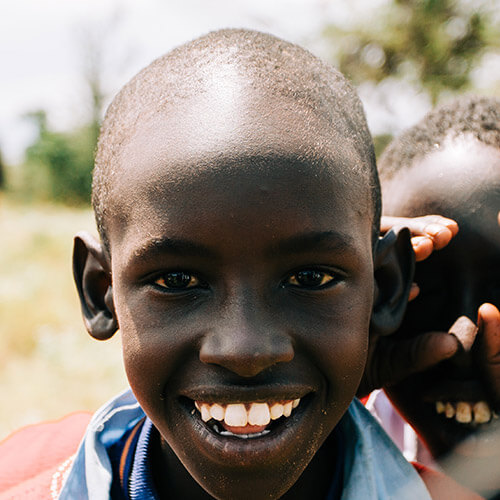
The roundtable began with a welcome by children from Snehalaya’s Balbhavans, setting the tone for a discussion centred on children’s voices and experiences.
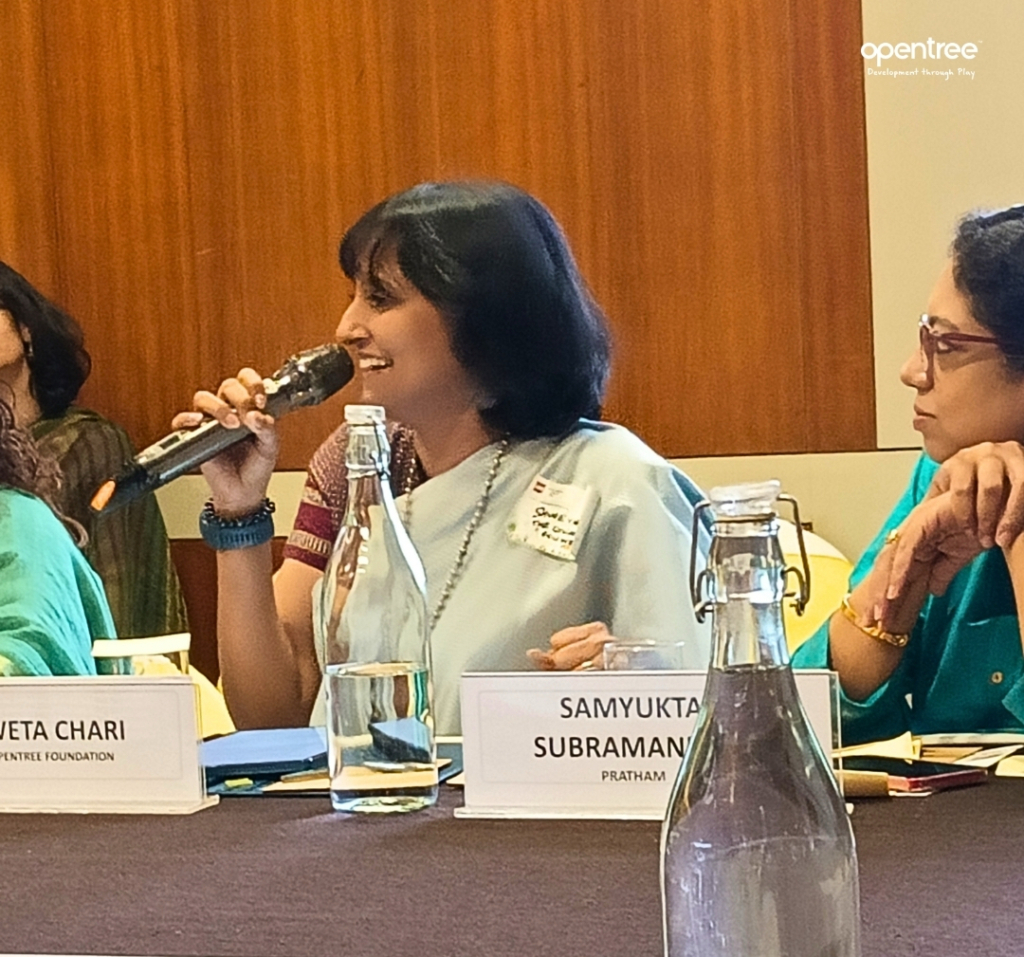
Shweta Chari, Co-founder and CEO of TOF, argued that play is not an extracurricular activity, but the foundation on which children develop the creativity, empathy and problem-solving skills needed to become thriving adults as well as contributing citizens.
Shri. Satyajeet Sudhir Tambe reflected on the rapidly changing nature of childhood, emphasising that schools must intentionally nurture these abilities, while Shri Anand Bhandari shared his vision of schools as places of joy, creativity and confidence.
Shri Satyajeet Sudhir Tambe spoke about the speed at which childhood is changing, arguing that schools must evolve just as quickly.
“Any muscle you don’t use stops working. If we don’t give children regular opportunities to use their cognitive and creative skills, those skills will disappear.”
-Shri. Satyajeet Sudhir Tambe
“Schools should be the heart of a child’s happiness—spaces of joy, creativity and confidence, where every child grows up with a teacher they remember all their life.”
– Shri. Anand Bhandari, IAS, CEO, Ahilyanagar Zilla Parishad
Rashmi Nagori, Head of ESG and CSR at Nuvama Group, challenged the false divide between play and education. She called for play to be recognised as an essential investment in children’s learning and development, reminding the room that “Play is learning.”
Bringing these ideas into practice, TOF’s long-standing partners, Snehalaya and Sanskriti Samvardhan Mandal, shared how Play2Learn had transformed classrooms by replacing fear with trust, strengthening teacher-child relationships, and helping children engage more confidently in learning. As Dr. Girish Kulkarni, Founder of Snehalaya, reflected, “Nothing we tried worked until Play reached these children—it was as though Play helped us find a way to connect with them.”
The roundtable was also the first ever felicitation of Ahilyanagar’s Play champions and Leaders – teachers and principals from our partner schools who have embedded Play-based learning in classrooms across Ahilyanagar.
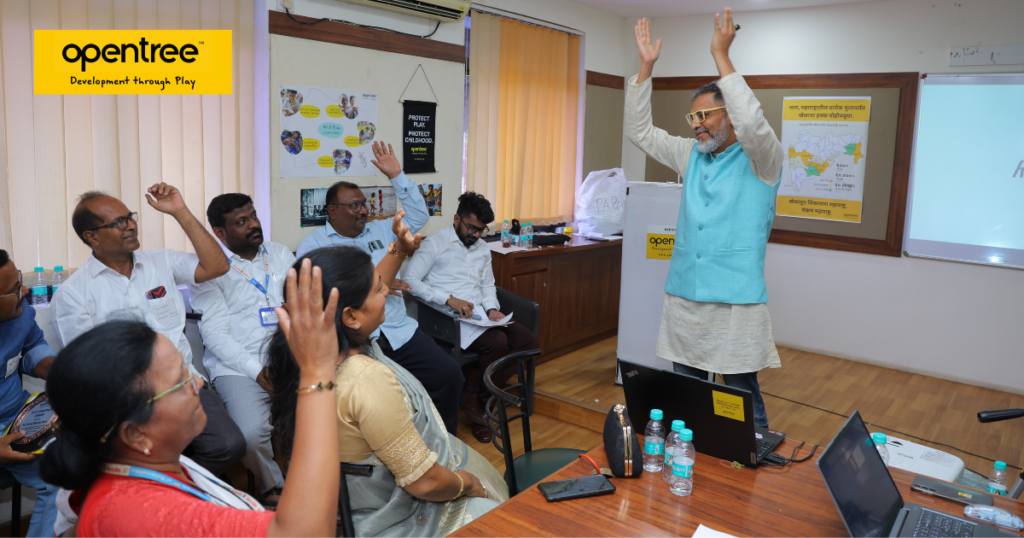
The session concluded with an interactive Play reflection led by TOF Trustee Devendra Naik, inviting participants to collectively envision the future of Play-based learning in Maharashtra.
The roundtable also opened new systemic pathways at a district and state level:
- Expanding the Play2Learn programme Municipal Council schools in Sangamner
- Embedding play-based learning into the district’s School Development Plans
- Introducing TOF’s School Readiness Play Programme into Anganwadis and expanding Play2Learn into secondary schools in the district
- Deepening partnerships with Gram Panchayats and School Management Committees.
- Possible alignment with Maharashtra’s proposed Future Generations Wellbeing Bill with evidence on play and child wellbeing.
Each of these pathways represents an opportunity to move closer to institutionalising Play-based learning in government systems, and towards making Maharashtra the first state in India to have a government-adopted, scalable model for Play-integrated schools.
For over two decades, The Opentree Foundation has worked to demonstrate that Play is fundamental to how children learn, grow and thrive. The roundtable and declaration in Ahilyanagar represent a district where years of evidence, partnerships and trust have translated into system-wide action.
The vision has always been larger than a single programme or district. It is to build a future where every child in India, regardless of where they are born or which school they attend, experience learning that allows them to be themselves, feel joyful, curious, excited, and prepares them to thrive as adults in their future.
Ahilyanagar has shown that this future is possible. Now, the work begins to make it the norm, across Maharashtra, and India.