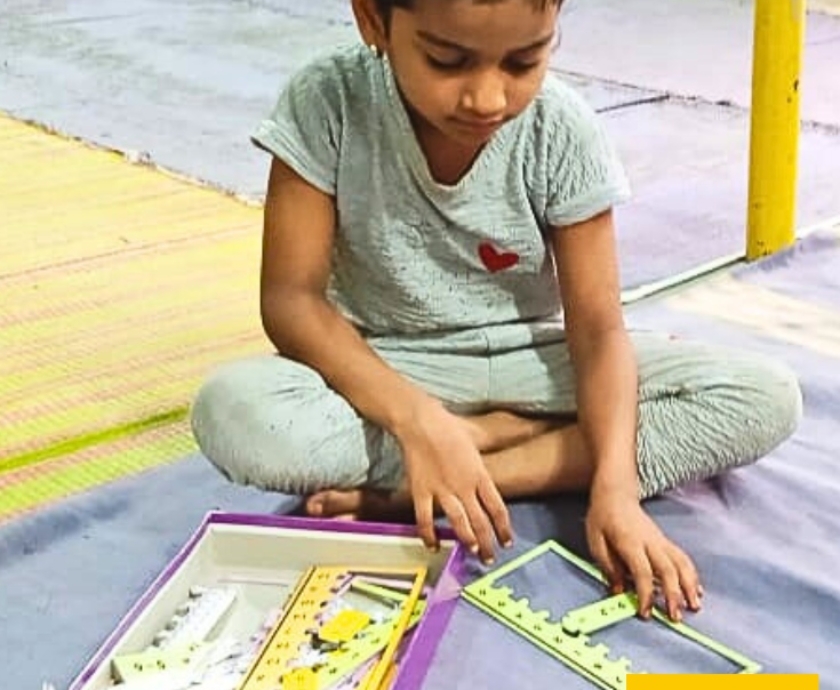
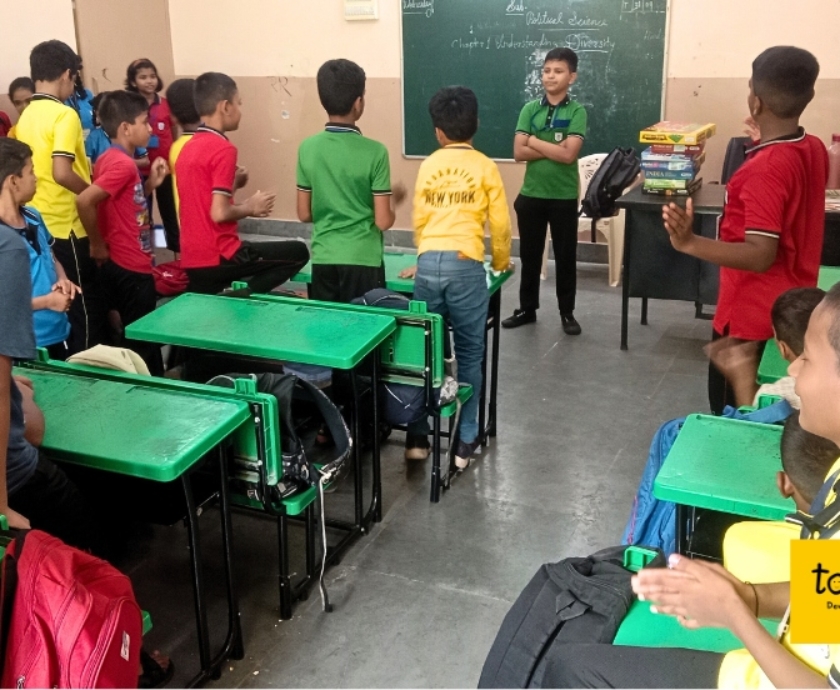
For over two decades, The Opentree Foundation has worked towards a vision of integrating play-based learning into India’s public education system. While the National Education Policy 2020 increasingly recognises the importance of joyful and experiential learning, lasting change depends on something much bigger: an ecosystem of educators, practitioners, children, institutions, and government working together to make it possible.
That ecosystem was visible at the National Play Dialogue – “Viksit Bharat Through Learning, Creativity and Play” on 15 June 2026, convened by The LEGO Group at the India Habitat Centre, New Delhi.
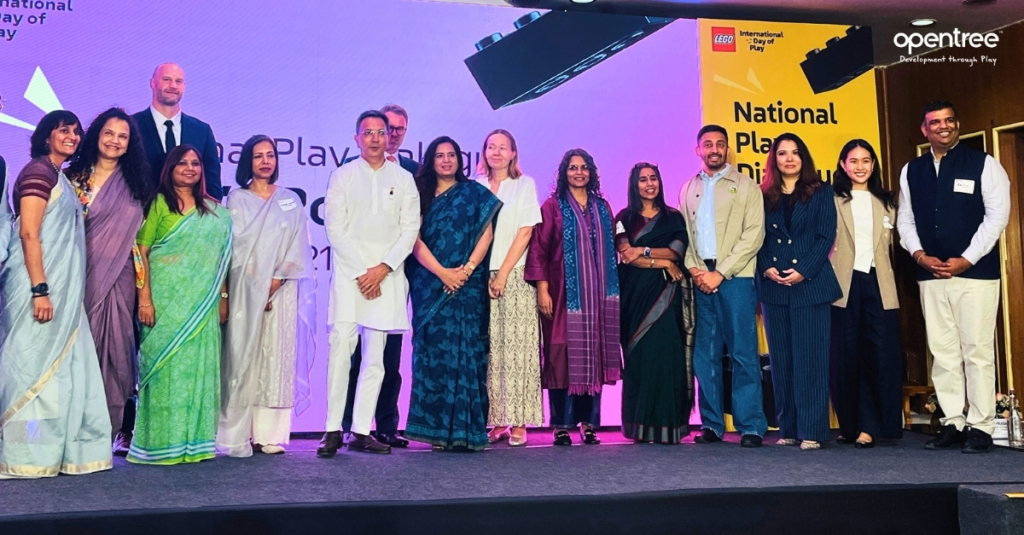
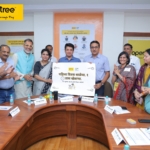
Along with Shri Jitin Prasada, Union Minister of State for Commerce & Industry and Electronics & Information Technology, Ms Debashree Mukherjee, Secretary, Ministry of Skill Development & Entrepreneurship, Ms. Ira Singhal, Deputy Secretary, Department of School Education & Literacy, Ministry of Education, and leaders from across the education and development ecosystem, the dialogue reflected a growing national consensus that play-based learning is fundamental to preparing children for Viksit Bharat 2047.
Government leaders, educators, and development partners at the National Play Dialogue – "Viksit Bharat Through Learning, Creativity and Play."
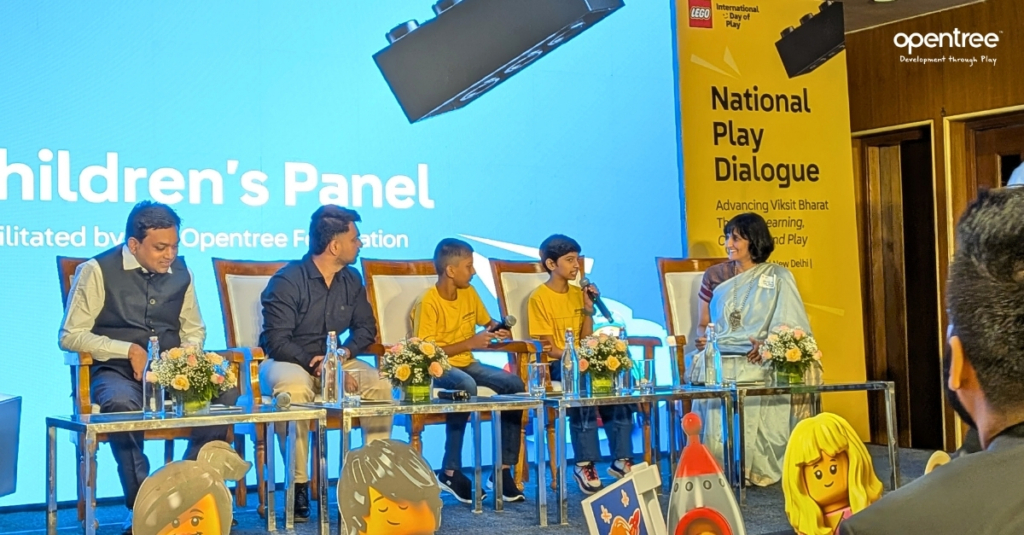
For us, one moment captured exactly what systemic change looks like – the Children’s Panel, facilitated by Shweta, along with students and the principal of our partner school in Mumbai.
Parth and Arpita, Grade 6 students from our Play2Learn partner school, Rajawadi Mumbai Public School CBSE, shared what it means to learn in a school where play is part of everyday learning. Standing alongside them were Dr. Sanjay Chavan, whose leadership has embedded play-based learning into the school’s culture, and Akash, a former government school student who now works with The Opentree Foundation to bring the same opportunities to thousands of children.
“We come to school because it is a happy place where we get to play ,” they shared.
Their message to the adults in the room was equally clear:“Let us play. Let us learn through joy.”
Together, this panel represented the vision that The Opentree Foundation has worked towards for over two-decades. They demonstrated that play-based learning is not an aspiration waiting to be tested. It is already transforming government school classrooms through committed educators, empowered practitioners, and children who have experienced its impact firsthand.
The same question carried into the Leaders’ Roundtable, where representatives from organisations including UNICEF, Atal Innovation Mission, Magic Bus, Bernard van Leer Foundation, Reach to Teach, CRY, Sesame Workshop, and others reflected on the future of play-based learning in India.
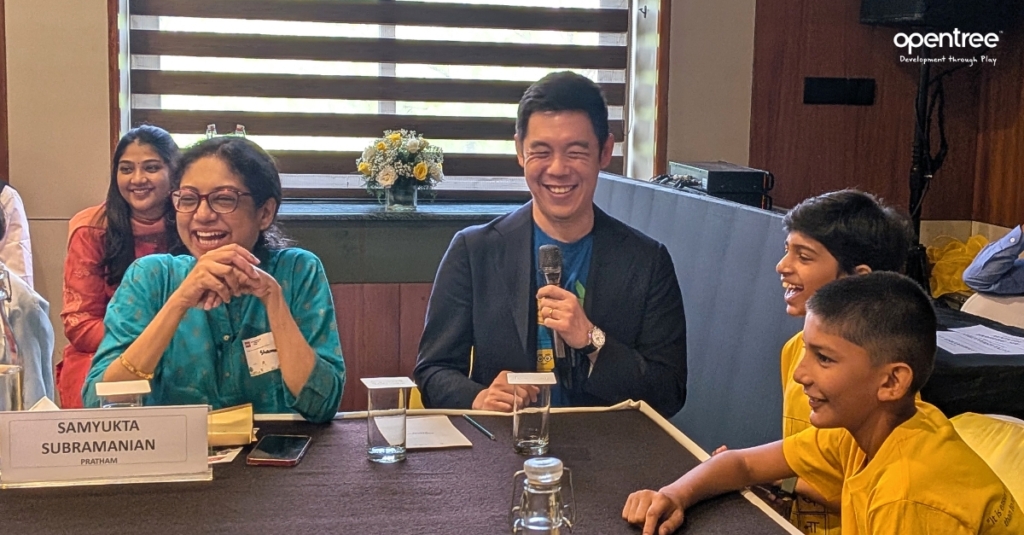
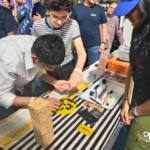
The roundtable too, began with a play-based activity facilitated by who else, but our Play Experts – Parth and Arpita. The room came alive with laughter, excitement and lightness as our students guided the adults with a game from their Play sessions.
Parth and Arpita, our 6th grade students from Rajawadi Mumbai Public School CBSE watch as the leaders participate in their facilitated activity
As the conversation unfolded, leaders from across the sector shared their learnings, challenges and perspectives from designing and implementing play-based learning in varied contexts. Across these rich, diverse perspectives, one message stood out: the sector has moved beyond asking why play matters. The challenge now is how to embed it into systems at scale.
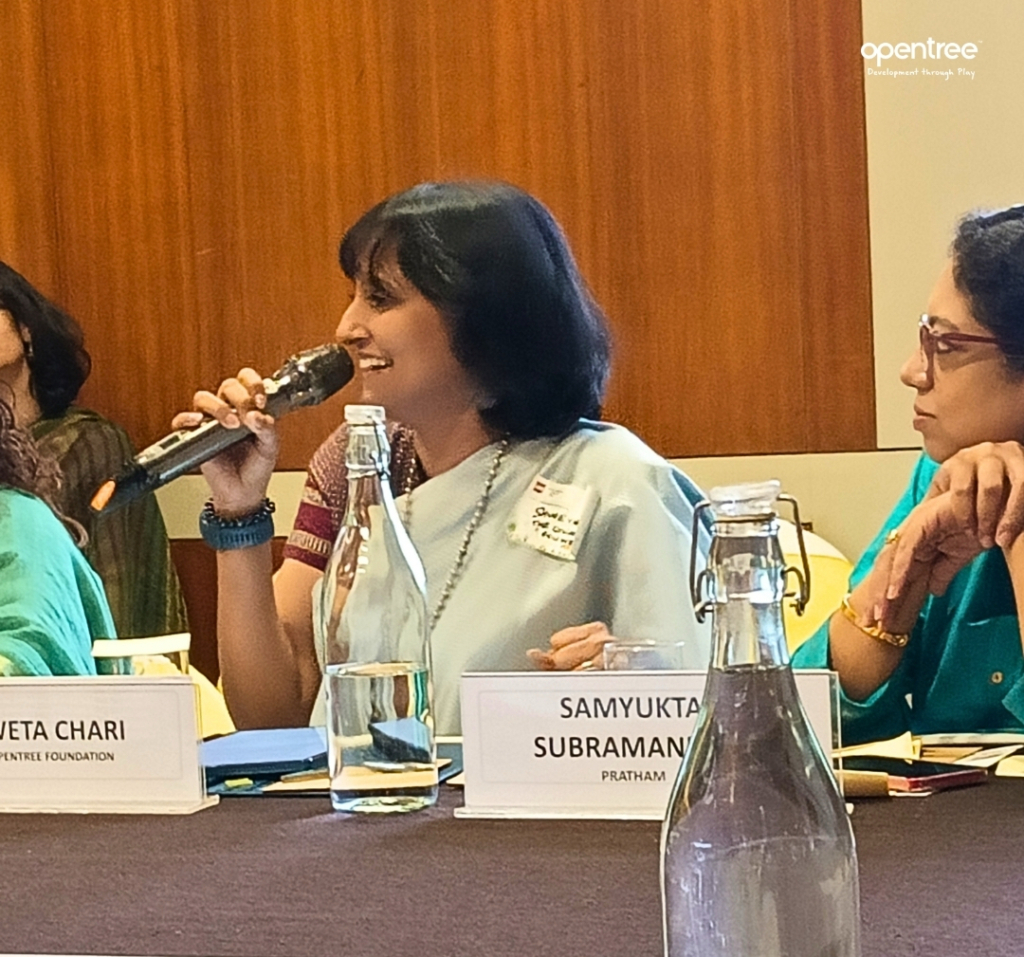
Drawing on The Opentree Foundation’s 22 years of work, our CEO & Co-founder Shweta Chari spoke to precisely this challenge. Through partnerships with government school systems, teacher capacity-building, and our integrated Foundational PlayTM approach, our work has focused on building practical models that help schools integrate play-based learning into everyday teaching—not as an additional programme, but as the way learning happens.
For us, this dialogue was an important milestone, not just because it brought together influential voices, but because it reflected a growing national readiness to make play-based learning part of India’s education systems. Realising every child’s right to play will take collective action. When school leaders, practitioners, children, government, and partners are all part of the same conversation, that future moves one step closer.