
Contacts

92 Bowery St., NY 10013

thepascal@mail.com

+1 800 123 456 789

Tag: CHILD-CENTRIC POLICY

EVENTSIMPORTANCE OF PLAYPOLICY

Protect Play, Protect Childhood — District-Level Roundtable, Ahilyanagar

12  years of on-ground work reflected in a landmark decision by the Ahilyanagar Zilla Parishad: all schools across the district began the new academic year with an Hour of Play—and why this marks an important milestone for play-integrated education in Maharashtra.

On  11 June 2026, the International Day of Play, we convened  Protect Play, Protect Childhood, a district-level roundtable with our partner, Snehalaya at the Ahilyanagar Gymkhana. The conversation brought together government leaders, educators, civil society organisations and CSR partners around a shared question: 

What would it take for every child to experience play as part of school?
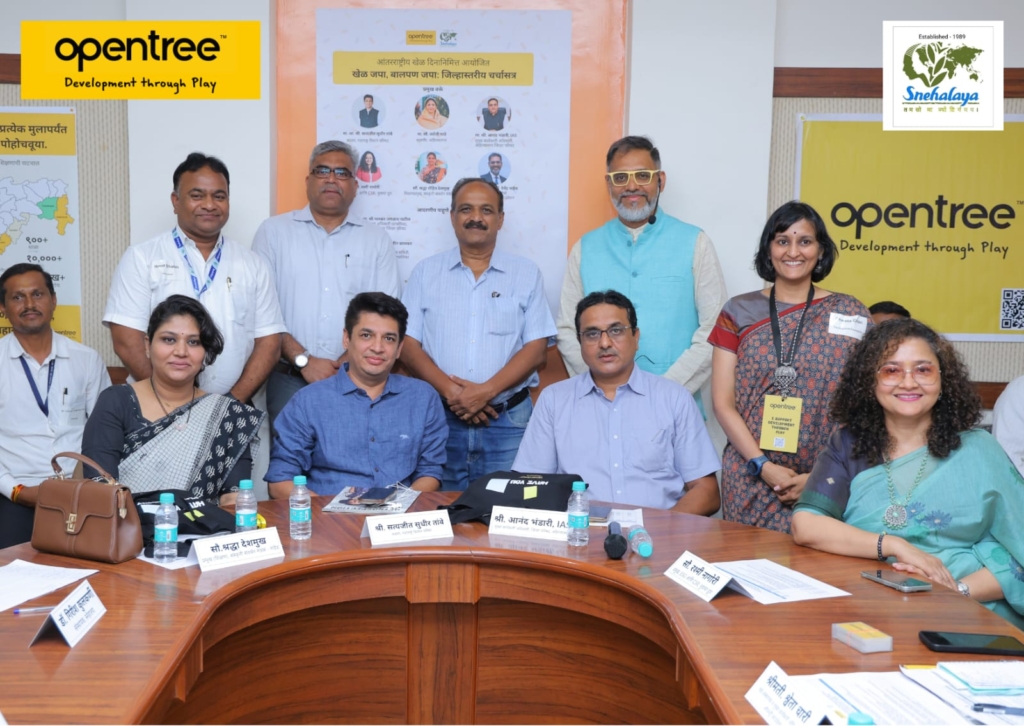
The room included Shri. Anand Bhandari, IAS, CEO, Ahilyanagar Zilla Parishad, Shri. Satyajeet Sudhir Tambe (Member of Legislative Council, Maharashtra), Ms. Rashmi Nagori (Head, ESG and CSR, Nuvama Group), Mrs. Shraddha Deshmukh and Mr. Rohit Deshmukh (Sanskriti Samvardhan Mandal, Nanded), Ms Shweta Chari (Co-founder and CEO, TOF), Dr. Girish Kulkarni (Founder, Snehalaya), and Mr. Devendra Naik (Founder, NoMoBo, and Trustee, TOF), who moderated the discussion.

Rather than focusing on a single programme or intervention, the roundtable built the case for play-based learning from four complementary directions: what children need to thrive, how rapidly childhood is changing, what schools are meant to offer beyond academics, and what it takes for change to last inside public systems.

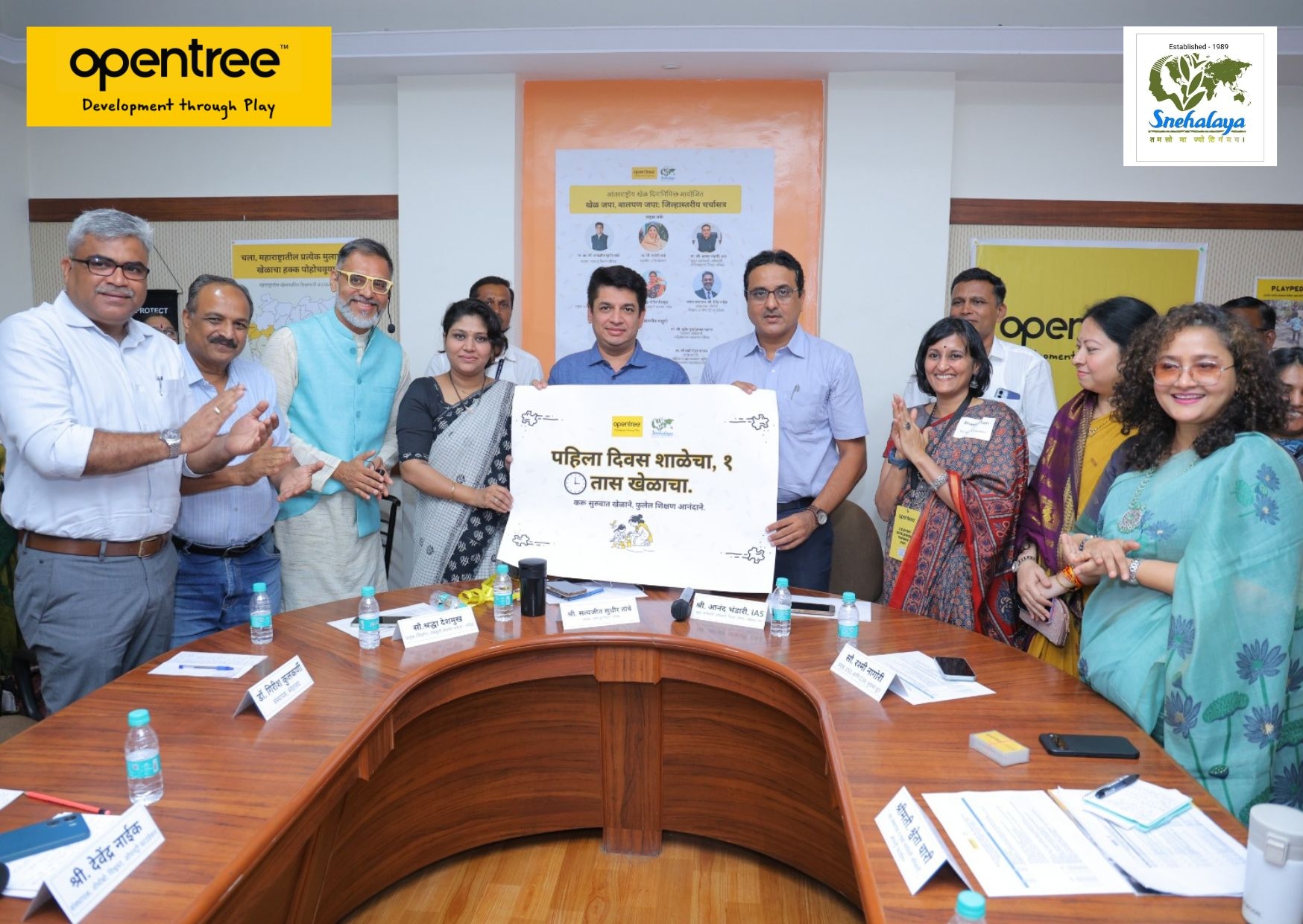
The discussion culminated in the declaration of a district-wide initiative by Shri Anand Bhandari, IAS, CEO, Zilla Parishad, Ahilyanagar.

पहिला दिवस शाळेचा, एक तास खेळाचा. (Day 1 of school, 1 Hour of Play)
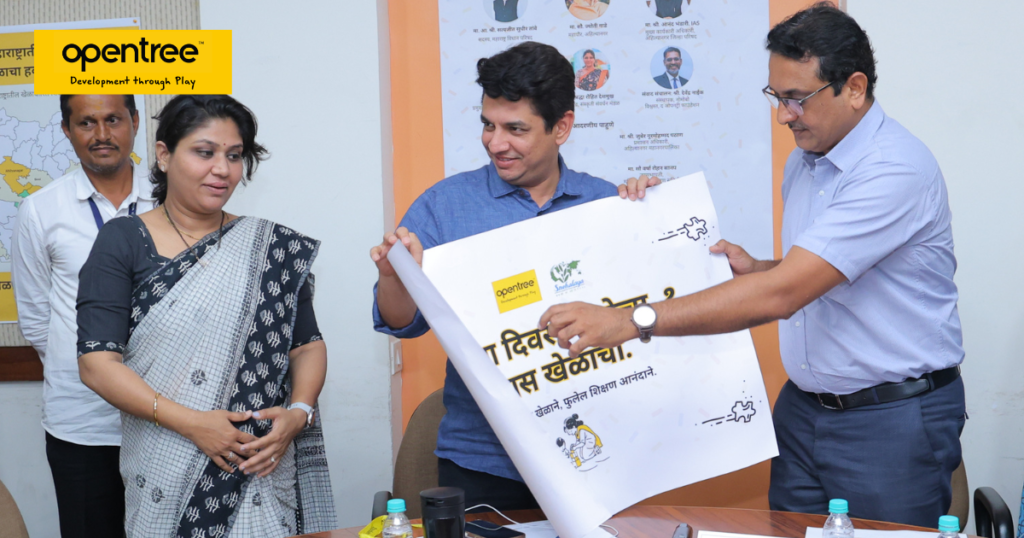
With that announcement, every government school in Ahilyanagar was mandated to celebrate the new academic year with an hour of play.

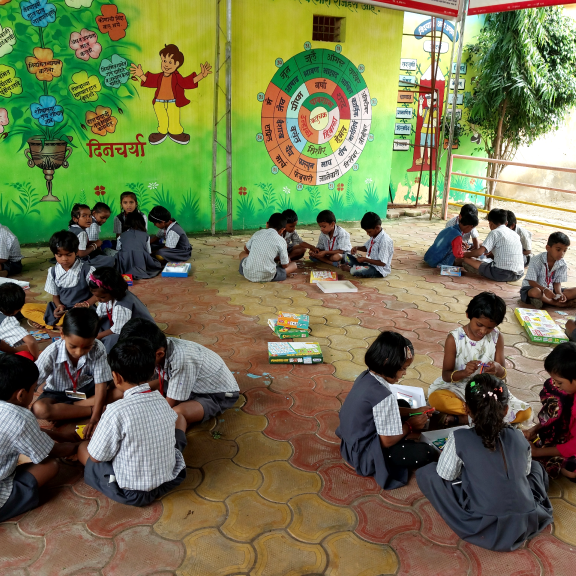
On 15 June 2026, children across 1000+ Zilla Parishad schools in Ahilyanagar were welcomed to school with a joyful hour of Play, a day they will cherish for a long time to come. Principals, teachers and school staff enthusiastically planned games and activities, decorating classrooms with posters and banners. 
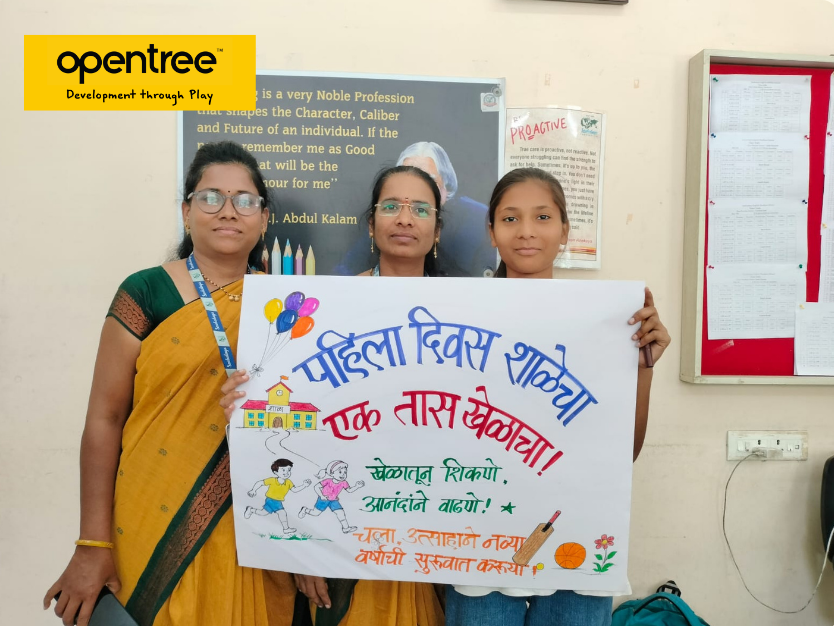
TOF’s team collaborated with all Block Education and Block Development Officers across all 14 blocks to support implementation, drawing on more than 350 free activities from Playpedia.in, TOF’s open-source library of low-resource play ideas. Following the success of the initiative, Shri Bhandari also directed that schools across the district undergo Playpedia sensitisation sessions led by TOF.

For The Opentree Foundation (TOF), the roundtable and the पहिला दिवस शाळेचा, एक तास खेळाचा initiative (Day 1 of school, 1 Hour of Play) represent a powerful, significant step in its journey towards realising the Right to Play in India. This was a historic moment –  the first time a government institution in Maharashtra  had taken ownership towards integrating Play-based learning into schools at a scale — the systemic shift TOF has been working towards for over two decades, reflected in the room through voices across the system.

The roundtable began with a welcome by children from Snehalaya’s Balbhavans, setting the tone for a discussion centred on children’s voices and experiences.

Shweta Chari, Co-founder and CEO of TOF, argued that play is not an extracurricular activity, but the foundation on which children develop the creativity, empathy and problem-solving skills needed to become thriving adults as well as contributing citizens. 

Shri. Satyajeet Sudhir Tambe reflected on the rapidly changing nature of childhood, emphasising that schools must intentionally nurture these abilities, while Shri Anand Bhandari shared his vision of schools as places of joy, creativity and confidence.

Shri Satyajeet Sudhir Tambe spoke about the speed at which childhood is changing, arguing that schools must evolve just as quickly.

“Any muscle you don’t use stops working. If we don’t give children regular opportunities to use their cognitive and creative skills, those skills will disappear.”

-Shri. Satyajeet Sudhir Tambe

“Schools should be the heart of a child’s happiness—spaces of joy, creativity and confidence, where every child grows up with a teacher they remember all their life.”

– Shri. Anand Bhandari, IAS, CEO, Ahilyanagar Zilla Parishad


Rashmi Nagori, Head of ESG and CSR at Nuvama Group, challenged the false divide between play and education. She called for play to be recognised as an essential investment in children’s learning and development, reminding the room that “Play is learning.”

Bringing these ideas into practice, TOF’s long-standing partners, Snehalaya and Sanskriti Samvardhan Mandal, shared how Play2Learn had transformed classrooms by replacing fear with trust, strengthening teacher-child relationships, and helping children engage more confidently in learning. As Dr. Girish Kulkarni, Founder of Snehalaya, reflected, “Nothing we tried worked until Play reached these children—it was as though Play helped us find a way to connect with them.”

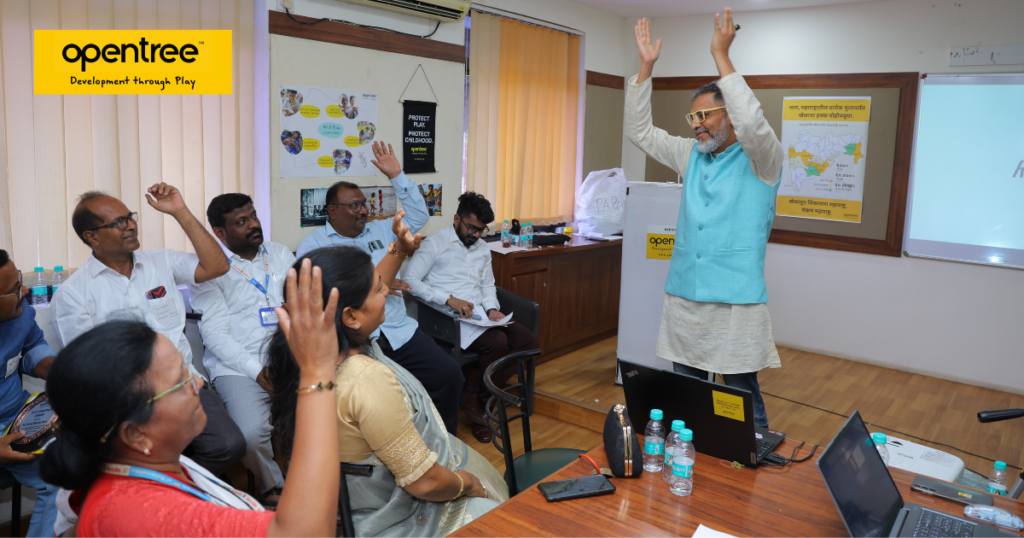
The roundtable was also the first ever felicitation of Ahilyanagar’s Play champions and Leaders – teachers and principals from our  partner schools who have embedded Play-based learning in classrooms across Ahilyanagar.

The session concluded with an interactive Play reflection led by TOF Trustee Devendra Naik, inviting participants to collectively envision the future of Play-based learning in Maharashtra.
The roundtable also opened new systemic pathways at a district and state level:

  • Expanding the Play2Learn programme  Municipal Council schools in Sangamner
  • Embedding play-based learning into the district’s School Development Plans
  • Introducing TOF’s School Readiness Play Programme into Anganwadis and expanding Play2Learn into secondary schools in the district
  • Deepening partnerships with Gram Panchayats and School Management Committees.
  • Possible alignment with  Maharashtra’s proposed Future Generations Wellbeing Bill with evidence on play and child wellbeing.

Each of these pathways represents an opportunity to move closer to institutionalising Play-based learning in government systems, and towards making Maharashtra the first state in India to have a government-adopted, scalable model for Play-integrated schools. 

For over two decades, The Opentree Foundation has worked to demonstrate that Play is fundamental to how children learn, grow and thrive. The roundtable and declaration in Ahilyanagar represent a district where years of evidence, partnerships and trust have translated into system-wide action.

The vision has always been larger than a single programme or district. It is to build a future where every child in India, regardless of where they are born or which school they attend, experience learning that allows them to be themselves, feel joyful, curious, excited, and prepares them to thrive as adults in their future. 

Ahilyanagar has shown that this future is possible. Now, the work begins to make it the norm, across Maharashtra, and India. 
EVENTSIMPORTANCE OF PLAYPOLICY

From Classrooms to National Conversations: Contributing to India’s National Dialogue on Play-Based Learning

For over two decades, The Opentree Foundation has worked towards a vision of integrating play-based learning into India’s public education system. While the National Education Policy 2020 increasingly recognises the importance of joyful and experiential learning, lasting change depends on something much bigger: an ecosystem of educators, practitioners, children, institutions, and government working together to make it possible.

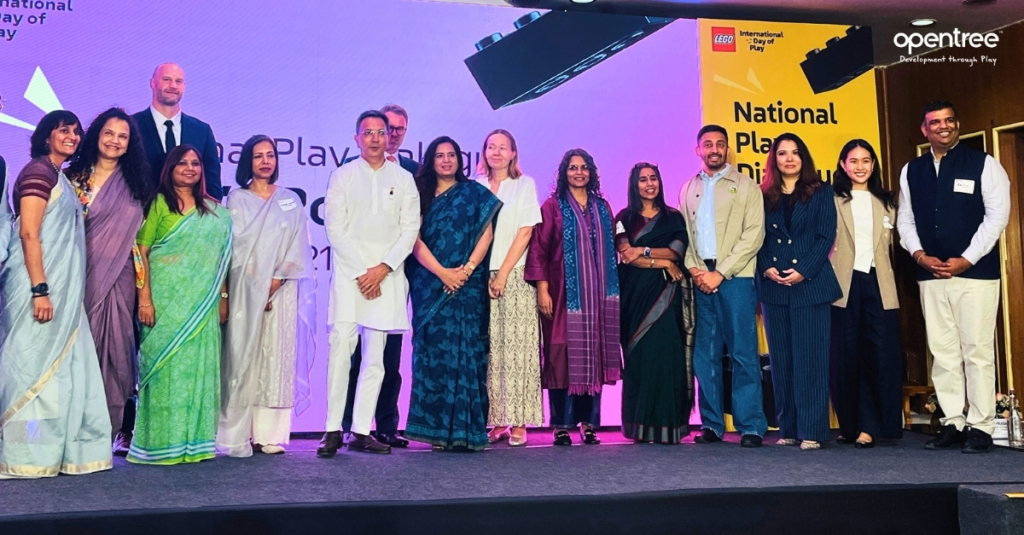
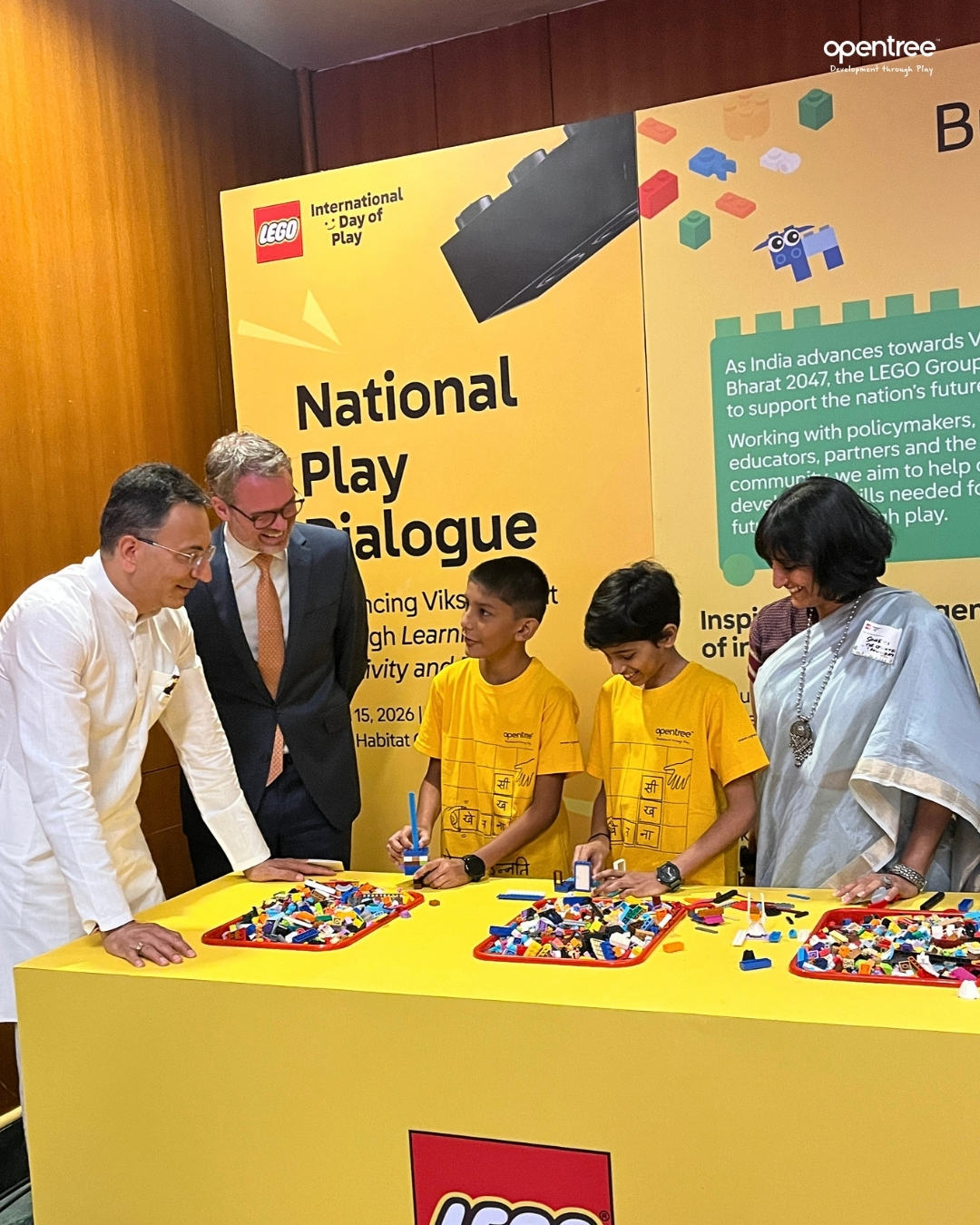
That ecosystem was visible at the National Play Dialogue – “Viksit Bharat Through Learning, Creativity and Play” on 15 June 2026, convened by The LEGO Group at the India Habitat Centre, New Delhi.

Along with Shri Jitin Prasada, Union Minister of State for Commerce & Industry and Electronics & Information Technology, Ms Debashree Mukherjee, Secretary, Ministry of Skill Development & Entrepreneurship, Ms. Ira Singhal, Deputy Secretary, Department of School Education & Literacy, Ministry of Education, and leaders from across the education and development ecosystem, the dialogue reflected a growing national consensus that play-based learning is fundamental to preparing children for Viksit Bharat 2047.

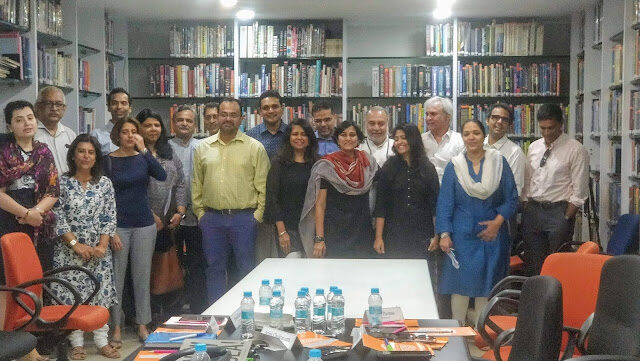
Government leaders, educators, and development partners at the National Play Dialogue – "Viksit Bharat Through Learning, Creativity and Play."

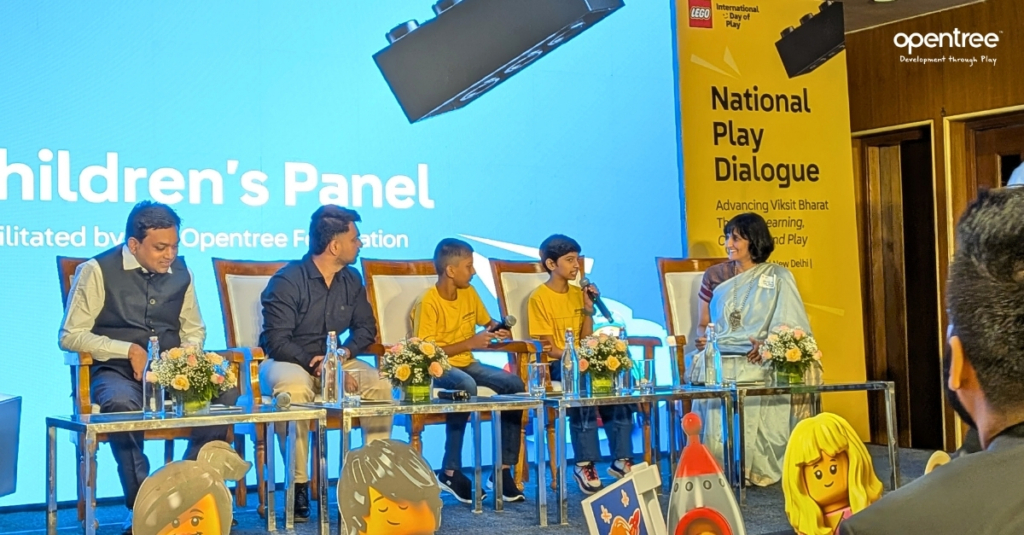
For us, one moment captured exactly what systemic change looks like – the Children’s Panel, facilitated by Shweta, along with students and the principal of our partner school in Mumbai.

Parth and Arpita, Grade 6 students from our Play2Learn partner school, Rajawadi Mumbai Public School CBSE, shared what it means to learn in a school where play is part of everyday learning. Standing alongside them were Dr. Sanjay Chavan, whose leadership has embedded play-based learning into the school’s culture, and Akash, a former government school student who now works with The Opentree Foundation to bring the same opportunities to thousands of children.

“We come to school because it is a happy place where we get to play ,” they shared.

Their message to the adults in the room was equally clear: “Let us play. Let us learn through joy.”

Together, this panel represented the vision that The Opentree Foundation has worked towards for over two-decades. They demonstrated that play-based learning is not an aspiration waiting to be tested. It is already transforming government school classrooms through committed educators, empowered practitioners, and children who have experienced its impact firsthand.

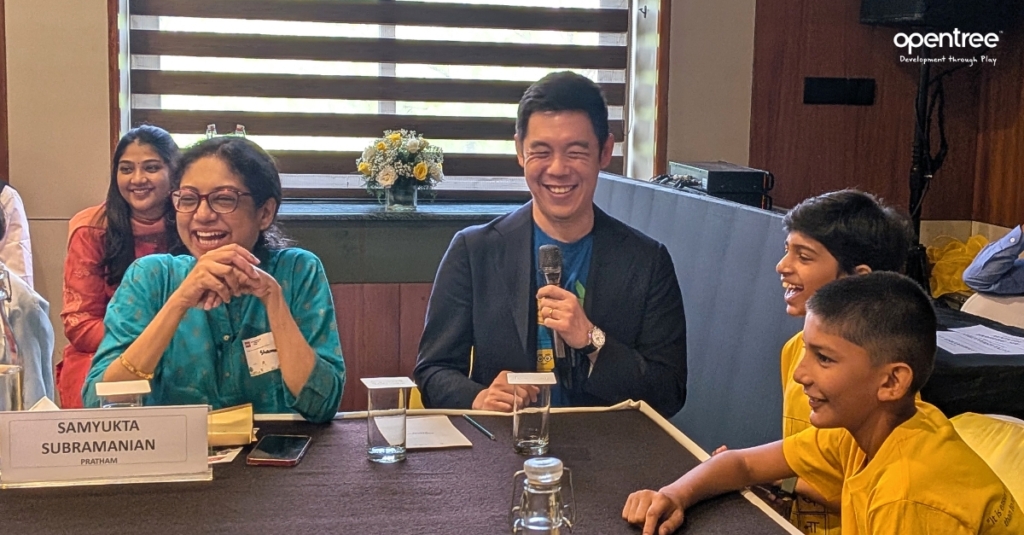
The same question carried into the Leaders’ Roundtable, where representatives from organisations including UNICEF, Atal Innovation Mission, Magic Bus, Bernard van Leer Foundation, Reach to Teach, CRY, Sesame Workshop, and others reflected on the future of play-based learning in India. 

The roundtable too, began with a play-based activity facilitated by who else, but our Play Experts – Parth and Arpita. The room came alive with laughter, excitement and lightness as our students guided the adults with a game  from their Play sessions.

Parth and Arpita, our 6th grade students from Rajawadi Mumbai Public School CBSE watch as the leaders participate in their facilitated activity

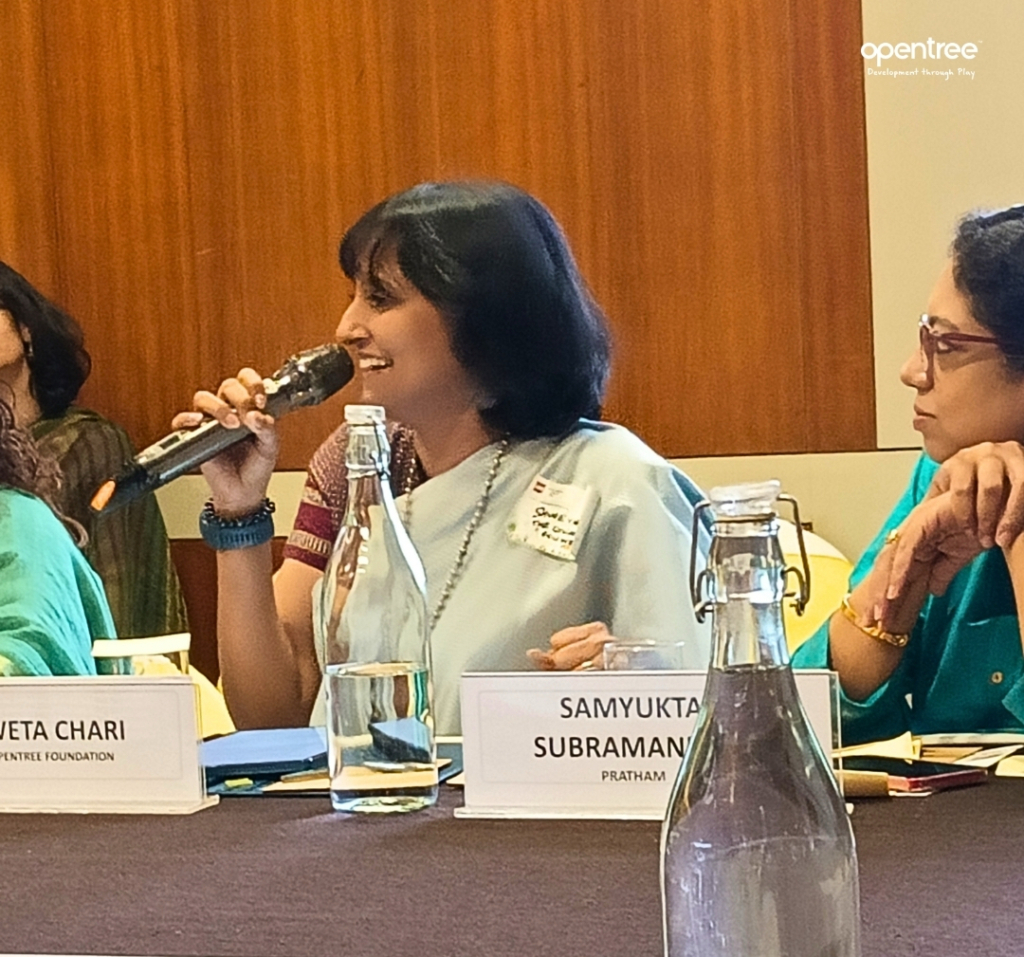
As the conversation unfolded, leaders from across the sector shared their learnings, challenges and perspectives from designing and implementing play-based learning in varied contexts. Across these rich, diverse perspectives, one message stood out: the sector has moved beyond asking why play matters. The challenge now is how to embed it into systems at scale.

Drawing on The Opentree Foundation’s 22 years of work, our CEO & Co-founder Shweta Chari spoke to precisely this challenge. Through partnerships with government school systems, teacher capacity-building, and our integrated Foundational PlayTM approach, our work has focused on building practical models that help schools integrate play-based learning into everyday teaching—not as an additional programme, but as the way learning happens.

For us, this dialogue was an important milestone, not just because it brought together influential voices, but because it reflected a growing national readiness to make play-based learning part of India’s education systems. Realising every child’s right to play will take collective action. When school leaders, practitioners, children, government, and partners are all part of the same conversation, that future moves one step closer.

EVENTSIMPORTANCE OF PLAY

Play for Transformation: Toybank roundtable discussion

The need to make Play mainstream and an integral part of society can never be emphasised enough. After all, play improves the educational, health and employability outcomes for children.
 
Driving on this notion, Toybank hosted its first-ever round table, to discuss ‘Play for Transformation’ and how to make it mainstream. The session was attended by Toybank’s trustees, board members and supporters.
 
Is Play understood and prominent in India? Is there a need to fully understand play before incorporating it into a child’s lifestyle? Notions like it is creativity and a child creating something is playing restricts its definition. If we redefine play, it may have a greater impact on children. The panel reckoned it’s a state of mind that can give you clarity of thought and minimize frustrations, which can be implemented in different aspects of life.
 
WHAT’S PLAY-GUING PLAY?
Play has been mainstreamed only in Scandinavian countries that have recognized its power. In India, it’s still as sidelined as mental health. The reason for play being just tangential indicated several issues it’s dealing with.
 
It comes at a cost 
Even though the right of every child, Toybank Advisory Board Member Vivek Jhangiani and CEO at United Toys, President of The All India Toy Manufacturers Association (TAITMA) and Ambassador for Value of Play in the Indian toy industry, pointed out that play is accessible only to the affluent. There’s a considerable gap between India and the world when it comes to the commercials of play. “In India, the per capita of games, toys or sports-related products on a single child does not cross $3 a year, as opposed to $300-400 in the US. The mindset of an average Indian towards play comes partly from limited resources,” Vivek states. 
 

“In India, the per capita of games, toys or sports-related products on a single child does not cross $3 a year, as opposed to $300-400 in the US”

— Vivek Jhangiani, Toybank Advisory Board Member & CEO, United Toys
 
Advisory Board Member Ratan Batliboi, Board Chair and Hon. Trustee at CRY, further stated that we do not need props, money, space or urban planning to play. It’s an innate behavioral shift that needs to transpire. The critical issue is how one can communicate the long-term change in a parent body and students.
 
Play v/s sport
Parents consider academics and extra-curricular activities as important and play does not figure in the scheme of things unless it’s a sport that can be taken up as a career. As key enablers, it’s important that parents understand why play is important. The fun of participation is initiated in a child through play, along with the joy of winning and learning from defeat; later come personality development, extroversion, etc. Learning to play with others and making new friends help make better kids. However, India is yet to realize these benefits; unlike Africa, which is comparable with us in terms of poverty and other issues. But they have a culture of sports that brings them out of their miseries and makes them better athletes.
 
 
We do not value play
The ecosystem for play is not quite conducive in India. Policies, lack of urban planning as well as encouragement by parents to send kids to play are some other issues. Toybank supporter Sumangali Gada, Founder and trustee at the PRAJA Foundation, reasoned that even if we get the why of play, we do not value it. “Though we want children to learn empathy, critical thinking and such values, we are at sea about how to actualize these qualities. There are barely any schools that walk the talk and espouse the values that play entails,” says she. 
 
Performance over play
One of the primary reasons why children do not get enough benefits of play is competitiveness. Nimesh Sumati of Caring Friends says we need to urge parents to not make kids compete but just play. This tendency has percolated to the lower strata of the society, with children facing peer pressure, with performance given more importance than play.
 

Lack of urban planning and parents encouraging children to play are other issues preventing the mainstreaming of Play.


Play is an add-on 
Taking Maslow’s Hierarchy of Needs into consideration, with basic issues like food and literacy that India is faced with, play does not get the prominence it deserves, Samonnoi Banerjee, Bain Capital, Managing Director in the Healthcare and Technology, Media & Telecommunications Verticals stated. Play will always be an add-on. It will always be equal to recreation and not a conscious mechanism of development. Unless it is brought into people’s consciousness through a communication or a big campaign like Swachh Bharat, we may never fully comprehend its importance. He further observed that we are looking at a large-scale impact. Accessibility and affordability can be solved through some other ways if we admit that play is important and makes a difference.
POLICY

Early childhood education: Exploring the National Curriculum Framework

Early childhood care and education are key areas of development, according to the National Curriculum Framework 2022

The Indian government’s launch of the National Curriculum Framework (NCF) for Education 2022 of Children in the 3-8 Years Age Group marks a significant milestone in the field of early childhood education.

This framework aims to provide a strong foundation for the holistic development of young children across the country. At Toybank, we recognise the importance of early childhood education and its impact on shaping the lives of children.

In this blog post, we delve into the key aspects of the National Curriculum Framework and its implications for early childhood education in India.

  • A comprehensive approach to learning:
    The National Curriculum Framework emphasises a child-centered and play-based approach to education. It recognises the significance of play in fostering creativity, imagination, and cognitive development. By incorporating play-based activities into the curriculum, children are encouraged to actively explore their surroundings, engage in hands-on learning, and develop a love for lifelong learning.

For the first time in 50 Kendriya Vidyalayas, on pilot-mode, we are launching play schools in an institutionalised form with a targeted learning outcome on a pedagogy based on this NCF.


– Union Education Minister Dharmendra Pradhan
  • Holistic development:
    The framework emphasises the holistic development of children, encompassing their cognitive, socio-emotional, and physical well-being. It encourages the integration of various domains of development, such as language and literacy, numeracy, social skills, and physical development, into a cohesive learning experience. This holistic approach ensures that children receive a well-rounded education that prepares them for future academic and personal success.

  • Inclusivity and diversity:
    The National Curriculum Framework recognises the diverse needs and backgrounds of children in India. It emphasises the importance of creating inclusive and welcoming learning environments that cater to the unique abilities, interests, and cultural contexts of every child. This inclusivity promotes social cohesion, empathy, and respect for diversity among young learners, setting a strong foundation for a harmonious and inclusive society.

The launch of the National Curriculum Framework for the Education of Children in the 3-8 Years Age Group is a significant step towards enhancing early childhood education in India. At Toybank, we believe in the power of play to foster holistic development, ignite curiosity, and nurture a love for learning from an early age. Through our play programmes, we strive to complement and supplement the efforts of early childhood educators.

Together, let us create a vibrant and inclusive early childhood education landscape that empowers every child to reach their full potential and lays a strong foundation for their future success.

Source: India Today. (2022, October 21). Govt Launches National Curriculum Framework for Education of Children in 3-8 Yrs Age Group