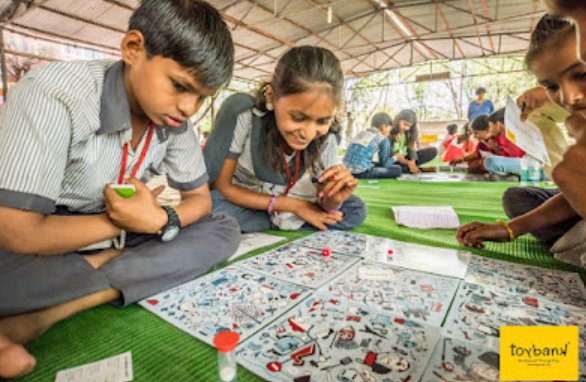
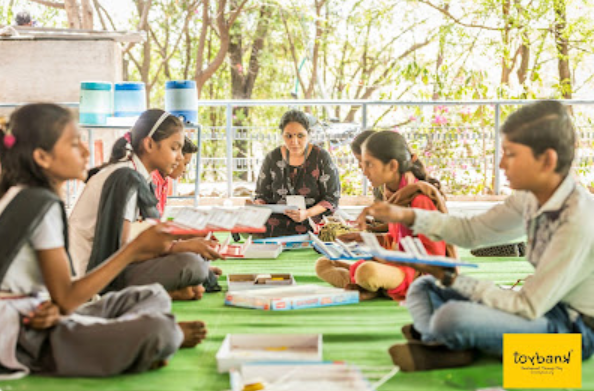
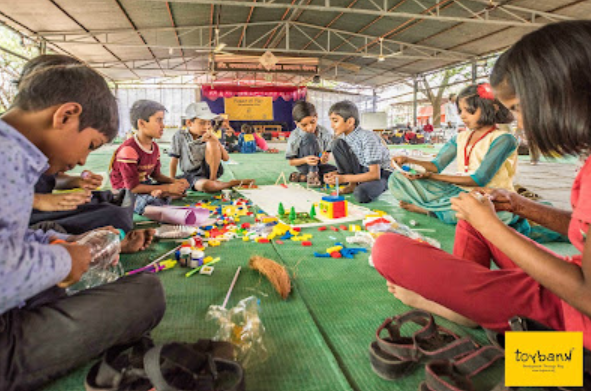
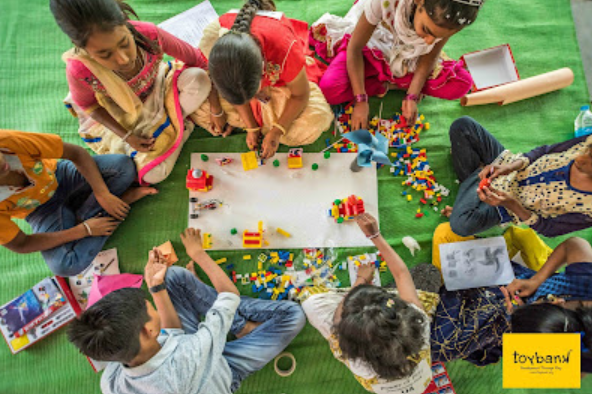
For over two decades, The Opentree Foundation has worked towards a vision of integrating play-based learning into India’s public education system. While the National Education Policy 2020 increasingly recognises the importance of joyful and experiential learning, lasting change depends on something much bigger: an ecosystem of educators, practitioners, children, institutions, and government working together to make it possible.
That ecosystem was visible at the National Play Dialogue – “Viksit Bharat Through Learning, Creativity and Play” on 15 June 2026, convened by The LEGO Group at the India Habitat Centre, New Delhi.
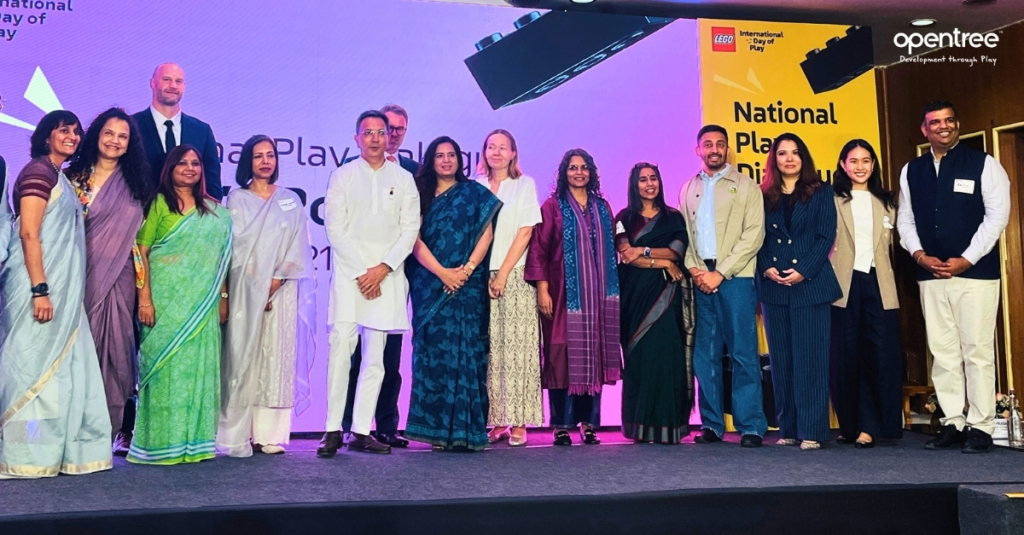
Along with Shri Jitin Prasada, Union Minister of State for Commerce & Industry and Electronics & Information Technology, Ms Debashree Mukherjee, Secretary, Ministry of Skill Development & Entrepreneurship, Ms. Ira Singhal, Deputy Secretary, Department of School Education & Literacy, Ministry of Education, and leaders from across the education and development ecosystem, the dialogue reflected a growing national consensus that play-based learning is fundamental to preparing children for Viksit Bharat 2047.
Government leaders, educators, and development partners at the National Play Dialogue – "Viksit Bharat Through Learning, Creativity and Play."
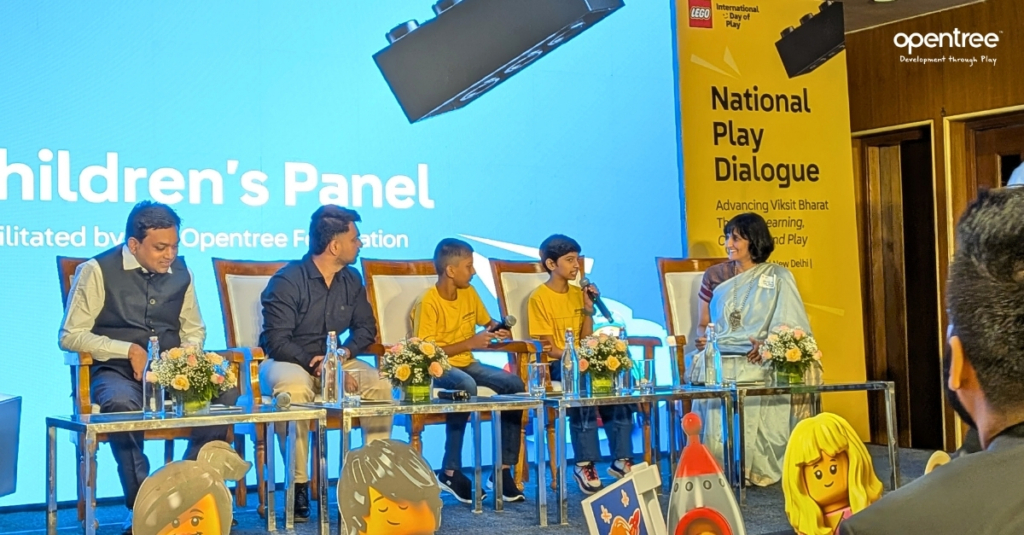
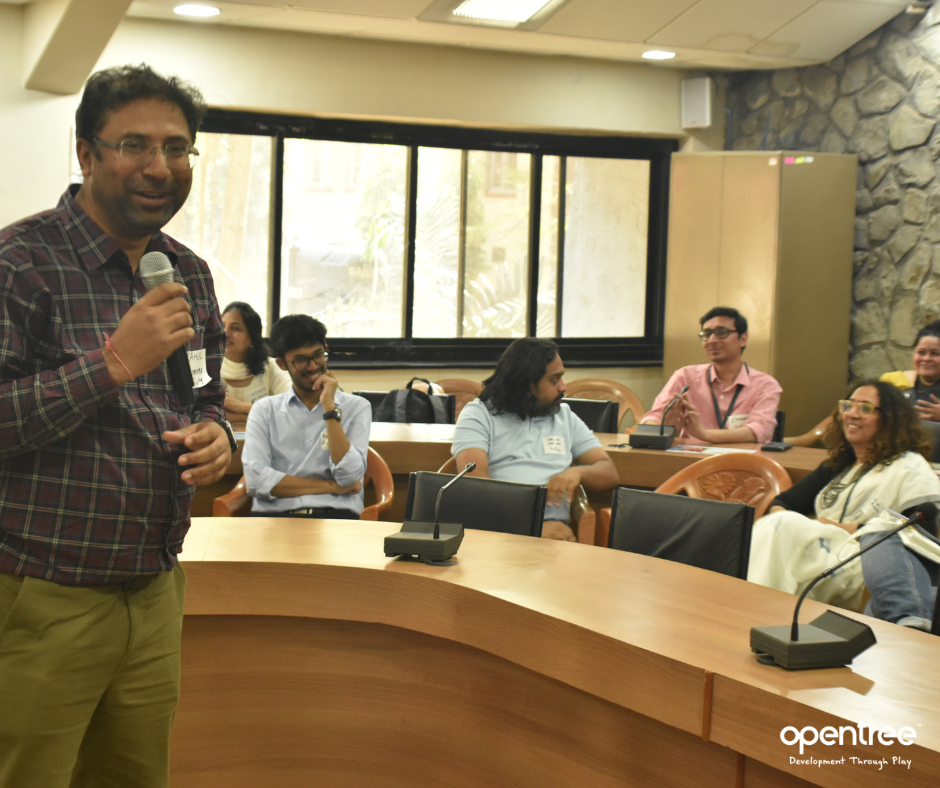
For us, one moment captured exactly what systemic change looks like – the Children’s Panel, facilitated by Shweta, along with students and the principal of our partner school in Mumbai.
Parth and Arpita, Grade 6 students from our Play2Learn partner school, Rajawadi Mumbai Public School CBSE, shared what it means to learn in a school where play is part of everyday learning. Standing alongside them were Dr. Sanjay Chavan, whose leadership has embedded play-based learning into the school’s culture, and Akash, a former government school student who now works with The Opentree Foundation to bring the same opportunities to thousands of children.
“We come to school because it is a happy place where we get to play ,” they shared.
Their message to the adults in the room was equally clear:“Let us play. Let us learn through joy.”
Together, this panel represented the vision that The Opentree Foundation has worked towards for over two-decades. They demonstrated that play-based learning is not an aspiration waiting to be tested. It is already transforming government school classrooms through committed educators, empowered practitioners, and children who have experienced its impact firsthand.
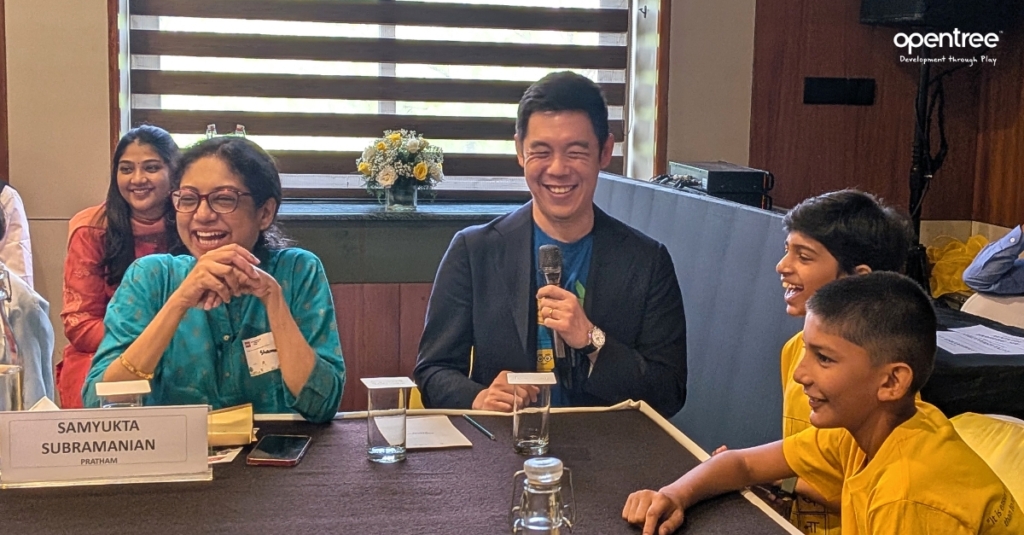
The same question carried into the Leaders’ Roundtable, where representatives from organisations including UNICEF, Atal Innovation Mission, Magic Bus, Bernard van Leer Foundation, Reach to Teach, CRY, Sesame Workshop, and others reflected on the future of play-based learning in India.
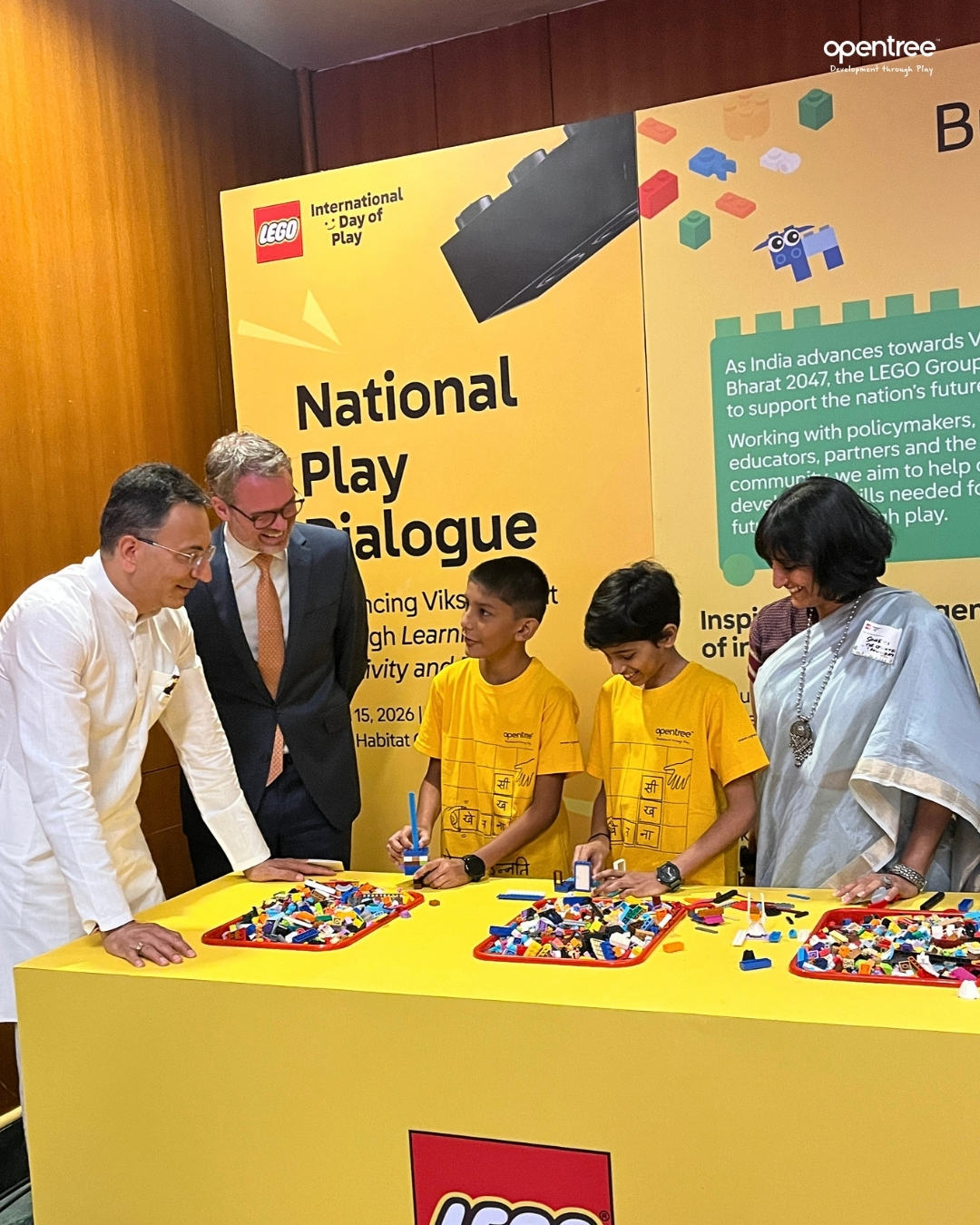
The roundtable too, began with a play-based activity facilitated by who else, but our Play Experts – Parth and Arpita. The room came alive with laughter, excitement and lightness as our students guided the adults with a game from their Play sessions.
Parth and Arpita, our 6th grade students from Rajawadi Mumbai Public School CBSE watch as the leaders participate in their facilitated activity
As the conversation unfolded, leaders from across the sector shared their learnings, challenges and perspectives from designing and implementing play-based learning in varied contexts. Across these rich, diverse perspectives, one message stood out: the sector has moved beyond asking why play matters. The challenge now is how to embed it into systems at scale.
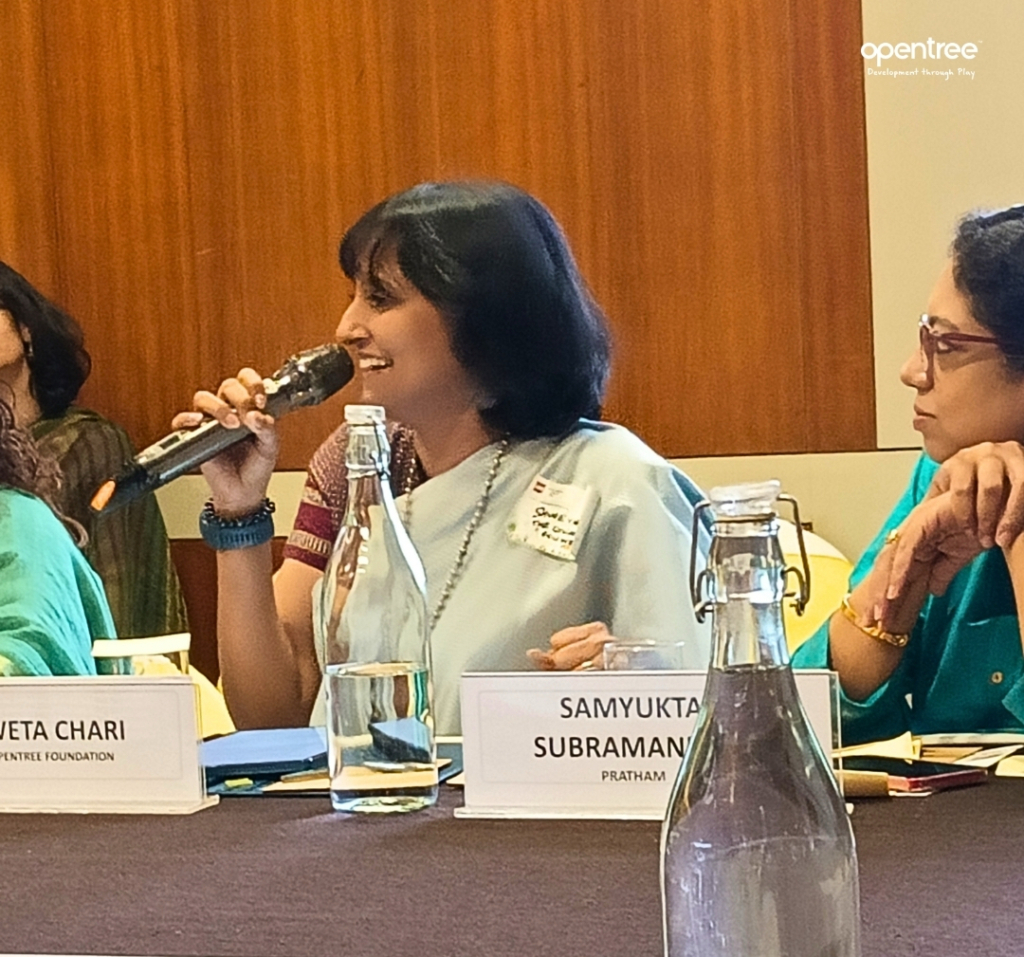
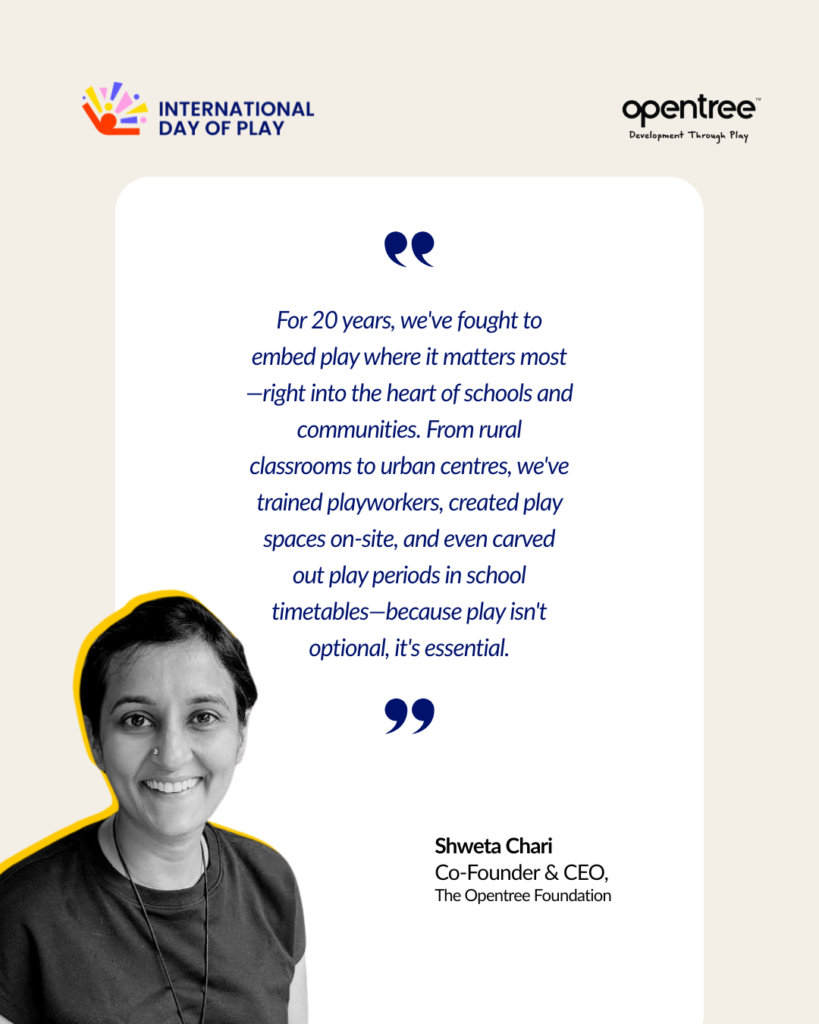
Drawing on The Opentree Foundation’s 22 years of work, our CEO & Co-founder Shweta Chari spoke to precisely this challenge. Through partnerships with government school systems, teacher capacity-building, and our integrated Foundational PlayTM approach, our work has focused on building practical models that help schools integrate play-based learning into everyday teaching—not as an additional programme, but as the way learning happens.
For us, this dialogue was an important milestone, not just because it brought together influential voices, but because it reflected a growing national readiness to make play-based learning part of India’s education systems. Realising every child’s right to play will take collective action. When school leaders, practitioners, children, government, and partners are all part of the same conversation, that future moves one step closer.
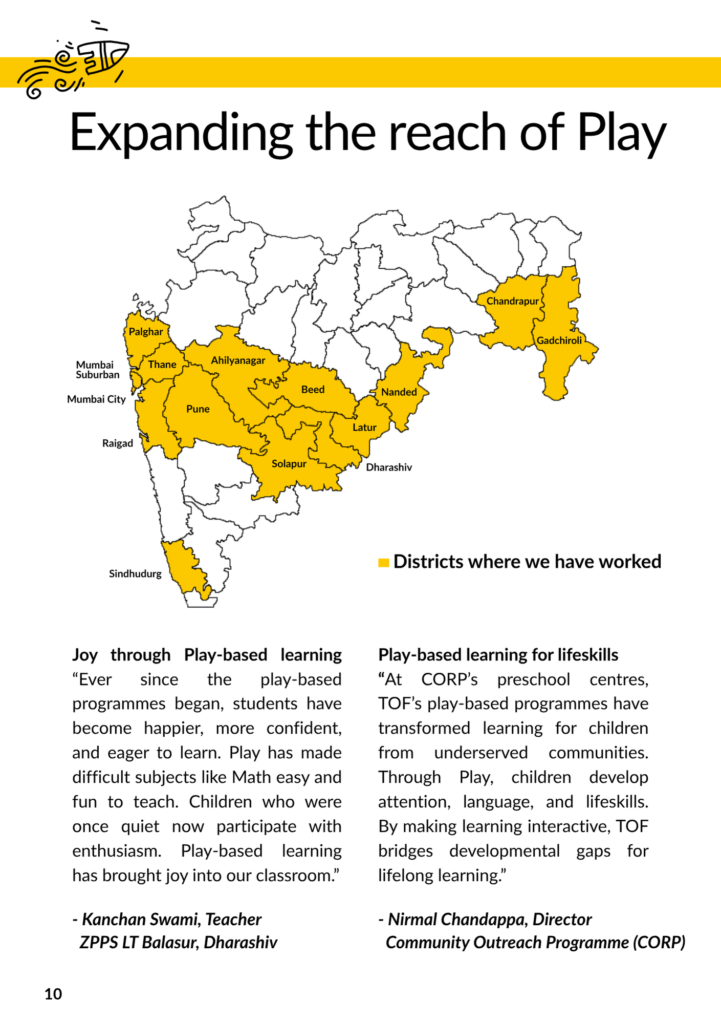
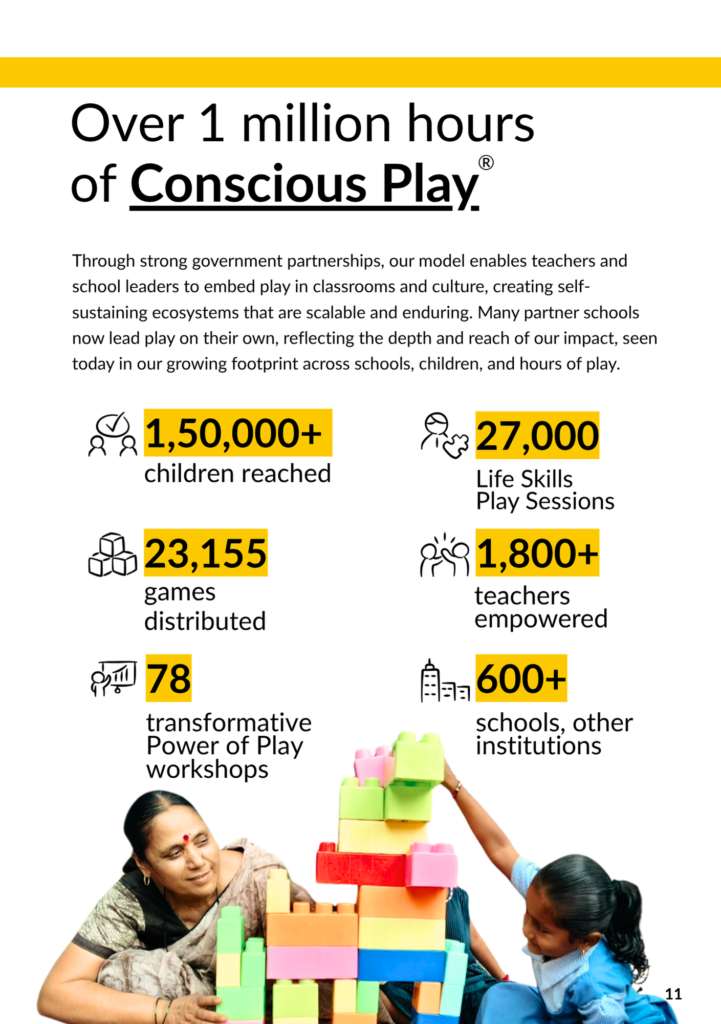
Twenty years ago, The Opentree Foundation began with a simple belief — that Play is not a luxury, but a necessity. What started in 2004 with one small group of children has grown into a movement transforming learning across 12 districts in Maharashtra. Through partnerships with 600+ under-resourced schools and 10,000+ teachers, we’ve seen how play unlocks imagination, resilience, confidence, and connection — helping children truly thrive.
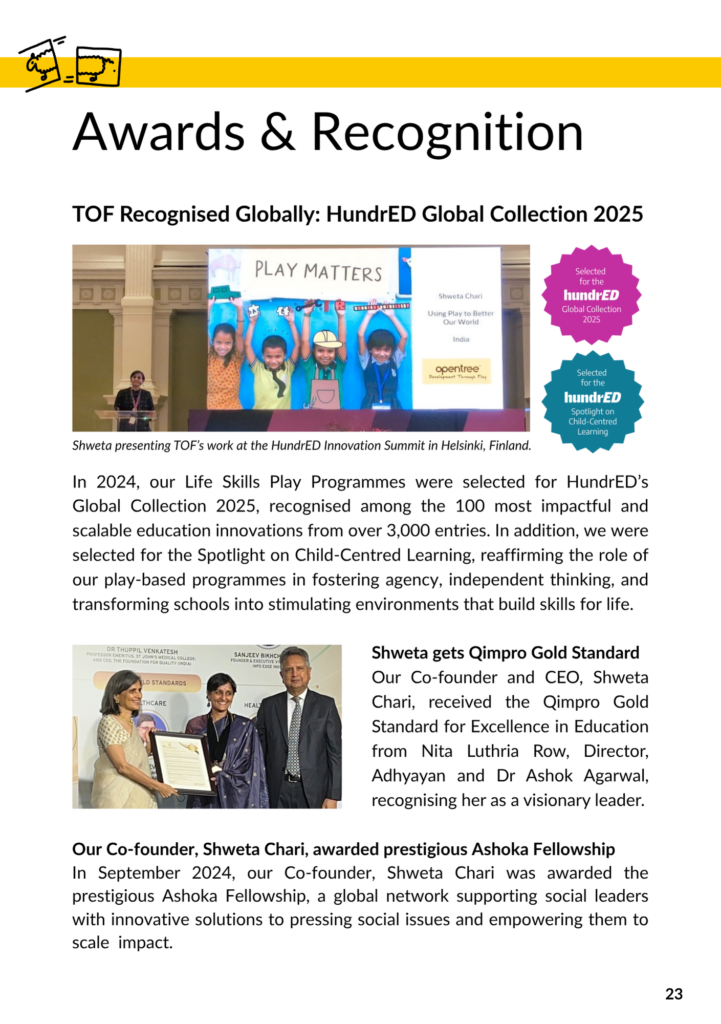
This year marked a milestone moment. We hosted India’s first Play Summit, bringing together educators, policymakers, and community leaders to champion play as central to learning and wellbeing. Our recognition by HundrED.org as a leading global education innovation reaffirmed what we’ve always known — that play has the power to change lives.
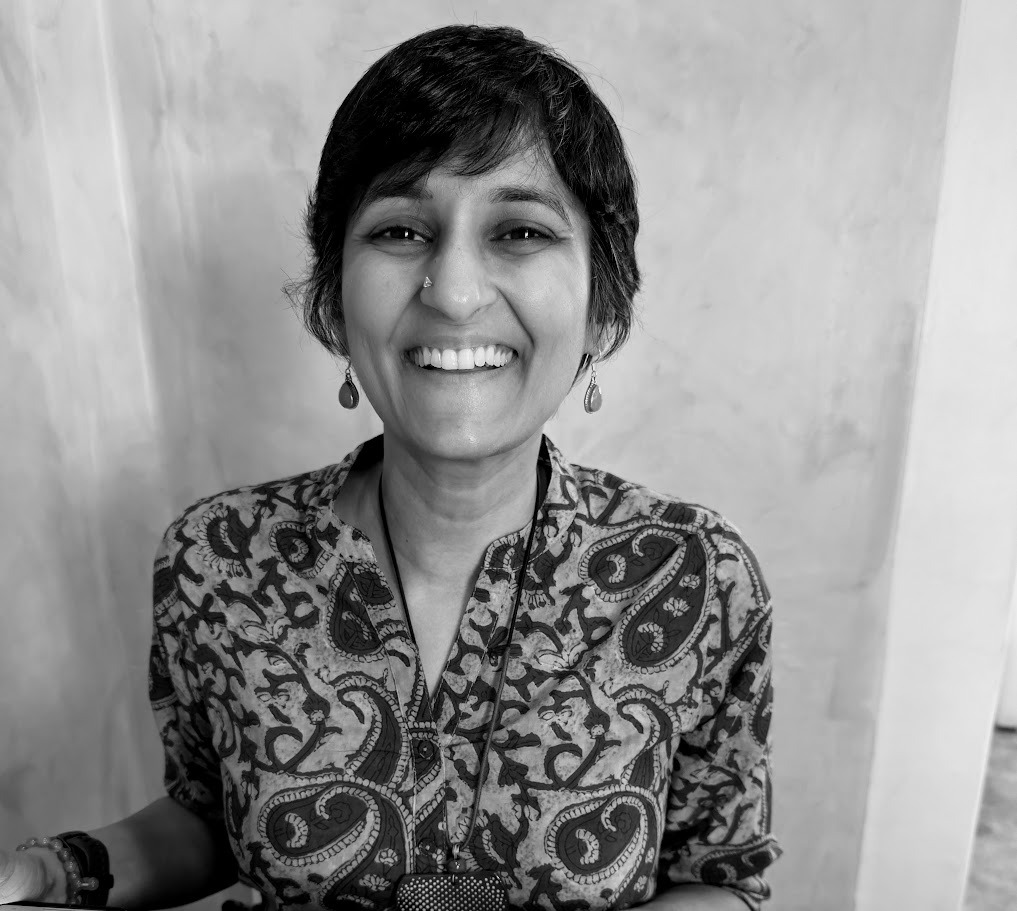
"Through our Conscious Play approach, we’ve turned classrooms into spaces of curiosity and discovery, helping every child experience the joy of learning and the confidence to explore the world."
Shweta Chari
Co-founder & CEO, The Opentree Foundation
The 2024–2025 Annual Report celebrates this 20-year journey of learning, adapting, and staying rooted in the belief that every child deserves to experience the joy and freedom of play. As we look to the future, our next bold step is clear: to reach one million children by 2030 and build systems that embed play as a right, not a privilege.
Because when we choose play, we choose a future filled with possibility and dignity.
At The Opentree Foundation (TOF), we’ve always believed that the work of building happier, healthier childhoods cannot be done alone. It takes deep partnerships, collective vision, and people who believe, not just from afar, but who show up, sit beside us, and walk the journey with us. One such person is David Millary.
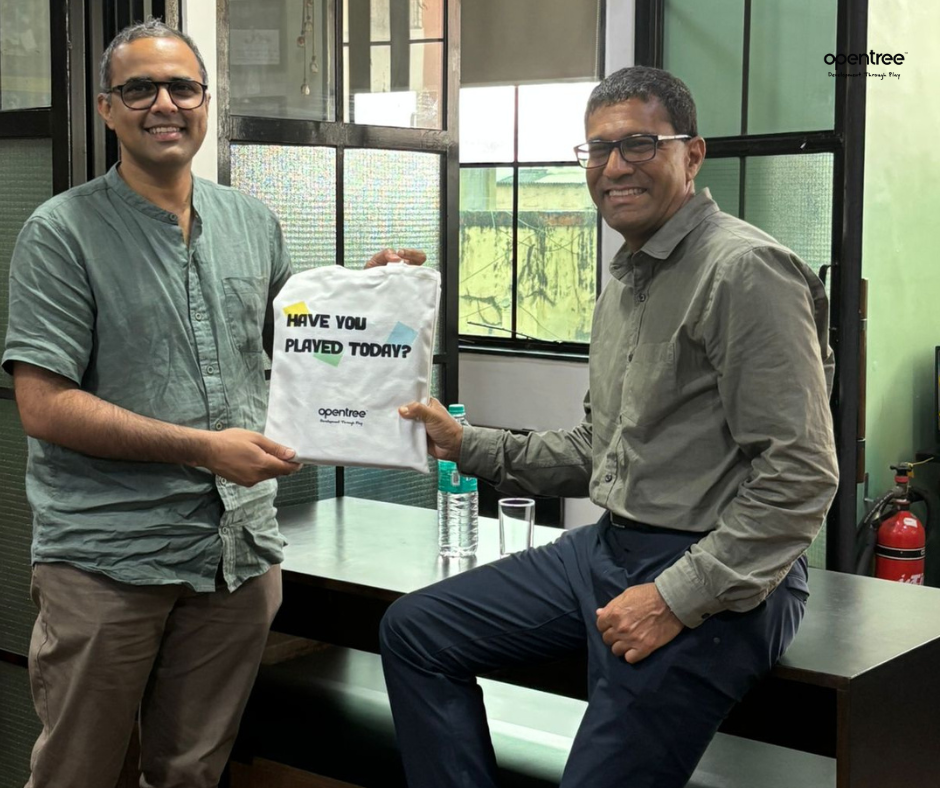
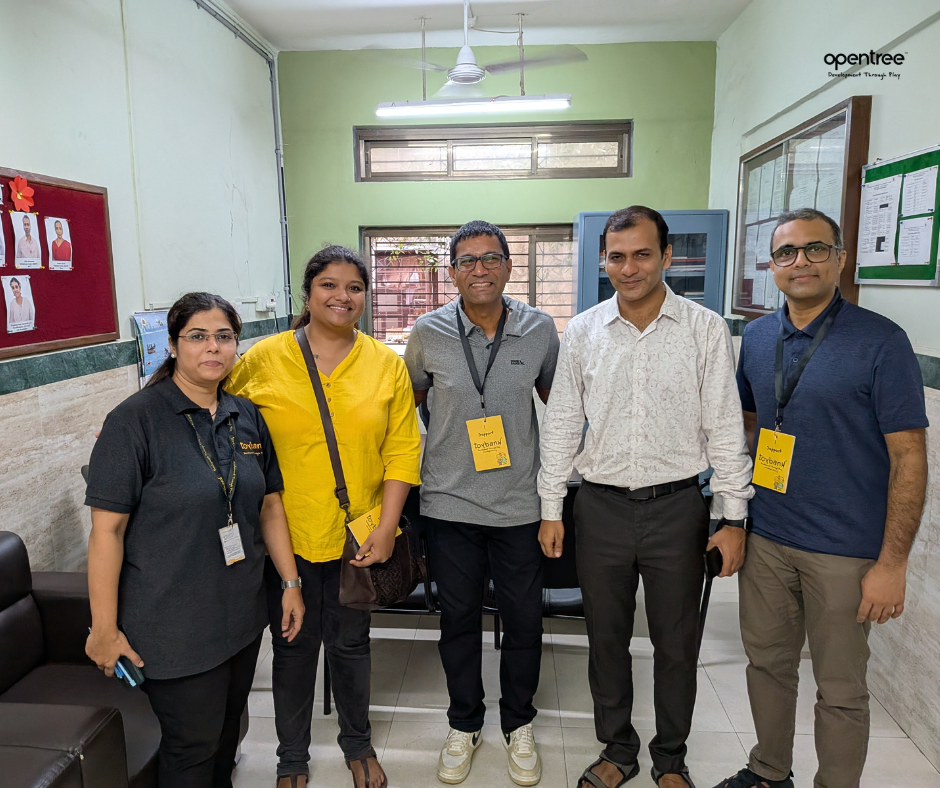
David has been a long-time friend and supporter of TOF for over six years. Earlier this month, he made a special three-day visit to India with a focused goal: to co-work with our team and help us plan more effectively, as we scale our work to reach 1 million children with play by 2030.
From day one, David’s energy was rooted in genuine connection. At our office in Mumbai, he spent time co-working with the team, not just advising, but actively engaging with the realities, ideas, and systems behind our work. He spoke to the larger team about why play matters and why what TOF does is critical. “Children never start from zero,” he shared. “Every child has a spark in them. Children TOF is working with, every one of them has something unique to offer the world.”
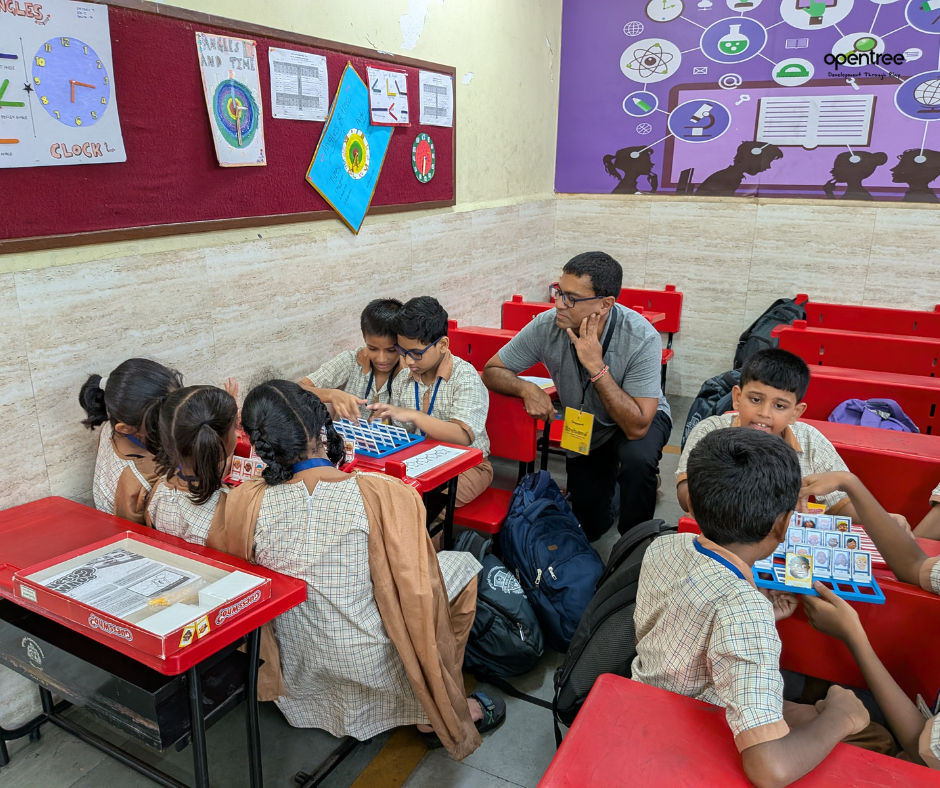
David also visited a play session at the Mumbai Public School, where Class 5 students were playing games that help build skills of communication and critical thinking. He joined the children in a round of Guess Who, admiring the strategies they used and the joy with which they played. He later spoke with the class teacher, who shared how useful TOF’s play sessions are, especially on busier days. The school’s principal echoed her thoughts, saying that in the past three years of partnering with TOF, the presence of play has built visible camaraderie and teamwork among the students, even when TOF facilitators aren’t around.
The visit culminated in our TOF Circle: Vision and Connection evening, an intimate gathering of our long-time supporters. Together, we reflected on our journey so far and discussed where we hope to take the power of play in the years ahead. David’s voice in the room grounded us, reminding everyone of the human connections behind the mission.
We are deeply grateful to David for taking the time to visit us, for working alongside us, listening to us, and cheering us on. In a world where many causes compete for attention, it means so much when someone chooses to stand with you, not just in words, but in presence.
David’s visit was a moment of reflection, motivation, and alignment. It reminded us that we are not alone in this mission to make play a right, not a privilege. And for that, we are truly thankful.
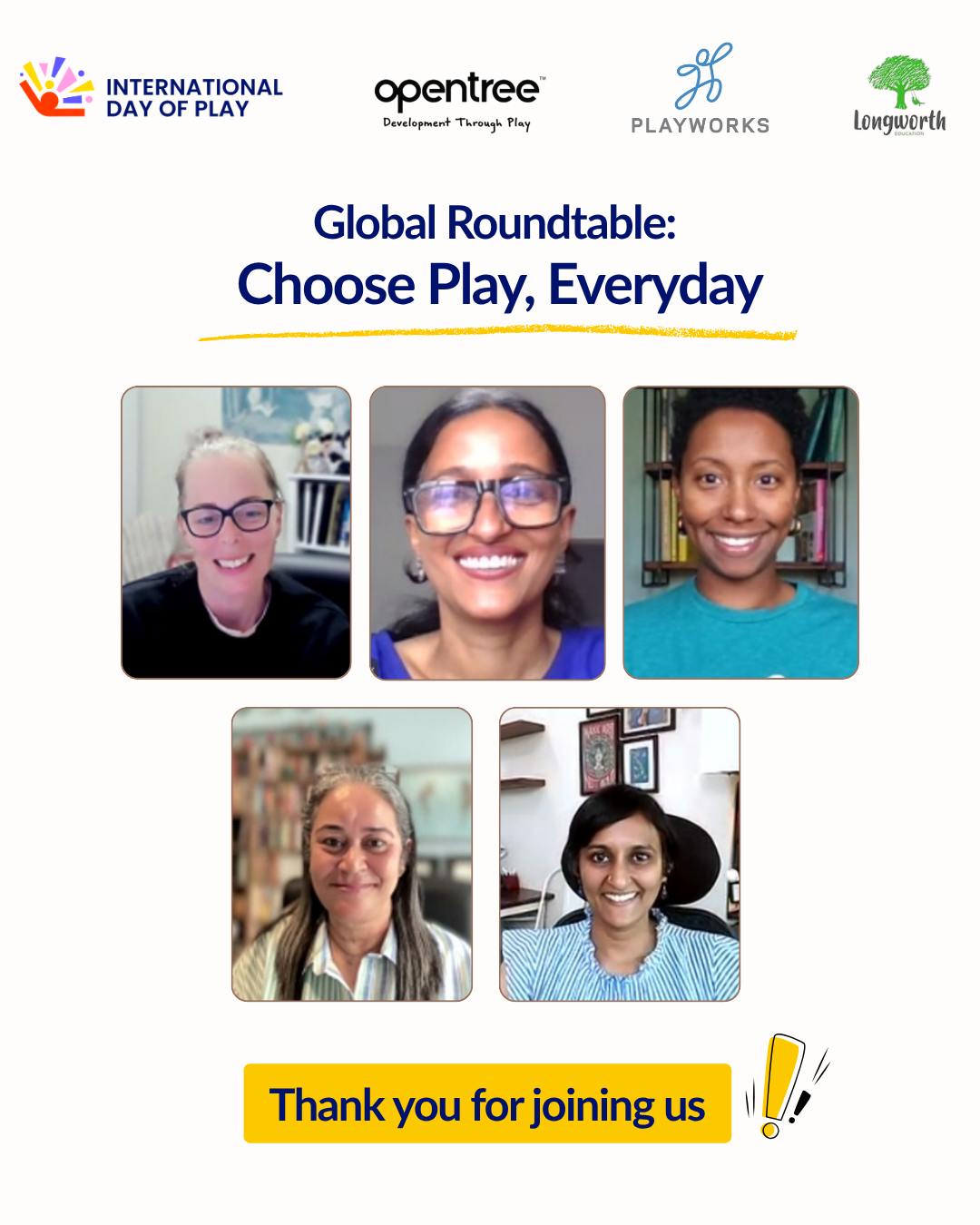
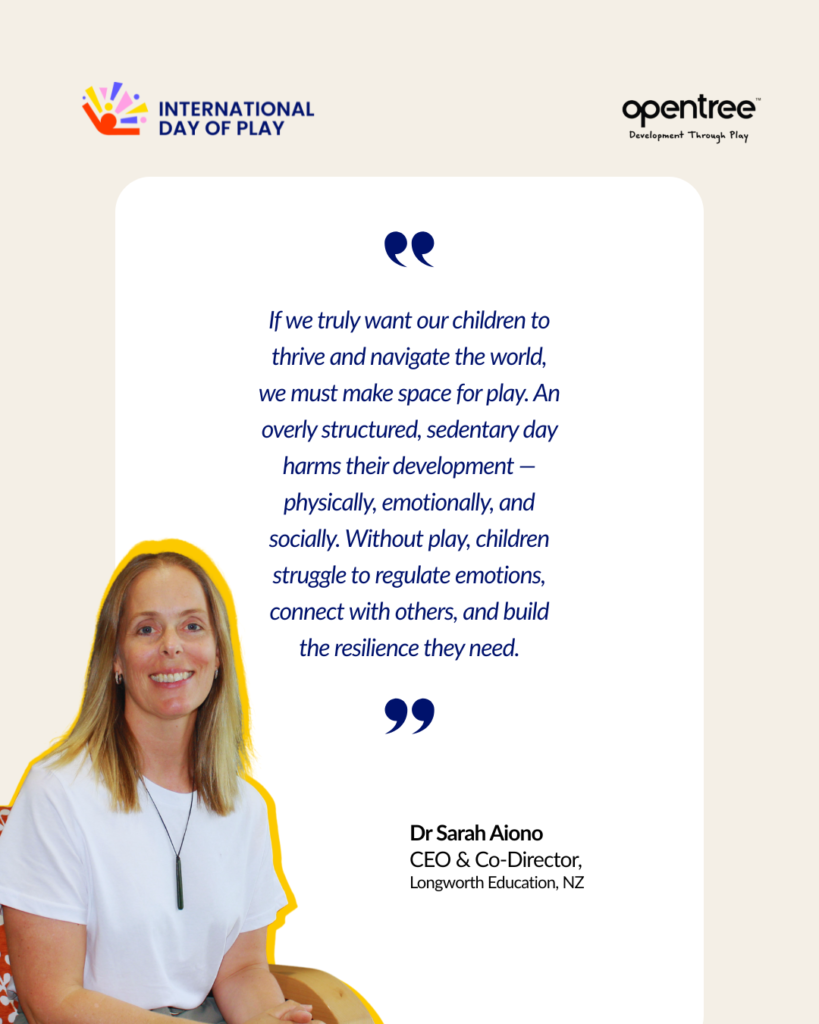
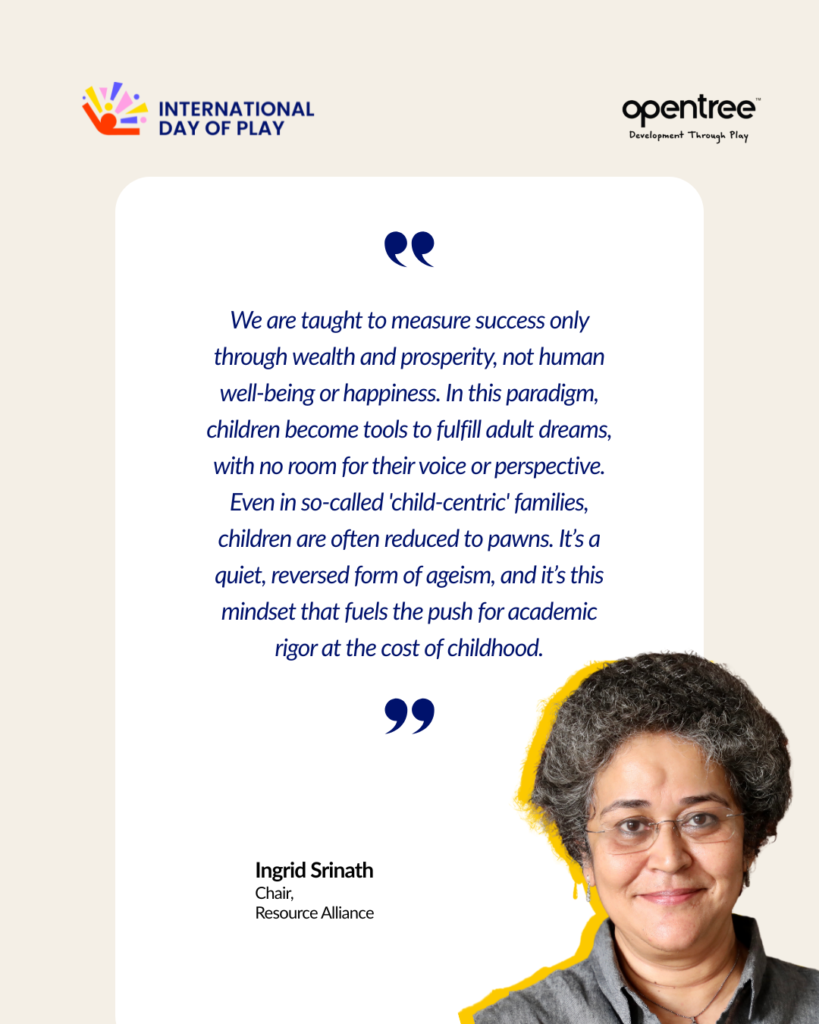
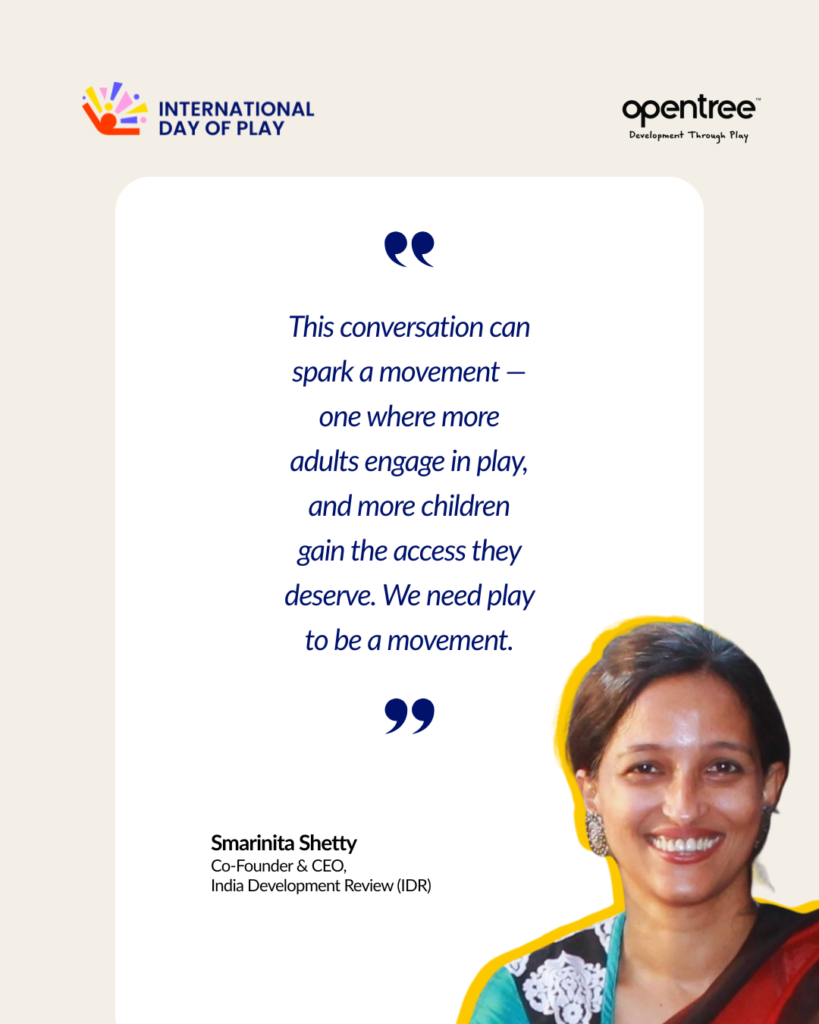
This International Day of Play, The Opentree Foundation hosted a powerful roundtable discussion titled ‘Choose Play, Everyday’, bringing together global voices to tackle a quiet crisis: the disappearance of play from children’s lives.
Moderated by Smarinita Shetty (India Development Review), the panel featured Dr Sarah Aiono (Longworth Education), Tia Mathisen (Playworks), Ingrid Srinath (Resource Alliance), and our very own Shweta Chari (The Opentree Foundation). The session explored how play, a natural right of every child, has been sidelined in classrooms, homes, and policy conversations.
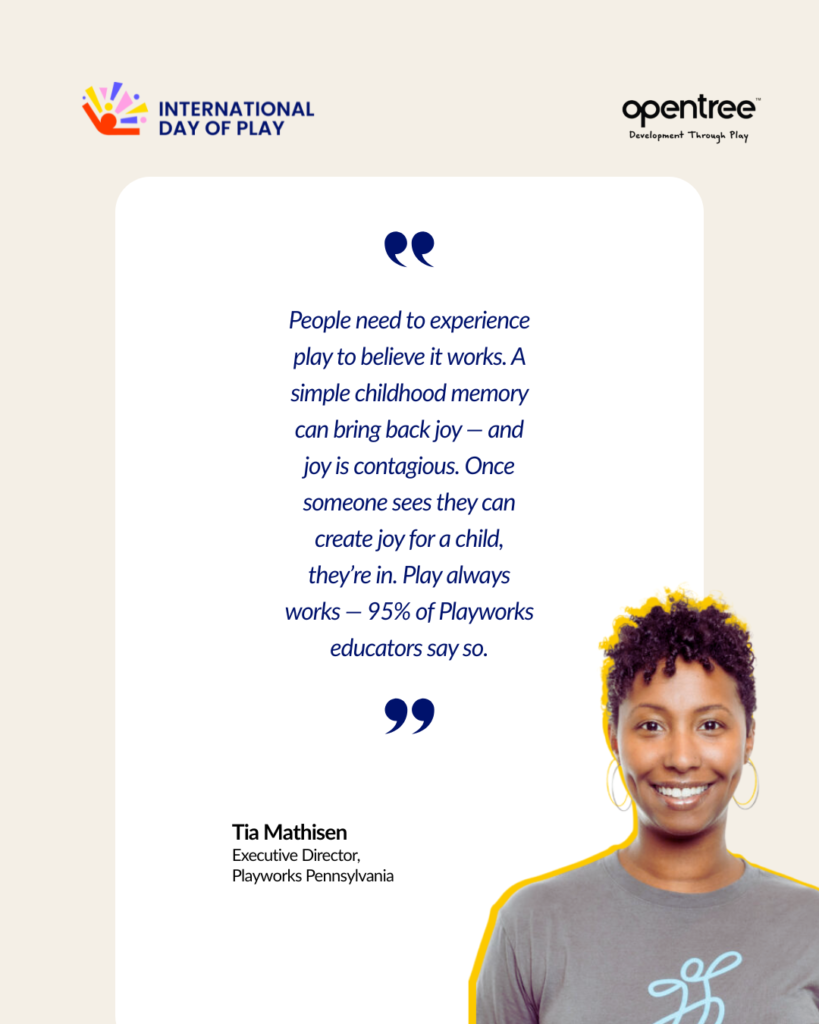
Panelists emphasised that play is not a luxury but a foundational element of childhood. Dr Aiono shared insights on how educators can bridge the gap between knowledge and practice, ensuring play is not reduced to a token activity, but embedded meaningfully in curricula. Tia Mathisen spoke about the power of adults rediscovering play for themselves, creating joyful moments that lead to lasting mindset shifts.
Ingrid Srinath reminded us that systemic change won’t happen until we redefine success, moving beyond grades to include creativity, wellbeing, and joy. And Shweta Chari brought the message home: “It’s so obvious. But still not understood.”
The way forward is clear: we need more data, yes, but we also need more demonstration. We need to let funders, policymakers, and educators feel the power of play.
At The Opentree Foundation, we remain rooted in our belief: it’s easier to build strong children than to repair broken adults. And in a world that desperately needs healing, choosing play every day might just be the most radical, hopeful act of all.
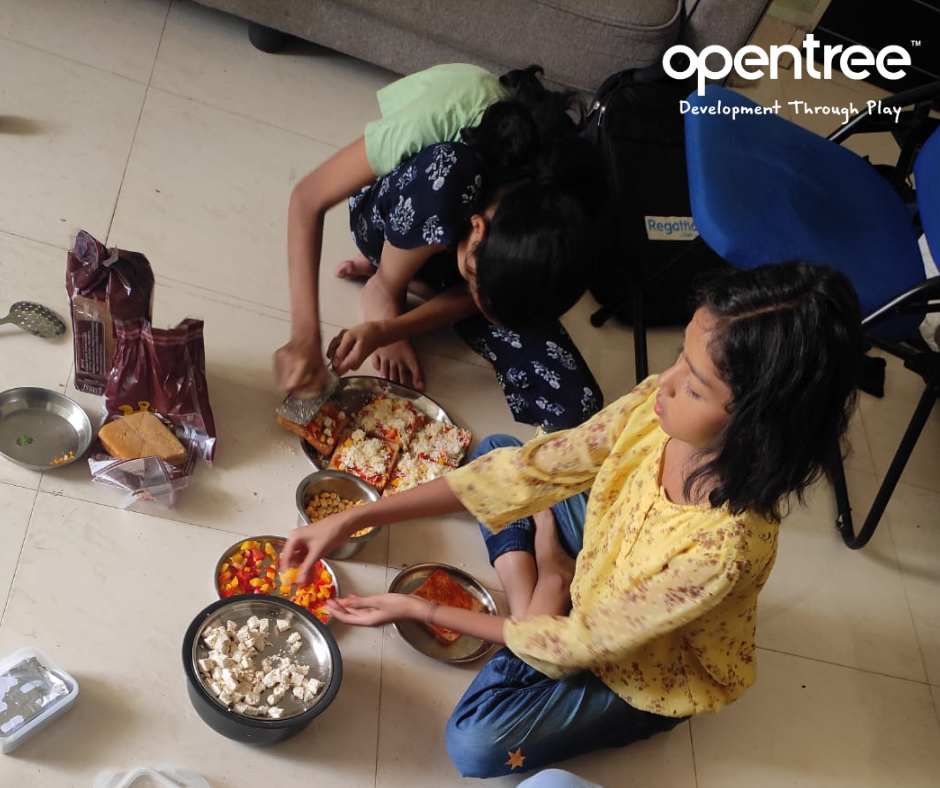
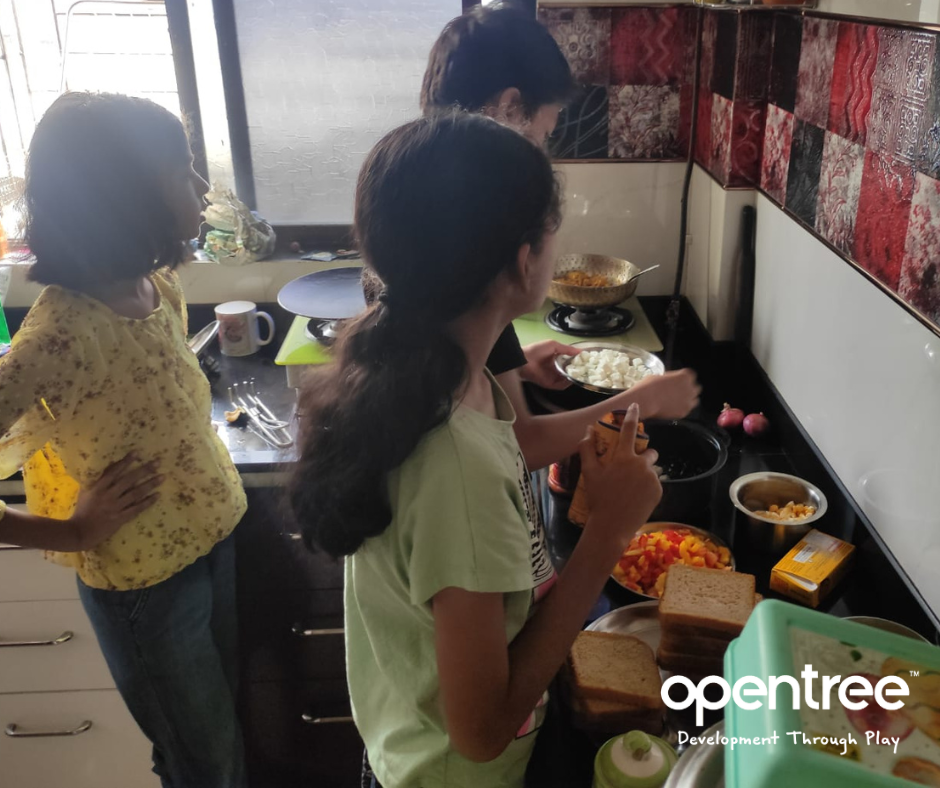
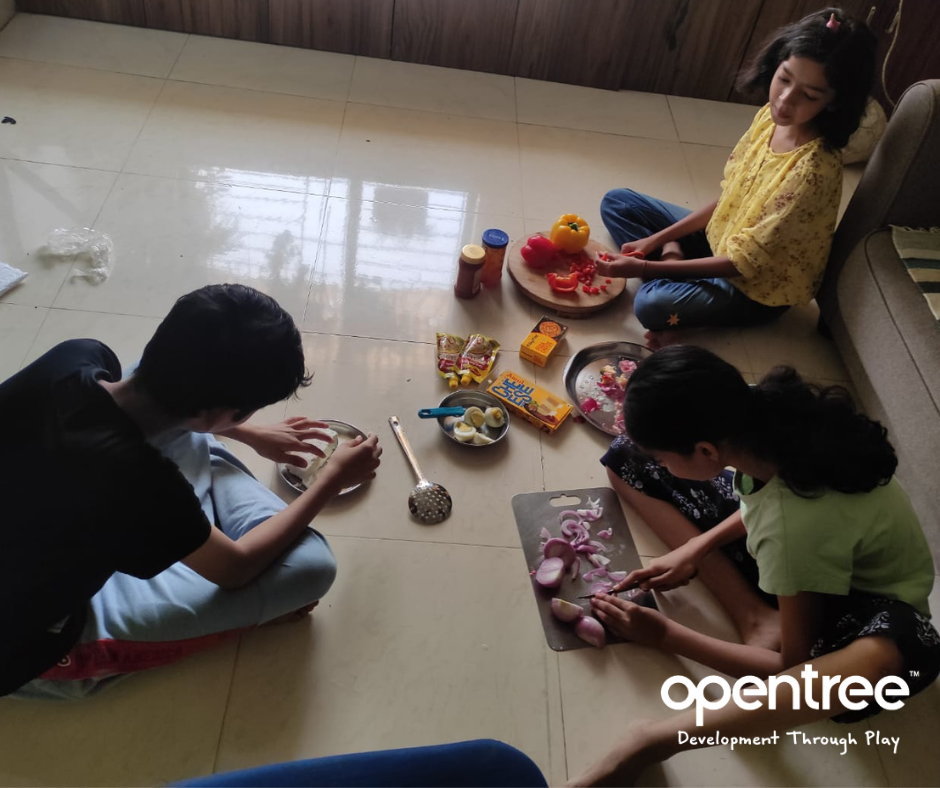
It all began with a simple craving — a craving for pizza. But this time, it wasn’t just about eating it. It was about making it. Together.
The idea sparked during playtime, as the children chatted about their favourite foods, and just like that, they decided to make their own pizza and the game was on.
What followed was no ordinary kitchen activity — it was an adventure led entirely by the children, powered by imagination, curiosity, and joy. First, they huddled together to list all the ingredients they would need. Tomatoes, cheese, onions, bell peppers… the list grew longer with every excited suggestion.
Then came the expedition. With shopping lists and bags in hand, the little team set off to the vegetable market, the dairy, and even a nearby supermarket. They asked questions, compared prices, bargained shyly, and learned how to choose the freshest produce. The bags were heavy, but not one complaint was heard — because they carried them together.
Back home, play turned into purpose. Sleeves rolled up, hands washed, and vegetables rinsed. Some chopped while others debated the best topping combinations. It was messy, noisy, but perfect. Each child had a role, and every task was a tiny triumph — from slicing mushrooms to spreading sauce just right. They took turns, shared tools, and offered encouragement.
When the pizzas were finally ready, they gathered around like proud chefs at a grand feast. It wasn’t just about the taste — it was about the journey. The teamwork, the creativity, the hands-on problem-solving. And the play.
This wasn’t a structured lesson. There were no worksheets, no formal instructions. Yet, in that afternoon of pretend play turned into a real-life project, they learned more than any textbook could offer — how to collaborate, communicate, plan, adapt, and most of all, how to turn ordinary moments into extraordinary memories.
This activity reminded us that play is not separate from learning — it is learning.
Written with inputs from Vijay Suryavanshi, a longtime volunteer at The Opentree Foundation and a supporter of play and play-based learning.
“It was inspiring to see how freely they translated their thoughts into art, reminding me that imagination has no limits when given the right space to grow.”
– Grade 11 ABWA CAS volunteer
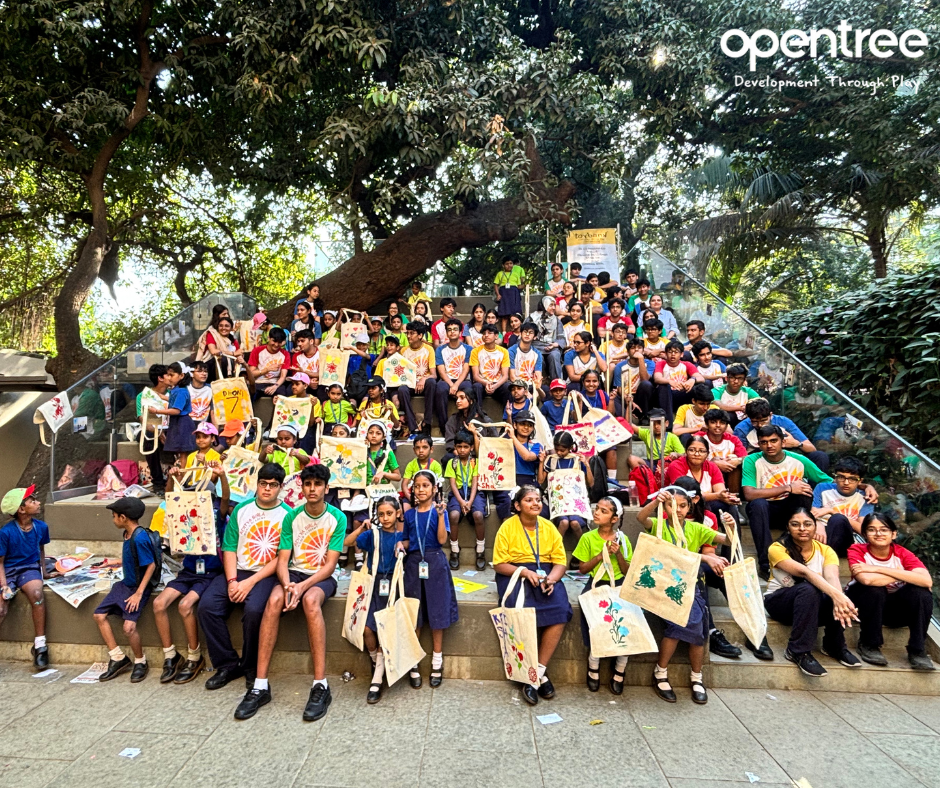
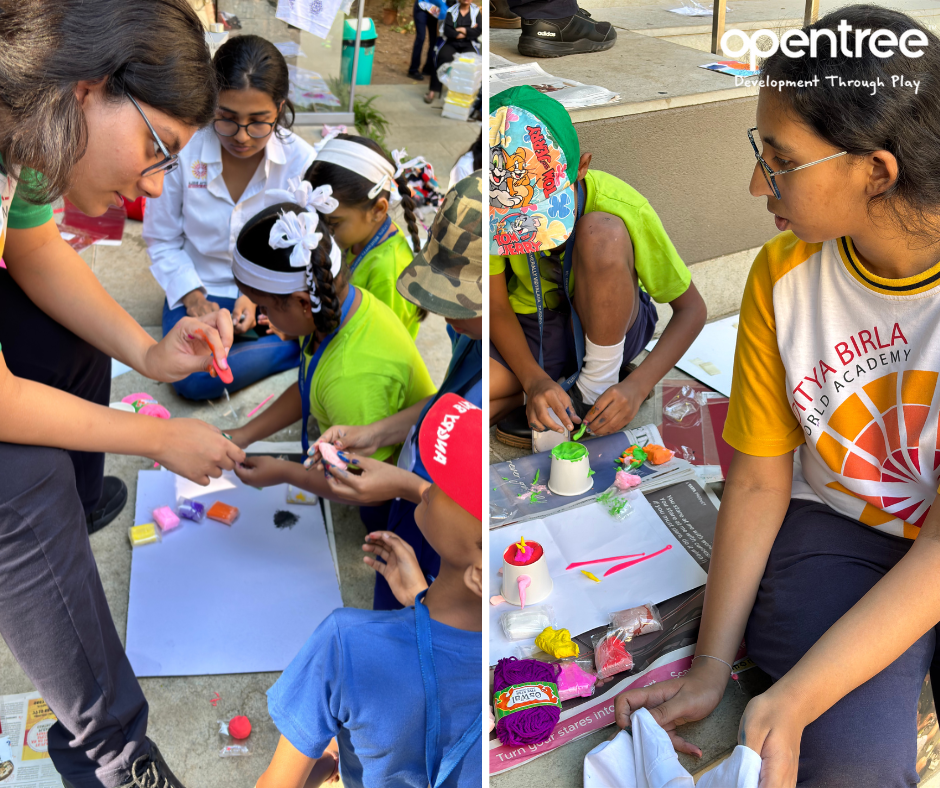
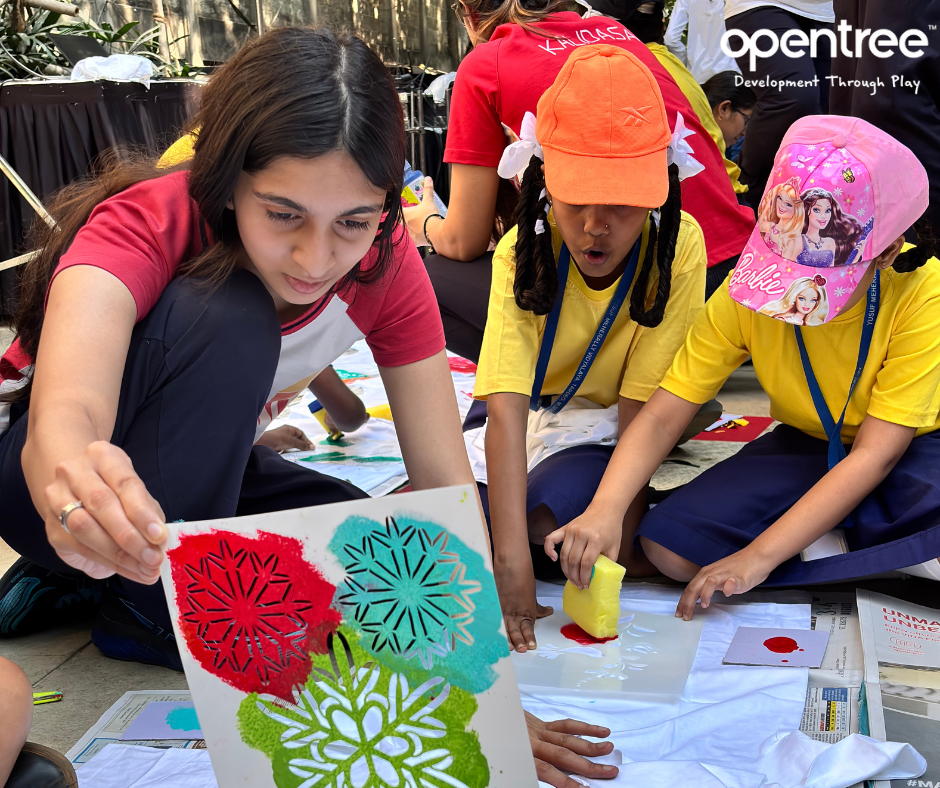
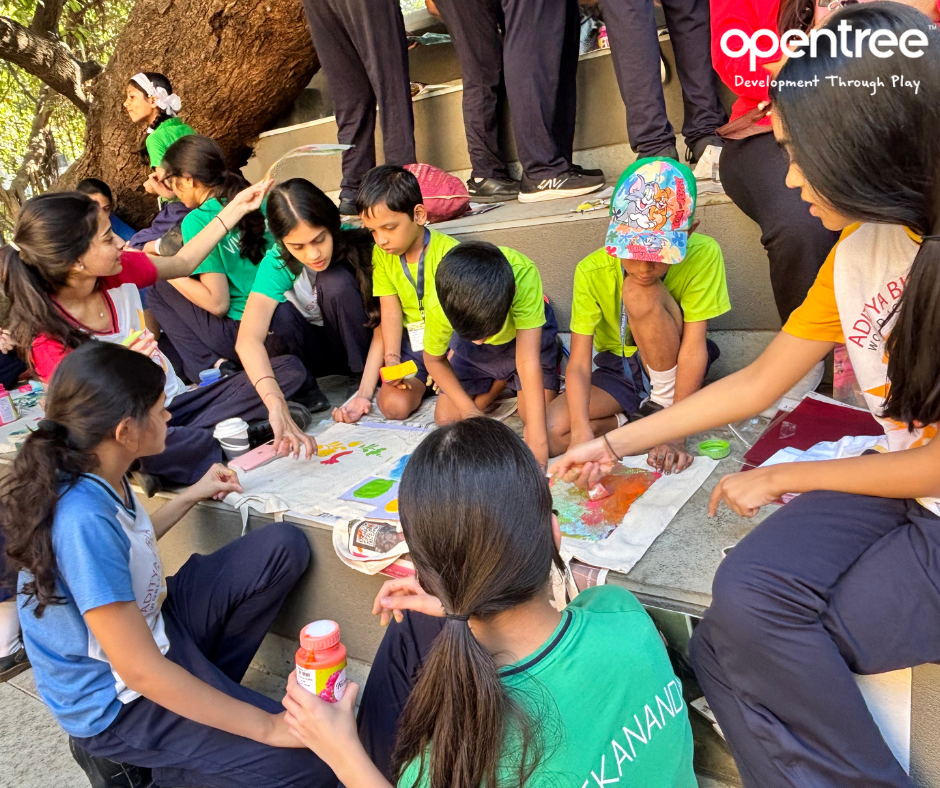
On January 29, 2025, we partnered with Aditya Birla World Academy (ABWA), to co-create a vibrant and inclusive play session at the Kala Ghoda Arts Festival. The collaboration brought together over 60 enthusiastic students from ABWA and 41 of children from The Opentree Foundation’s play centres, who celebrated the power of play, creativity, and connection. This wasn’t just an event — it was a reminder of how play can break down social barriers and empower every child to express themselves freely.
A Canvas of Creativity and Connection
The session was a colourful fusion of artistic exploration and joyful interaction. Children immersed themselves in:
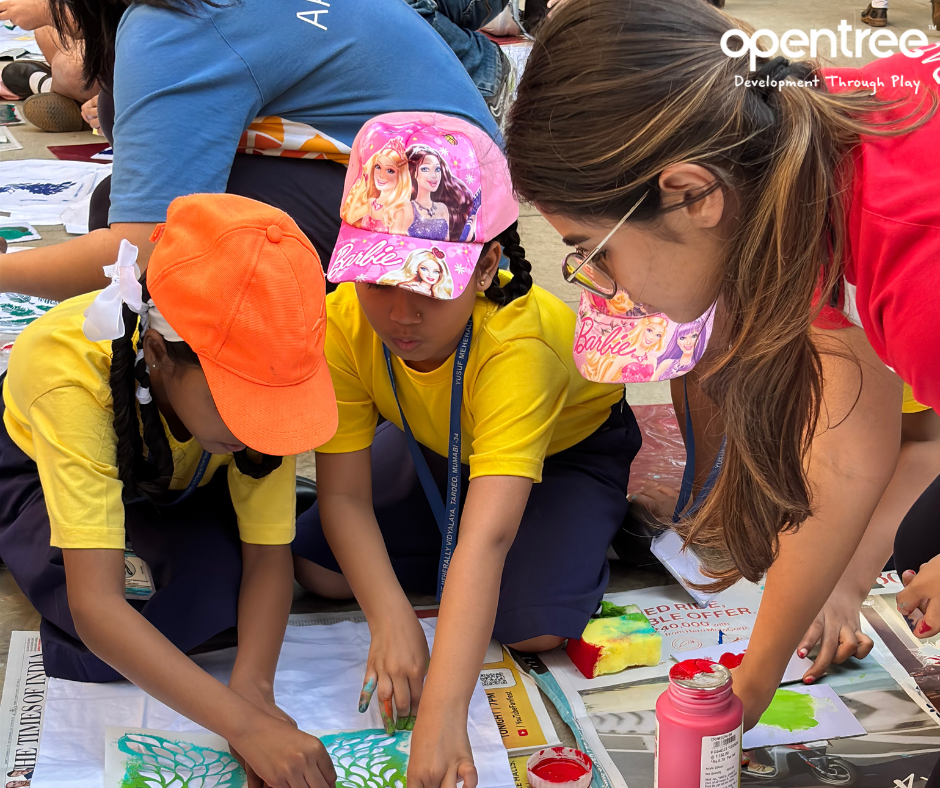
T-shirt and bag stencil painting – Letting their imaginations run wild, children designed unique pieces that reflected their inner worlds.
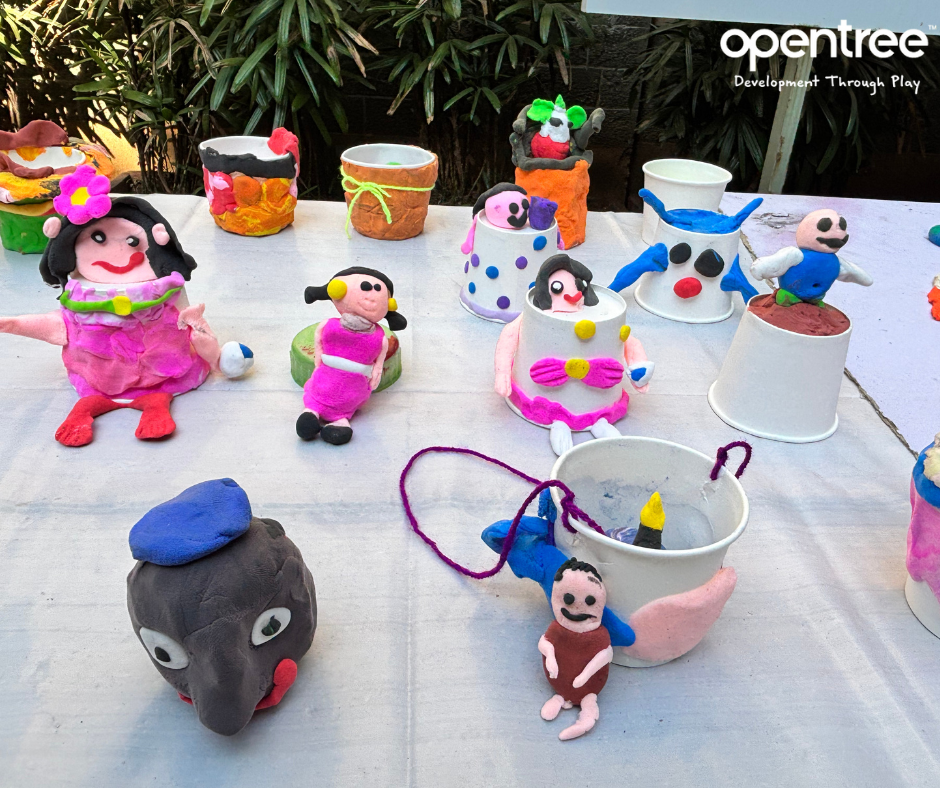
Loose parts play – Using everyday materials like U-pins, paper cups, and clay, the children created their own ‘imaginary friends’ —characters born entirely out of creativity and personal interpretation.
These hands-on activities encouraged self-expression, problem-solving, and collaboration. Children weren’t just making art — they were communicating ideas, forming bonds, and stepping into each other’s imaginative universes.
Play Beyond the Classroom
This session stood as a powerful testament to how unstructured play fosters critical life skills like creativity, empathy, critical thinking, and teamwork. Through shared experiences, children learned not only about themselves but about each other—celebrating differences, building confidence, and finding common ground through joyful engagement.
“Through this activity, I learned the importance of self-expression and creativity in a child’s development,” a Grade 11 ABWA CAS volunteer said. “It was inspiring to see how freely they translated their thoughts into art, reminding me that imagination has no limits when given the right space to grow.”
For the students of ABWA, it was a day of reflection and inspiration. For children from our play centres, it was a moment of recognition and freedom. And for us, it was yet another affirmation of the transformative power of play.
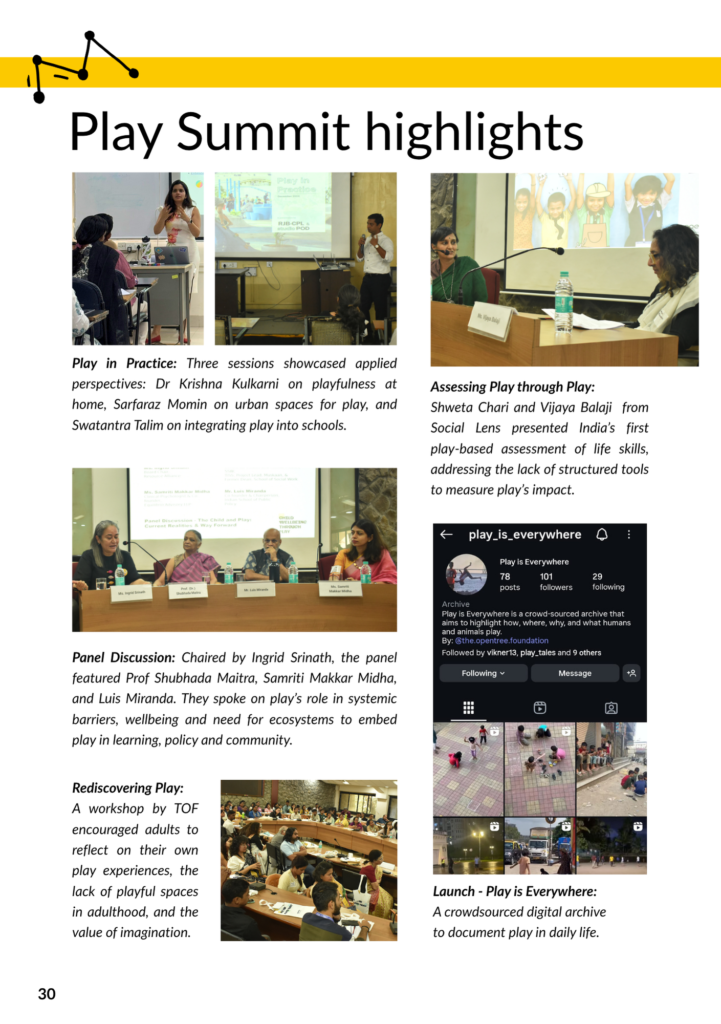
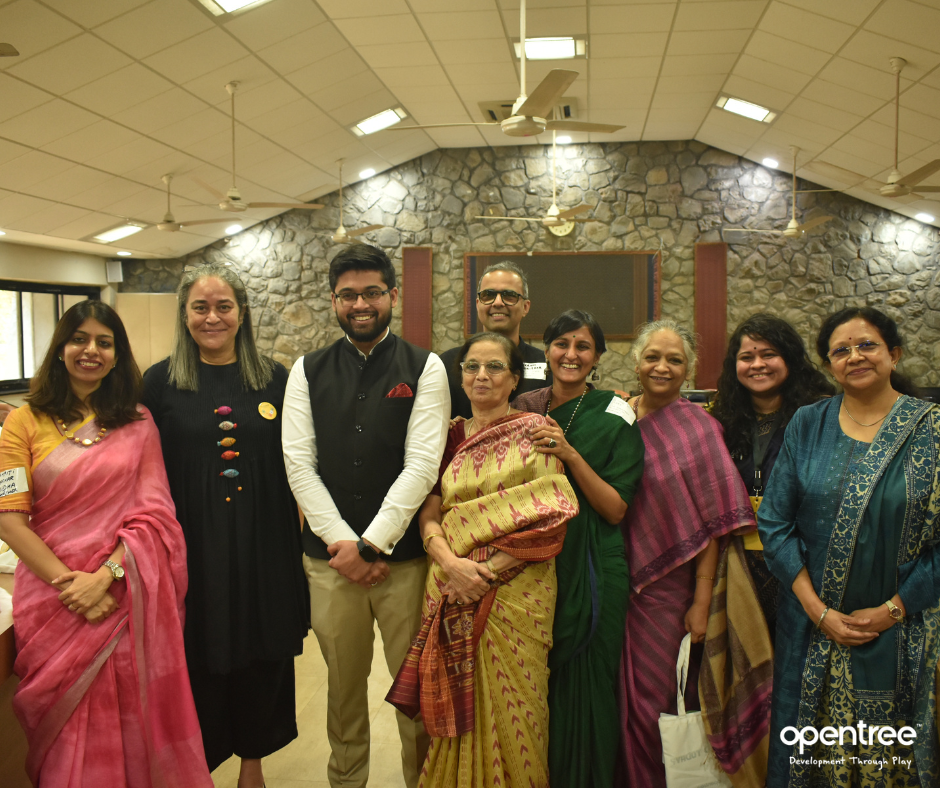
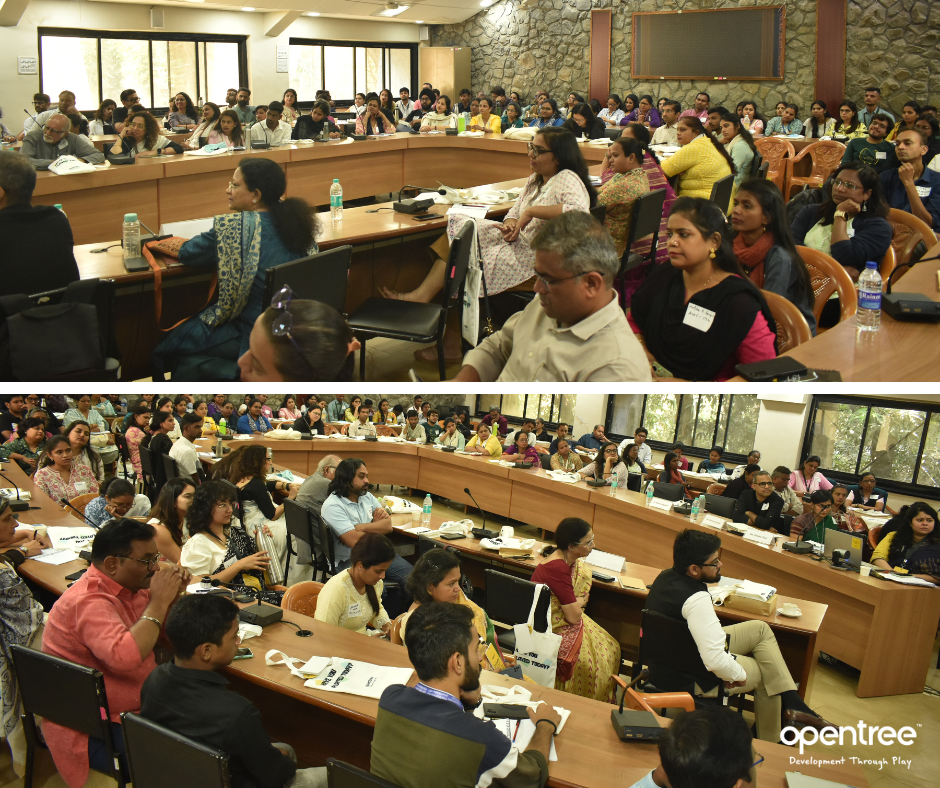
On December 14, 2025, The Opentree Foundation (TOF) hosted a Play Seminar – Child Wellbeing Through Play at the Armaity Desai Hall at the Tata Institute of Social Sciences, Mumbai. It was attended by over 100 engaging, enthusiastic play supporters from diverse spaces of academia, education, urban design, psychology, philanthropy and the social sector. It was heartening to see an auditorium and a courtyard bustling with participants throughout the day, showing a shared commitment and passion for play and play advocacy.
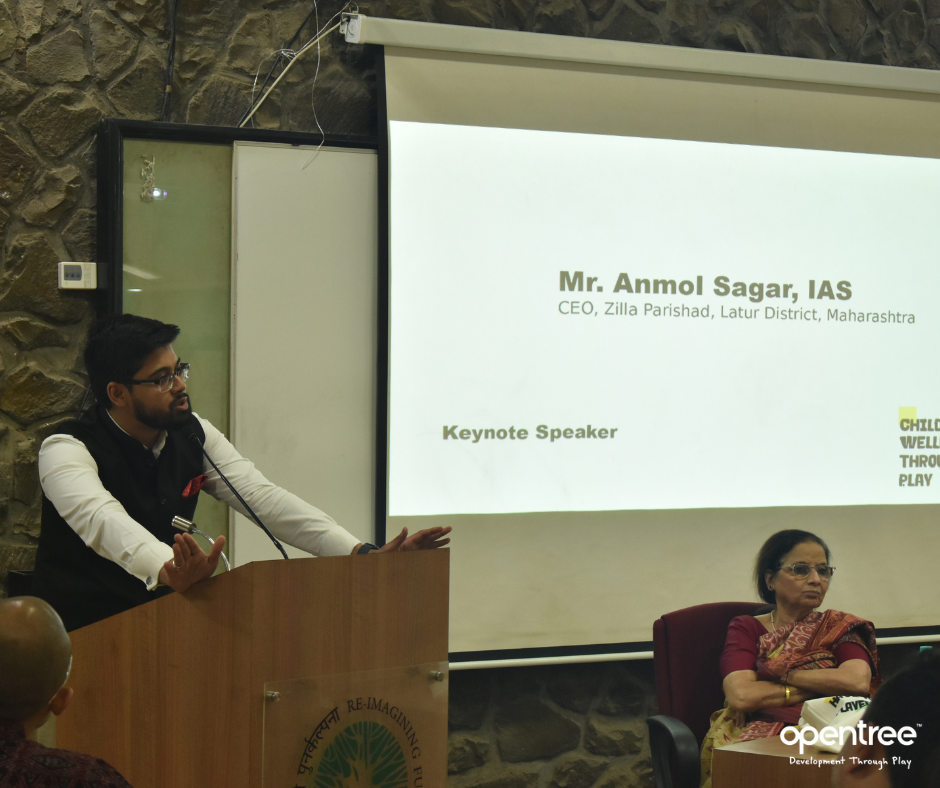
The keynote speakers for the event were Farida Lambay, Co-Founder, Pratham Education Foundation, and Anmol Sagar, IAS, CEO of Latur District, where TOF’s play programmes impact over 10,000 children across 50+ schools.
Lambay spoke at length about the various socio-economic barriers that limit children’s access to play, highlighting that even with the inclusion of Play in the National Education Policy (NEP) 2020, there remain considerable gaps in the implementation of play-centric teaching methods and the integration of play into learning spaces. Sagar, who has witnessed the impact of TOF’s programmes in Latur, spoke about play as a key tool for helping children develop positive attitudes towards school and learning, and urged organisations like TOF, and experts to come forth and collaborate with the government on more scalable, low-cost models of play-centric learning.
A Play-centric Space
Play is ubiquitous – we are surrounded by Play, and yet, we often fail to notice it. At this seminar, along with fostering dialogue and collective action on play, one of our goals was to create as many opportunities as possible for everyone to observe, recognise, and reflect on the presence of play all around.
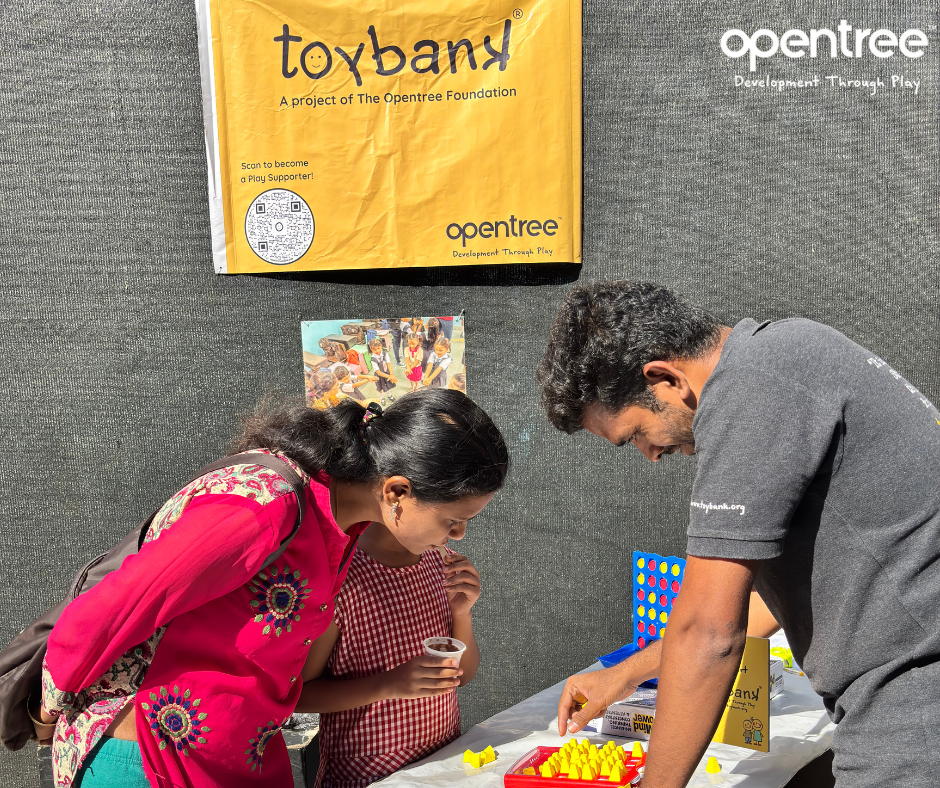
The essence of Play and playfulness was a key element of the experience design of the seminar. Our team created a series of interactive ‘play nooks’, that gave participants a chance to relive their own play memories, to understand some of the games used as part of project Toybank’s Conscious Play®approach, and invited them to reflect and collectively brainstorm solutions to these big questions: How can play become a part of learning environments? What can be done to make play accessible and equitable for children from underserved communities?
At these exhibits, participants also had a chance to understand the impact of TOF’s life skills play programme, which was also the focus of a session on Assessing through Play.
Panel Discussion - The Child and Play: Current Realities & Way Forward
The lack of equitable access to play is a complex problem, one that is deeply enmeshed with other socio-economic-cultural factors, and needs to be addressed through an ecosystem of mindset change, policy reform, capacity building and resource allocation. It is important that the child’s Right to Play is examined in the context of all these factors, along with defining the roles of various stakeholders in realising it.
These diverse perspectives on play came together in the form of a panel discussion titled ‘The Child and Play: Current Realities & Way Forward’ at the seminar, chaired by Ingrid Srinath, Founder-Director of Centre for Social Impact and Philanthropy. The panelists were:
Prof. (Dr.) Shubhada Maitra, former dean of the School of Social Work, TISS and an expert on children’s welfare, mental health, gender and play
Ms. Samriti Makkar Midha – a clinical psychologist and expert on play therapy, child protection, diversity and inclusion
Mr. Luis Miranda, chairman of the Indian School of Public Policy
The panelists navigated questions on where play can find a place in children’s well-being and cognitive development, the need to reimagine ecosystems through play-centric design and approaches, the role that socio-economic adversity, gender, geography play in enabling or restricting access to play.
Play in Practice: Parallel Sessions
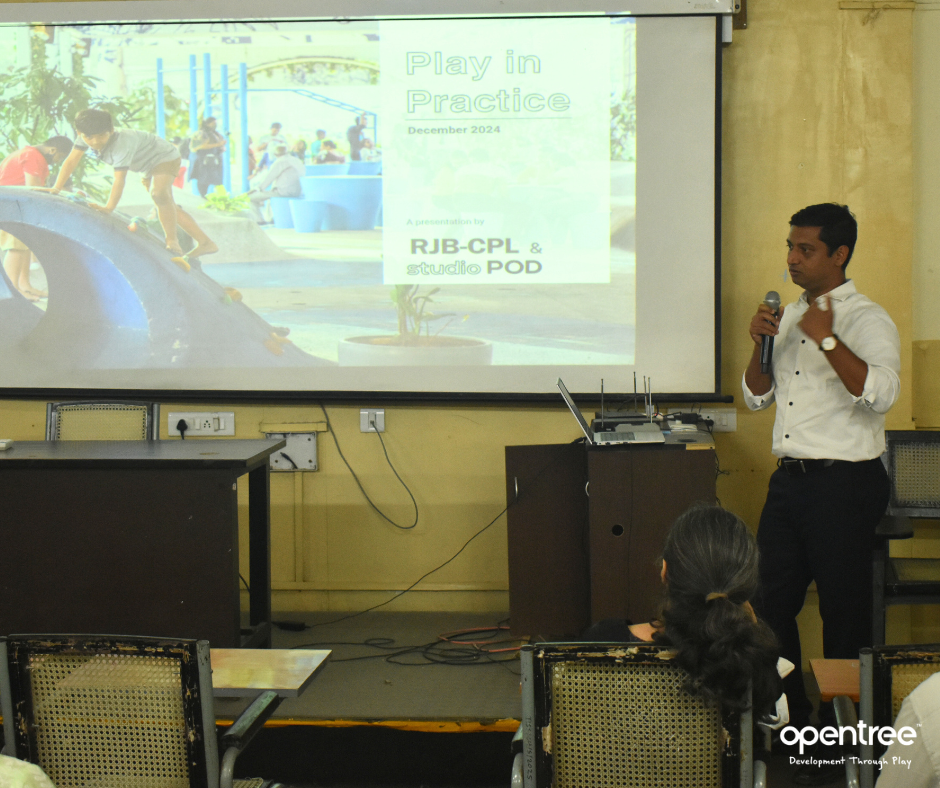
One of the highlights of the seminar were the sessions led by play practitioners – experts who use play as a tool for change in their own practices and contexts. The first session, ‘Beyond Toys: Beyond Toys: Creating a Culture of Playfulness for Families and Communities, was conducted by Dr. Krishna Kulkarni, a play researcher who uses playful practices to advise parents on fostering safe, joyful interactions and spaces with children. In Urban Spaces for Play, Sarfaraz Momin, the Co-Founder of StudioPOD spoke at length about how play can consciously be integrated into the design of spaces, and how play-centric design fosters wellbeing, cognitive development, and creates more equitable access for play.
The third session, How Play Makes Sense: Integrating Play in Schools & Communities and its Impact on Children was conducted by Rahul Aggarwal and Kuldeep Kannoujiya from Swatantra Talim, a Lucknow-based organisation that works to build children’s skills and agency through play-centric activities and environments. This session wove elements of free play, puppetry to give participants an immersive experience. These sessions inspired participants with ideas on how to integrate play into their own context, to address children’s needs and overcome barriers to play.
Workshop: Rediscovering Play
Facilitated by the The Opentree Foundation’s team, this 45-minute workshop was a space for participants to revisit play in their childhood, reflect on the paucity of play as we become adults, and to immerse themselves in a state of playfulness where they used their imagination to bring abstract objects to life. The workshop brought out rich reflections – from the role of stress in our fast paced lives, to the lack of non-judgemental, safe spaces where one can be playful, to the need for being open to newer, less structured ways of thinking and finding solutions.
Launch: Play is Everywhere
With all the participants in a playful state of mind, TOF announced the launch of Play is Everywhere, a crowdsourced digital archive that will inspire all of us to be more aware of play round us, to think more critically about what enables or deters access to play and the intermingling of culture with play. You can follow us here.
Assessing Play through Play
In the two decades of our work at The Opentree Foundation, a question that we have tried to address is: How do you measure Play? Play is not linear; its impact of play is largely visible through observation or interaction with children, and the outcome varies from child to child. Over the years we have conducted assessments, observations and case studies that document the impact of play on skills, socio-emotional development, school attendance and learning outcomes; and yet, there remains a large gap in terms of a shared body of knowledge, or even shared evidence on measuring the impact of play in the Indian context.
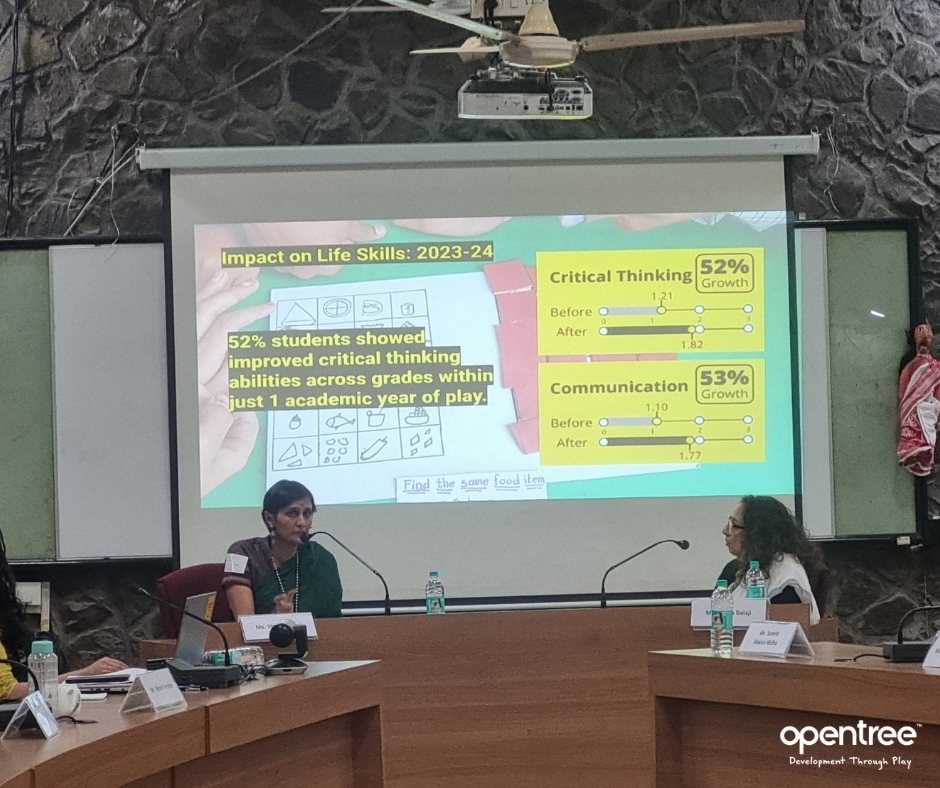
As our programmes have evolved, we also have steadily worked on bridging this gap in terms of resources and research on assessments for play in India. At the play seminar, Shweta Chari, CEO and Co-Founder, The Opentree Foundation, presented this journey of evolution of impact measurement for play, along with Vijaya Balaji, founder, Social Lens, which is our partner for data analysis and impact measurement.
In their session, Shweta and Vijaya reflected on the lack of structured tools and methods to measure the impact of play, beyond traditional surveys and questionnaires, and introduced TOF’s play-based assessment of life skills, which will be the first every framework of its kind in India that uses play to measure play.
Call for Collective Action
The seminar concluded with a call to action, for participants to come forward and sign up for a Play Collective, which will bring together a group of driven play advocates who will leverage their individual strengths, influence, resources and expertise to initiate collective action for mainstreaming play in schools, communities and public spaces in India. Through this Play Collective, The Opentree Foundation will spearhead play-centric research, innovation and policy change, paving the path for realising the Right to Play for every child in India.
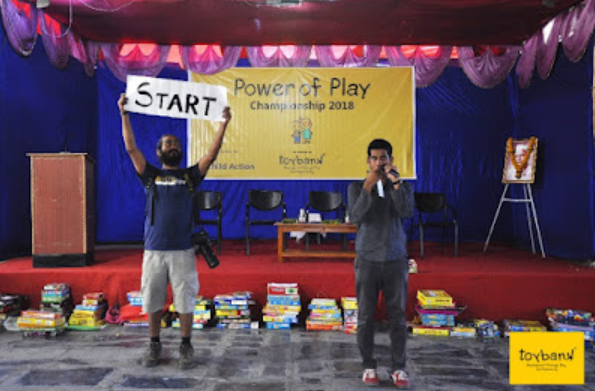
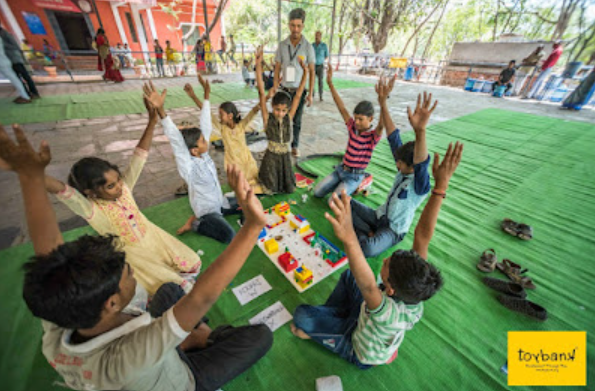
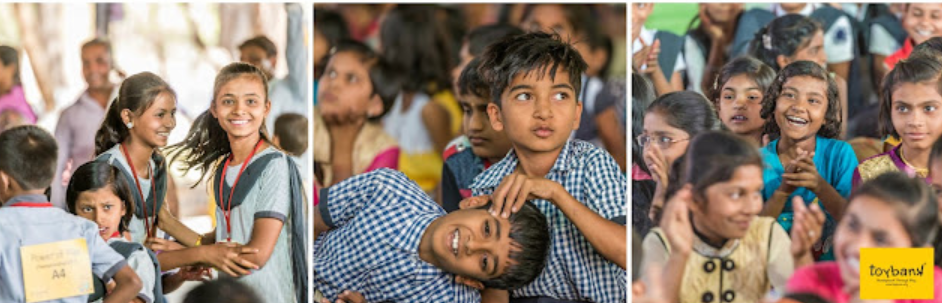
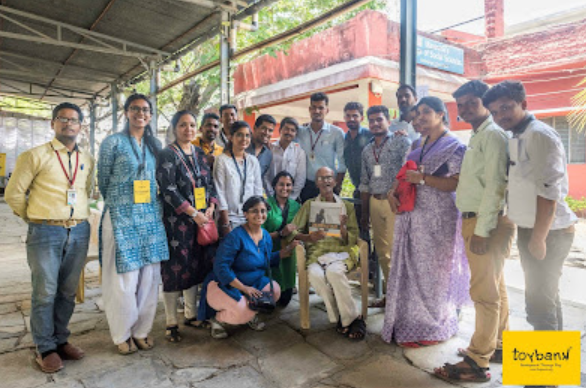
In April 2018, Toybank held the first ever Power of Play Championship. This revolutionary event provided a unique learning and development experience for 80 children from 20 schools across Maharashtra. In addition to providing an enriching experience for children, this event developed skills and sensitivities in teachers, Toybank team members, and volunteers including volunteers from Manavlok’s Masters of Social Work college. Our intention was to cleverly disguise the Power of Play Championship as a competitive event in which children competed against each other in three tasks: playing a game they were familiar with, playing a game which they had to learn on the spot, and completing creative exercise in a team.
Though the children did complete these tasks, and they were competing, the point of the championship was not to win the most games nor complete the best project; the point of the competition was to support development of well-rounded children. Children were scored on interpersonal and problem-solving skills– enthusiasm, politeness, attitude, and strategy, were only some of the characteristics which these children were scored on.
After the children had finished the first two sessions (playing a game they were familiar with, and learning a new game), we revealed the secret behind the scoring system.When the children as well as their instructors were informed of the alternative goals of the Power of Play Championship, everyone involved learned valuable lessons. The children learned that patience, kindness, and an open and creative mind are often more important to success than winning is. Those of us who had the privilege of observing the children got the chance to see clearly how play can develop the mind of a child beyond teaching him or her curriculum subjects.
The third session, which was a collaborative creative project, reinforced the concept that play is valuable in building well-adjusted and successful adults. Teams of children were given Legos, clay, mechanic sets, and other loose parts to use to build their ideal school or village.
Not only did this project enhance the children’s self-confidence by giving them the chance to express their own opinions concerning their everyday environments, but it also built unique skills which will help the children in their lives to come. One unexpected, and incredibly beautiful, outcome of this third challenge was that the children were exposed to materials and ideas which they had been unfamiliar withpreviously; an example of this is that many of the children hadn’t had the chance to play with molding clay before, they explored this material by feeling and even sniffing it!
Cmpleting this project in groups allowed the children to practice teamwork, collaboration, and communication. The task itself required the children to think critically about the components of a successful community and perhaps, how they see themselves involved in one.
The Power of Play Championship successfully exemplified the impact that play can have on children, their communities, and their futures. Volunteer Reeba George said “There was learning to happening all around; for us, for the teachers, and for the children. You could see the impact.” This statement illustrates the environment which we had hoped to create by providing this unique experience to the communities involved in this event.
In the end, every participant in the Power of Play Championship left having learned something about ourselves, our field of work, and or the human experience, proving how play has the capacity to encourage growth on an individual level as well as on a larger scale.