



Contacts

92 Bowery St., NY 10013

thepascal@mail.com

+1 800 123 456 789

Tag: Play-Based Learning

EVENTSIMPORTANCE OF PLAYPOLICY

Protect Play, Protect Childhood — District-Level Roundtable, Ahilyanagar

12  years of on-ground work reflected in a landmark decision by the Ahilyanagar Zilla Parishad: all schools across the district began the new academic year with an Hour of Play—and why this marks an important milestone for play-integrated education in Maharashtra.

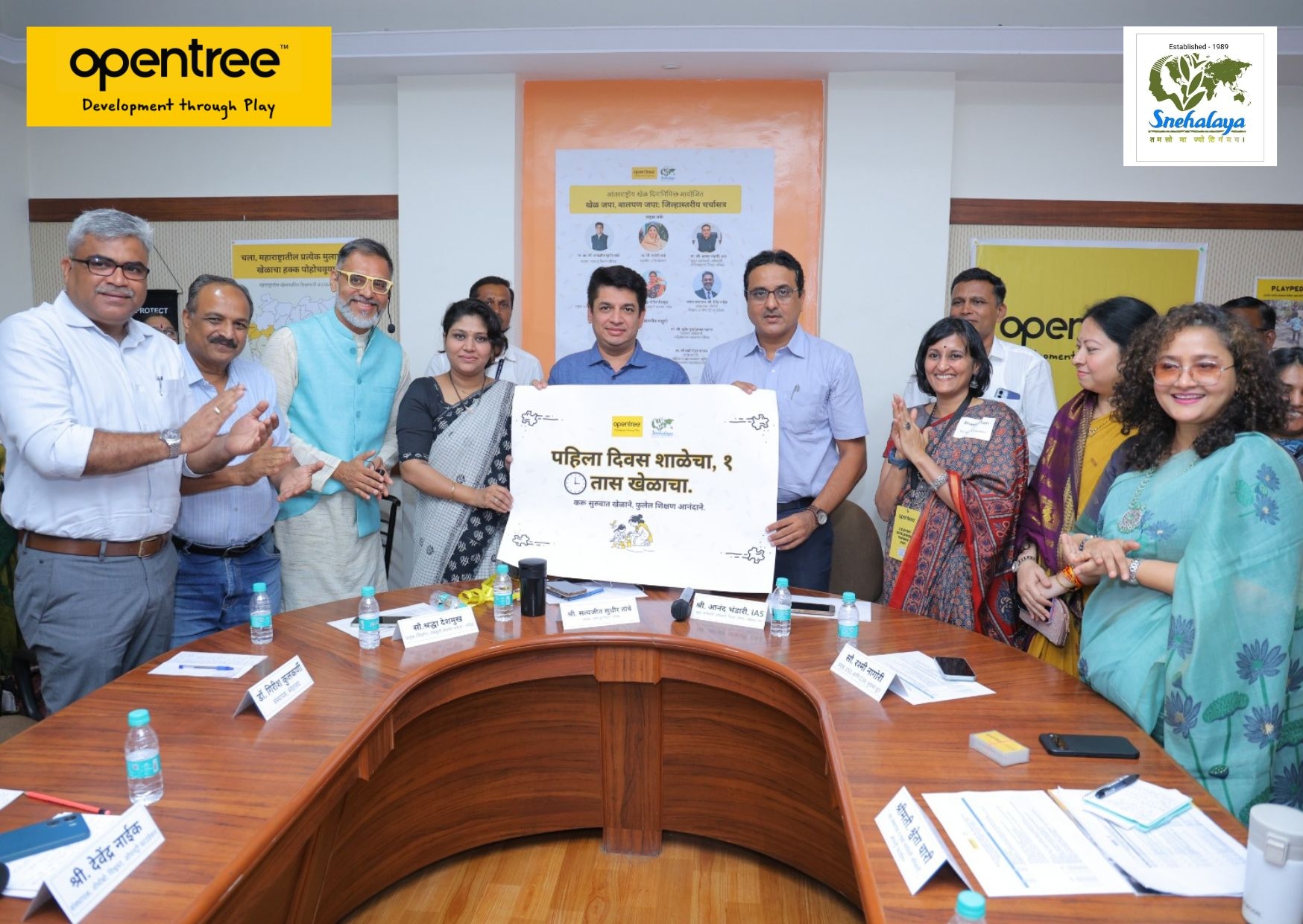
On  11 June 2026, the International Day of Play, we convened  Protect Play, Protect Childhood, a district-level roundtable with our partner, Snehalaya at the Ahilyanagar Gymkhana. The conversation brought together government leaders, educators, civil society organisations and CSR partners around a shared question: 

What would it take for every child to experience play as part of school?
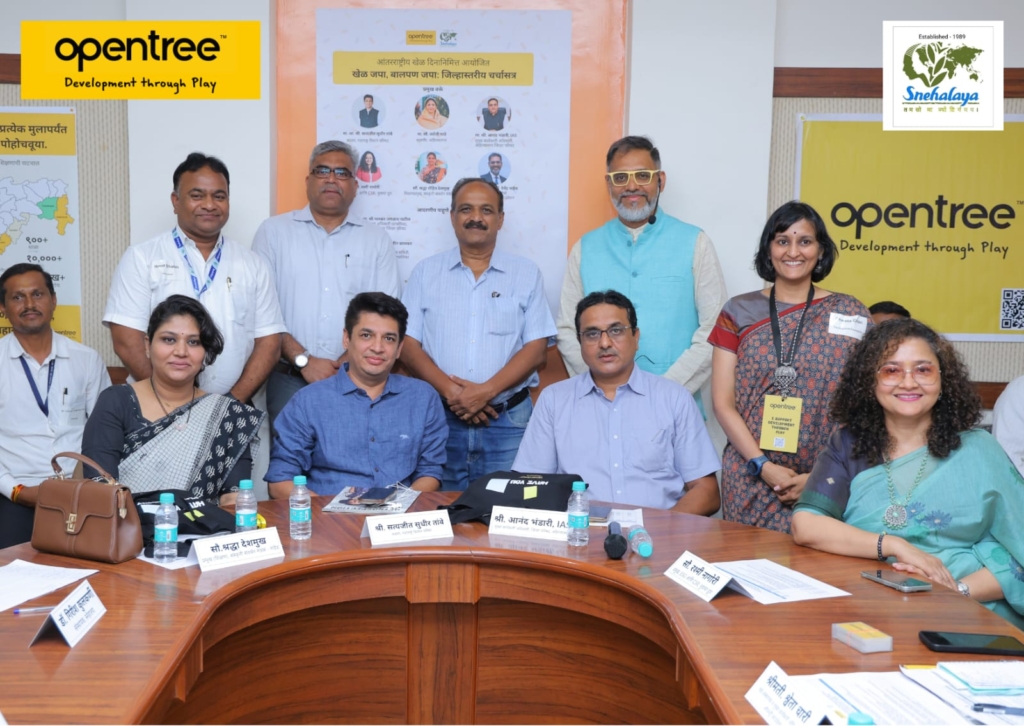
The room included Shri. Anand Bhandari, IAS, CEO, Ahilyanagar Zilla Parishad, Shri. Satyajeet Sudhir Tambe (Member of Legislative Council, Maharashtra), Ms. Rashmi Nagori (Head, ESG and CSR, Nuvama Group), Mrs. Shraddha Deshmukh and Mr. Rohit Deshmukh (Sanskriti Samvardhan Mandal, Nanded), Ms Shweta Chari (Co-founder and CEO, TOF), Dr. Girish Kulkarni (Founder, Snehalaya), and Mr. Devendra Naik (Founder, NoMoBo, and Trustee, TOF), who moderated the discussion.

Rather than focusing on a single programme or intervention, the roundtable built the case for play-based learning from four complementary directions: what children need to thrive, how rapidly childhood is changing, what schools are meant to offer beyond academics, and what it takes for change to last inside public systems.

The discussion culminated in the declaration of a district-wide initiative by Shri Anand Bhandari, IAS, CEO, Zilla Parishad, Ahilyanagar.

पहिला दिवस शाळेचा, एक तास खेळाचा. (Day 1 of school, 1 Hour of Play)
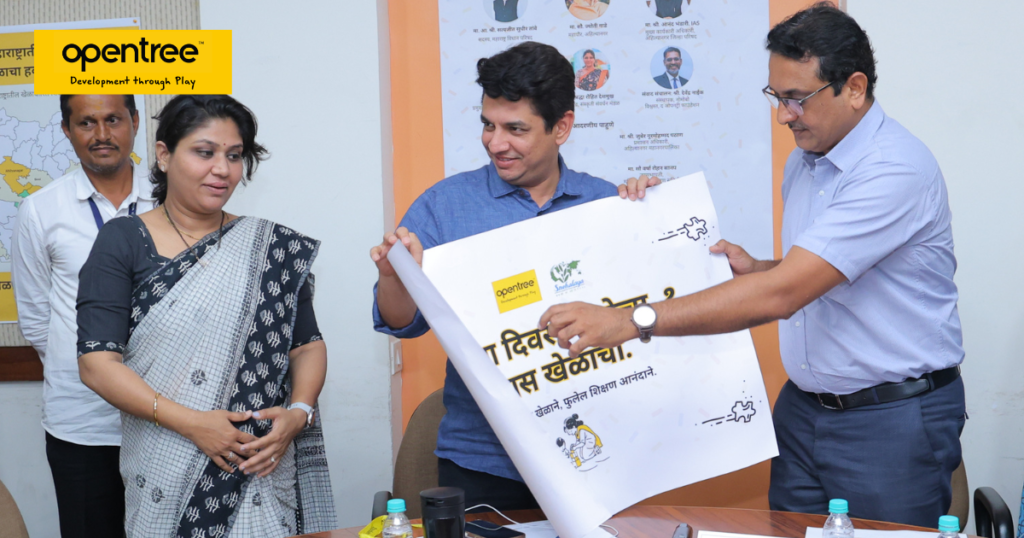
With that announcement, every government school in Ahilyanagar was mandated to celebrate the new academic year with an hour of play.

On 15 June 2026, children across 1000+ Zilla Parishad schools in Ahilyanagar were welcomed to school with a joyful hour of Play, a day they will cherish for a long time to come. Principals, teachers and school staff enthusiastically planned games and activities, decorating classrooms with posters and banners. 
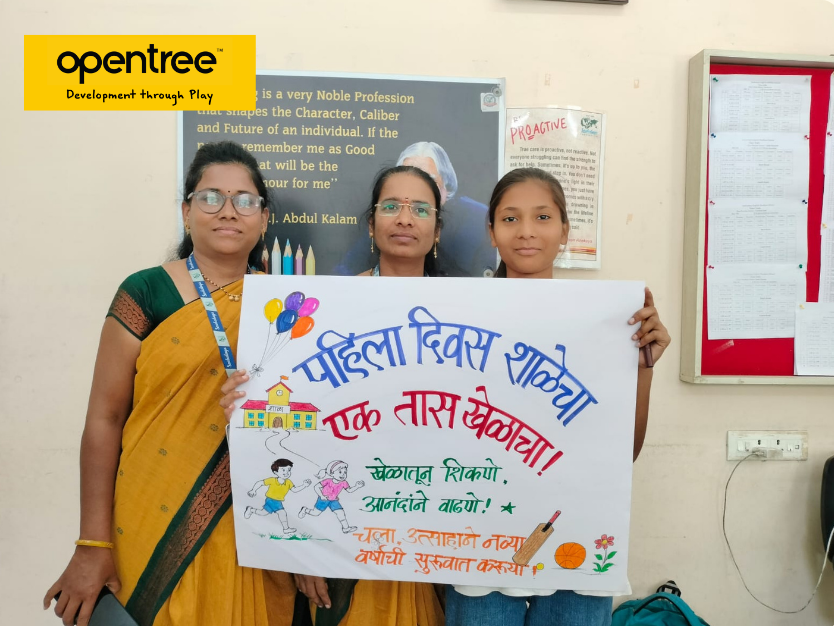
TOF’s team collaborated with all Block Education and Block Development Officers across all 14 blocks to support implementation, drawing on more than 350 free activities from Playpedia.in, TOF’s open-source library of low-resource play ideas. Following the success of the initiative, Shri Bhandari also directed that schools across the district undergo Playpedia sensitisation sessions led by TOF.

For The Opentree Foundation (TOF), the roundtable and the पहिला दिवस शाळेचा, एक तास खेळाचा initiative (Day 1 of school, 1 Hour of Play) represent a powerful, significant step in its journey towards realising the Right to Play in India. This was a historic moment –  the first time a government institution in Maharashtra  had taken ownership towards integrating Play-based learning into schools at a scale — the systemic shift TOF has been working towards for over two decades, reflected in the room through voices across the system.

The roundtable began with a welcome by children from Snehalaya’s Balbhavans, setting the tone for a discussion centred on children’s voices and experiences.

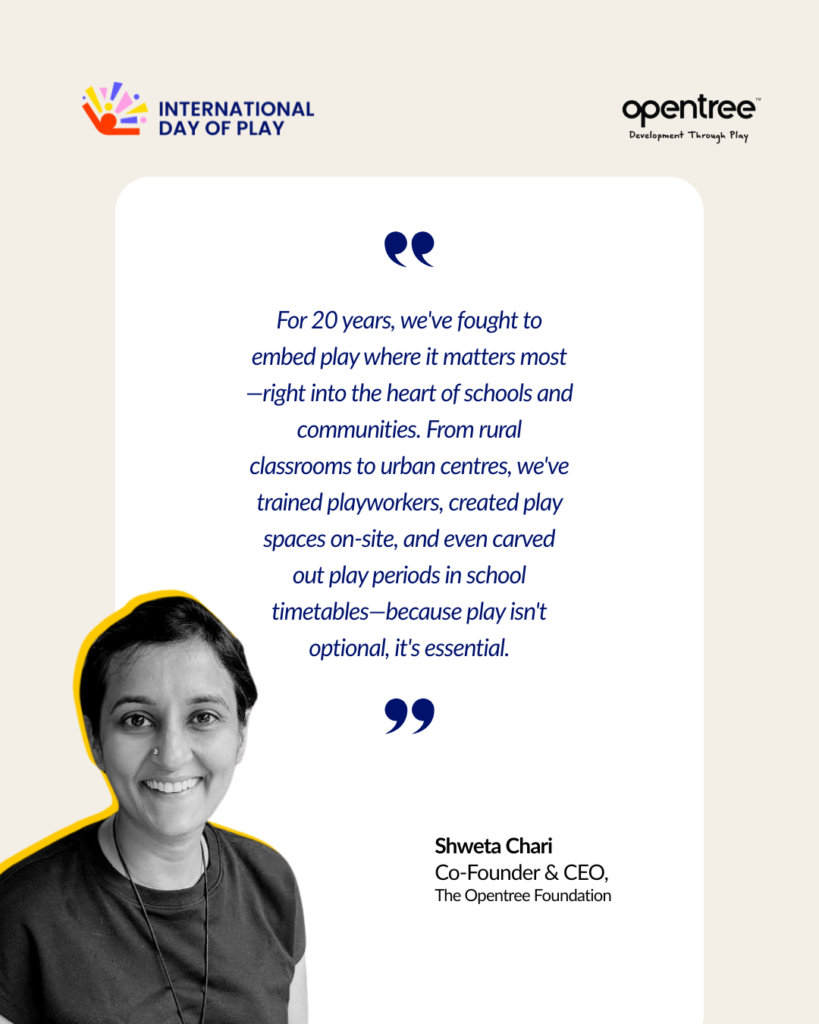
Shweta Chari, Co-founder and CEO of TOF, argued that play is not an extracurricular activity, but the foundation on which children develop the creativity, empathy and problem-solving skills needed to become thriving adults as well as contributing citizens. 

Shri. Satyajeet Sudhir Tambe reflected on the rapidly changing nature of childhood, emphasising that schools must intentionally nurture these abilities, while Shri Anand Bhandari shared his vision of schools as places of joy, creativity and confidence.

Shri Satyajeet Sudhir Tambe spoke about the speed at which childhood is changing, arguing that schools must evolve just as quickly.

“Any muscle you don’t use stops working. If we don’t give children regular opportunities to use their cognitive and creative skills, those skills will disappear.”

-Shri. Satyajeet Sudhir Tambe

“Schools should be the heart of a child’s happiness—spaces of joy, creativity and confidence, where every child grows up with a teacher they remember all their life.”

– Shri. Anand Bhandari, IAS, CEO, Ahilyanagar Zilla Parishad


Rashmi Nagori, Head of ESG and CSR at Nuvama Group, challenged the false divide between play and education. She called for play to be recognised as an essential investment in children’s learning and development, reminding the room that “Play is learning.”

Bringing these ideas into practice, TOF’s long-standing partners, Snehalaya and Sanskriti Samvardhan Mandal, shared how Play2Learn had transformed classrooms by replacing fear with trust, strengthening teacher-child relationships, and helping children engage more confidently in learning. As Dr. Girish Kulkarni, Founder of Snehalaya, reflected, “Nothing we tried worked until Play reached these children—it was as though Play helped us find a way to connect with them.”

The roundtable was also the first ever felicitation of Ahilyanagar’s Play champions and Leaders – teachers and principals from our  partner schools who have embedded Play-based learning in classrooms across Ahilyanagar.

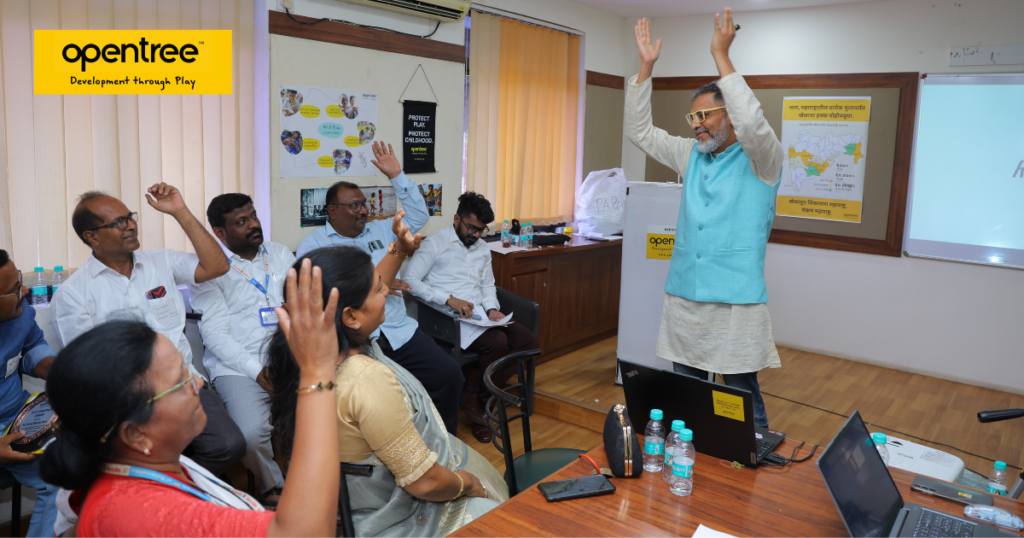
The session concluded with an interactive Play reflection led by TOF Trustee Devendra Naik, inviting participants to collectively envision the future of Play-based learning in Maharashtra.
The roundtable also opened new systemic pathways at a district and state level:

  • Expanding the Play2Learn programme  Municipal Council schools in Sangamner
  • Embedding play-based learning into the district’s School Development Plans
  • Introducing TOF’s School Readiness Play Programme into Anganwadis and expanding Play2Learn into secondary schools in the district
  • Deepening partnerships with Gram Panchayats and School Management Committees.
  • Possible alignment with  Maharashtra’s proposed Future Generations Wellbeing Bill with evidence on play and child wellbeing.

Each of these pathways represents an opportunity to move closer to institutionalising Play-based learning in government systems, and towards making Maharashtra the first state in India to have a government-adopted, scalable model for Play-integrated schools. 

For over two decades, The Opentree Foundation has worked to demonstrate that Play is fundamental to how children learn, grow and thrive. The roundtable and declaration in Ahilyanagar represent a district where years of evidence, partnerships and trust have translated into system-wide action.

The vision has always been larger than a single programme or district. It is to build a future where every child in India, regardless of where they are born or which school they attend, experience learning that allows them to be themselves, feel joyful, curious, excited, and prepares them to thrive as adults in their future. 

Ahilyanagar has shown that this future is possible. Now, the work begins to make it the norm, across Maharashtra, and India. 
EVENTSIMPORTANCE OF PLAYPOLICY

From Classrooms to National Conversations: Contributing to India’s National Dialogue on Play-Based Learning

For over two decades, The Opentree Foundation has worked towards a vision of integrating play-based learning into India’s public education system. While the National Education Policy 2020 increasingly recognises the importance of joyful and experiential learning, lasting change depends on something much bigger: an ecosystem of educators, practitioners, children, institutions, and government working together to make it possible.

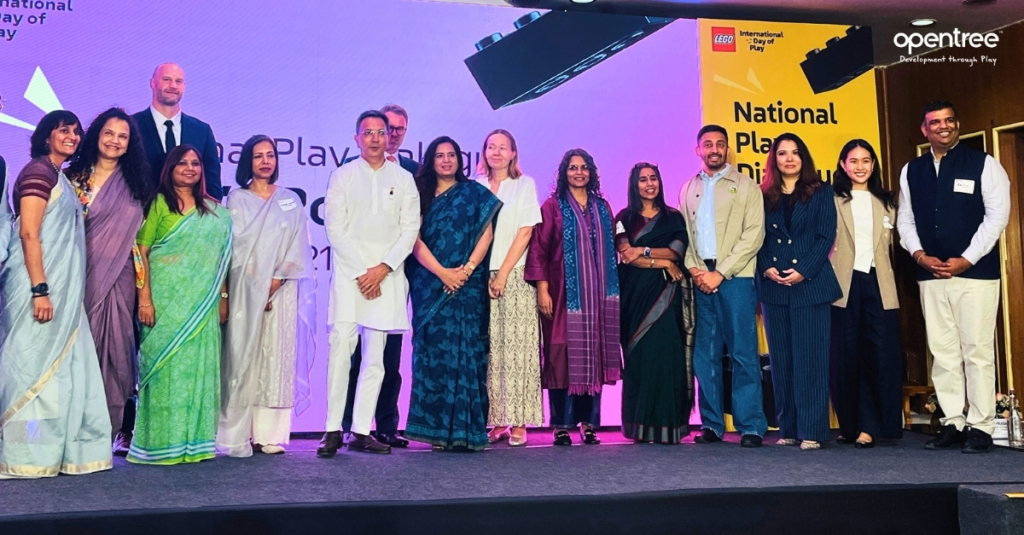
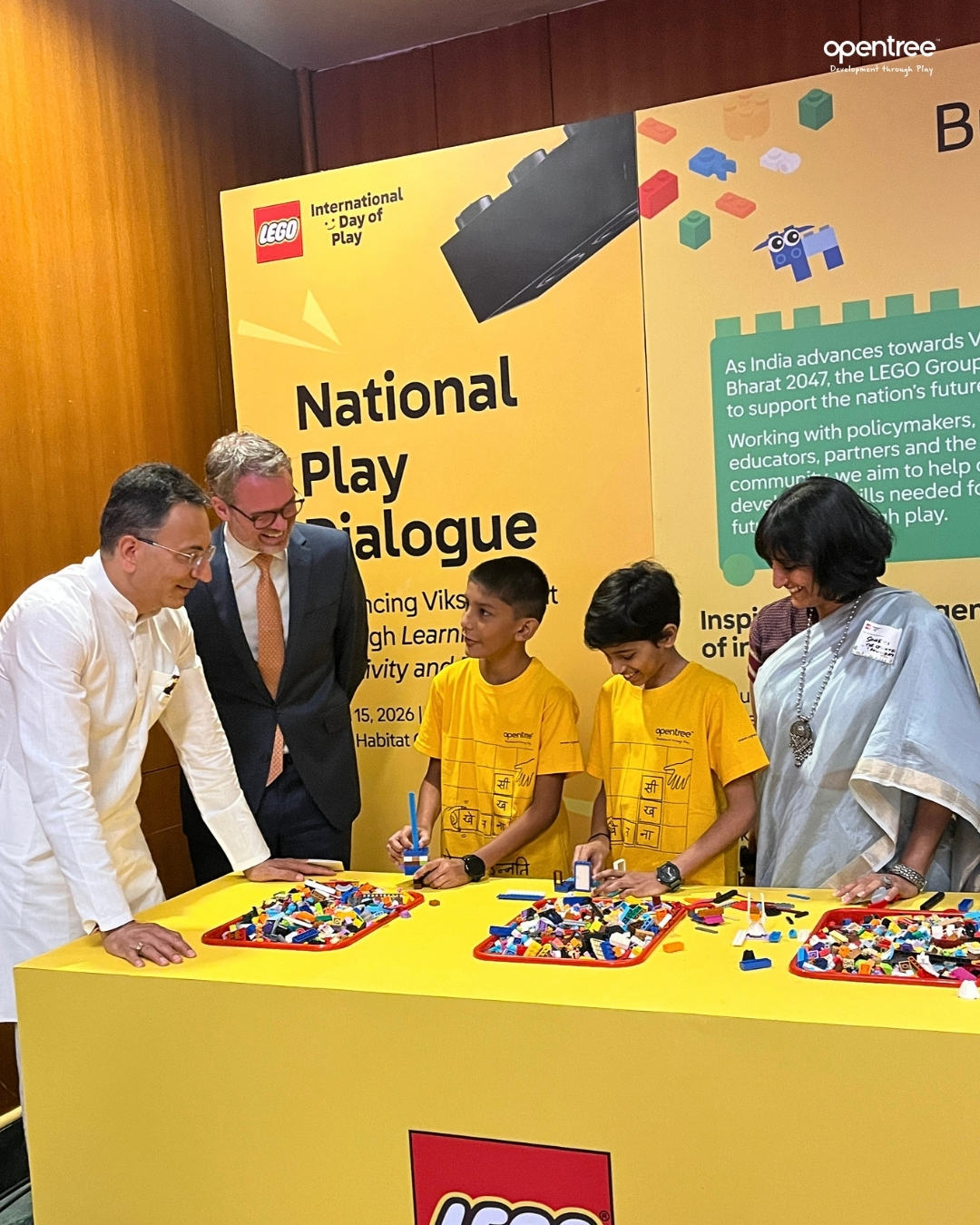
That ecosystem was visible at the National Play Dialogue – “Viksit Bharat Through Learning, Creativity and Play” on 15 June 2026, convened by The LEGO Group at the India Habitat Centre, New Delhi.

Along with Shri Jitin Prasada, Union Minister of State for Commerce & Industry and Electronics & Information Technology, Ms Debashree Mukherjee, Secretary, Ministry of Skill Development & Entrepreneurship, Ms. Ira Singhal, Deputy Secretary, Department of School Education & Literacy, Ministry of Education, and leaders from across the education and development ecosystem, the dialogue reflected a growing national consensus that play-based learning is fundamental to preparing children for Viksit Bharat 2047.

Government leaders, educators, and development partners at the National Play Dialogue – "Viksit Bharat Through Learning, Creativity and Play."

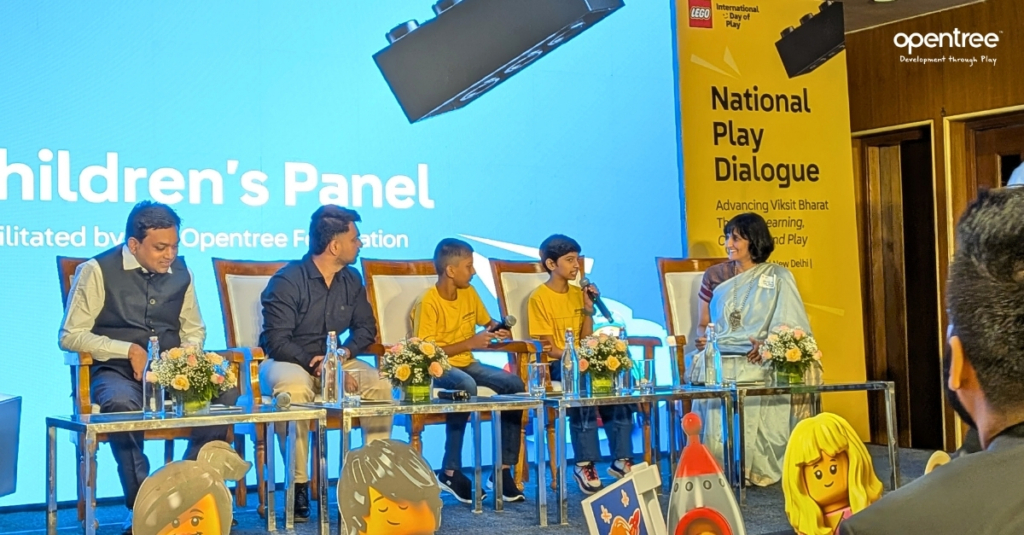
For us, one moment captured exactly what systemic change looks like – the Children’s Panel, facilitated by Shweta, along with students and the principal of our partner school in Mumbai.

Parth and Arpita, Grade 6 students from our Play2Learn partner school, Rajawadi Mumbai Public School CBSE, shared what it means to learn in a school where play is part of everyday learning. Standing alongside them were Dr. Sanjay Chavan, whose leadership has embedded play-based learning into the school’s culture, and Akash, a former government school student who now works with The Opentree Foundation to bring the same opportunities to thousands of children.

“We come to school because it is a happy place where we get to play ,” they shared.

Their message to the adults in the room was equally clear: “Let us play. Let us learn through joy.”

Together, this panel represented the vision that The Opentree Foundation has worked towards for over two-decades. They demonstrated that play-based learning is not an aspiration waiting to be tested. It is already transforming government school classrooms through committed educators, empowered practitioners, and children who have experienced its impact firsthand.

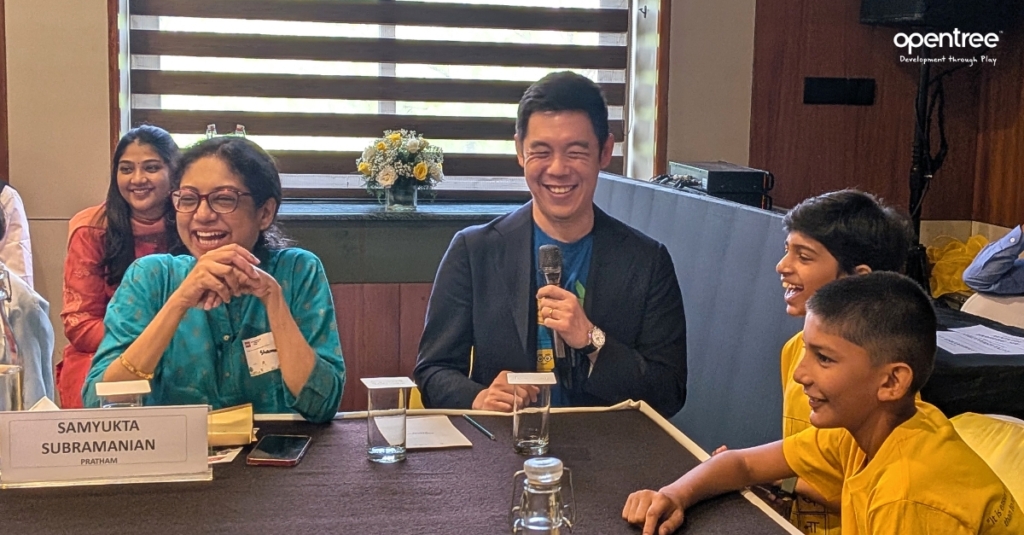
The same question carried into the Leaders’ Roundtable, where representatives from organisations including UNICEF, Atal Innovation Mission, Magic Bus, Bernard van Leer Foundation, Reach to Teach, CRY, Sesame Workshop, and others reflected on the future of play-based learning in India. 

The roundtable too, began with a play-based activity facilitated by who else, but our Play Experts – Parth and Arpita. The room came alive with laughter, excitement and lightness as our students guided the adults with a game  from their Play sessions.

Parth and Arpita, our 6th grade students from Rajawadi Mumbai Public School CBSE watch as the leaders participate in their facilitated activity

As the conversation unfolded, leaders from across the sector shared their learnings, challenges and perspectives from designing and implementing play-based learning in varied contexts. Across these rich, diverse perspectives, one message stood out: the sector has moved beyond asking why play matters. The challenge now is how to embed it into systems at scale.

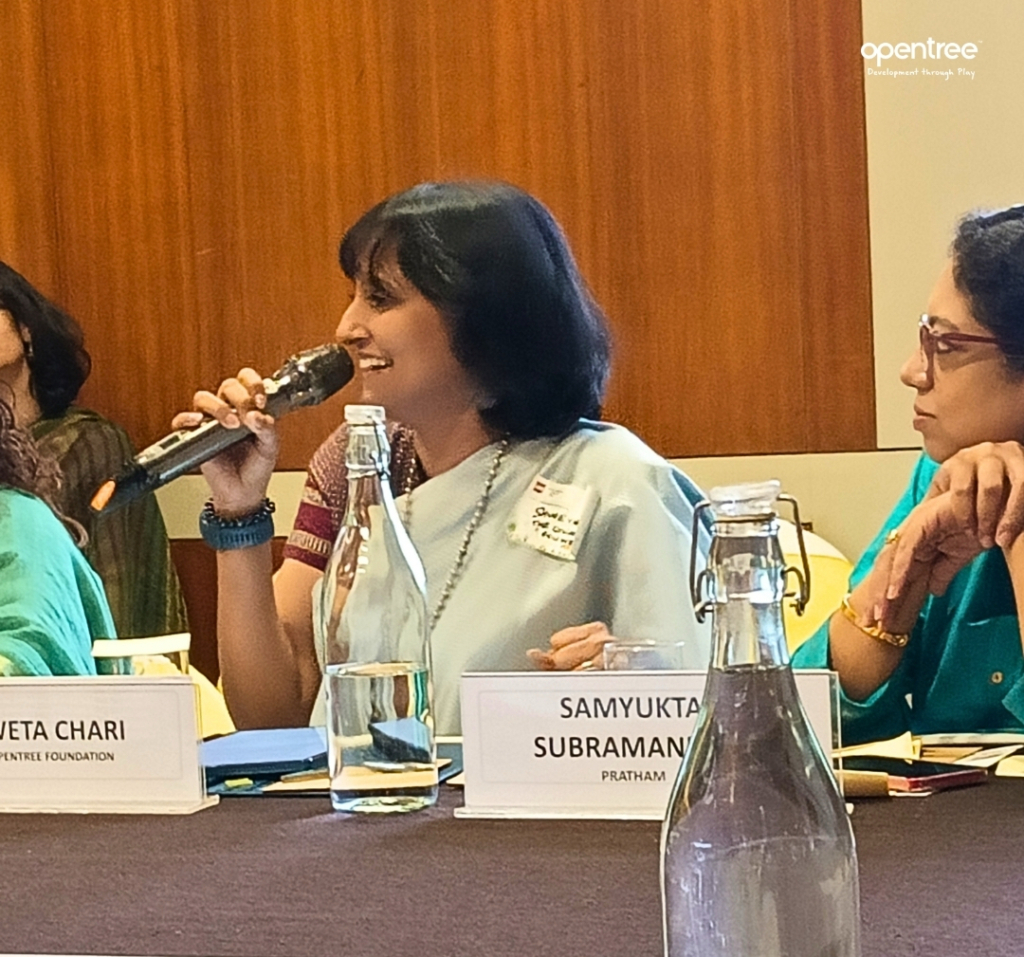
Drawing on The Opentree Foundation’s 22 years of work, our CEO & Co-founder Shweta Chari spoke to precisely this challenge. Through partnerships with government school systems, teacher capacity-building, and our integrated Foundational PlayTM approach, our work has focused on building practical models that help schools integrate play-based learning into everyday teaching—not as an additional programme, but as the way learning happens.

For us, this dialogue was an important milestone, not just because it brought together influential voices, but because it reflected a growing national readiness to make play-based learning part of India’s education systems. Realising every child’s right to play will take collective action. When school leaders, practitioners, children, government, and partners are all part of the same conversation, that future moves one step closer.

IMPORTANCE OF PLAYPLAY2LEARNSAFE SPACE

The invisible stress children face in urban India, and how play helps

“Tss-tss- tss-pshhhh” — a long whistle from the pressure cooker next door breaks the silence at dawn. In a one-room apartment, a child wakes and folds away the cloth they slept on so the kitchen can be set up. Outside, rickshaws honk and vendors call out prices. After a hurried breakfast, the walk to school begins, the bag on their back almost as heavy as they are. But even when the school bell rings at the end of the day, their work isn’t over. There are groceries to buy, siblings to look after, a house to clean. At just 10-years-old, their hours are filled with chaos, rush, and responsibility.

This isn’t unusual. For millions of children growing up in India’s cities, this is everyday life. Homes are crowded, streets are noisy, and schedules are relentless. Children carry not only books and chores but also invisible burdens: of stress, of expectations, of too little space to simply be.

Over time, this constant pressure shapes how children see themselves and the world. Some grow restless or withdrawn, others anxious or angry. What often gets overlooked is that beneath all this, every child still longs for something very simple: the chance to play and just be a child.

Play is often mistaken as “extra”, something that comes after studies or chores, if there’s time. But play is how children learn best. When they build, imagine, and role-play, they are also problem-solving, collaborating, and discovering themselves. For children in marginalised communities, who often lack safe spaces and supportive environments, play becomes even more critical. It is the one moment where their ideas and voices take centre stage, where they can lead, take risks, and experience the joy of success without fear of failure.

This is why play and play-based learning matters. Counting marbles can build numeracy, a round of carrom can teach patience, role-play can unlock language, and a puzzle can strengthen focus and resilience. For children who struggle with rigid, rote-based schooling, play opens a door back into learning. It turns fear of failure into curiosity, and disengagement into active participation.

The Opentree Foundation brings Conscious Play® into classrooms and communities where play is missing. Their Life Skills Play Programmes are not just about games, they are carefully curated spaces where children feel safe, supported, and encouraged. Volunteers like me and teachers guide children through games and activities that build both life skills and emotional wellbeing. Over time, we see children not only laughing and playing, but also showing more confidence in school, stronger friendships, and healthier ways of coping with stress.

I remember this one child would always sit in the corner, arms folded, refusing to join. Week after week, we kept inviting him in. One day, he quietly picked up a puzzle. By the end of the session, he wasn’t just playing, he was showing others how to solve it. That small shift says everything about the power of play.

I’ve seen it myself. One mischievous boy resisted for weeks, until we found the game that lit him up. Suddenly, he was laughing, engaging, even teaching others. At first, I used to watch the clock during sessions. Now, I dread the end, seeing the children’s faces fall when we pack up. That’s when I realised: what TOF offers is not just play. It is a relief. It is childhood, protected for just a little while longer.

In underserved communities, children often grow up faster than they should. Household chores, sibling care, and financial struggles leave little room for play. Schools too can be rigid, with their focus on exam results. By embedding play in these spaces, TOF ensures that children do not lose out on the joy and developmental benefits of play simply because of where they are born. Their work levels the playing field, giving every child, no matter their background, the right to play and learn.

Play is not a luxury. It is a lifeline. It gives children space to process big feelings, to connect with others, to imagine new possibilities. In cities that often ask children to grow up too soon, play lets them hold onto the magic of being young, if only for a while.

This article is written by our long-term student volunteer Rihan Shetty. 

IMPORTANCE OF PLAYPLAY2LEARN

IDOP 2025: Choosing Play, Every Day to Reclaim Childhood

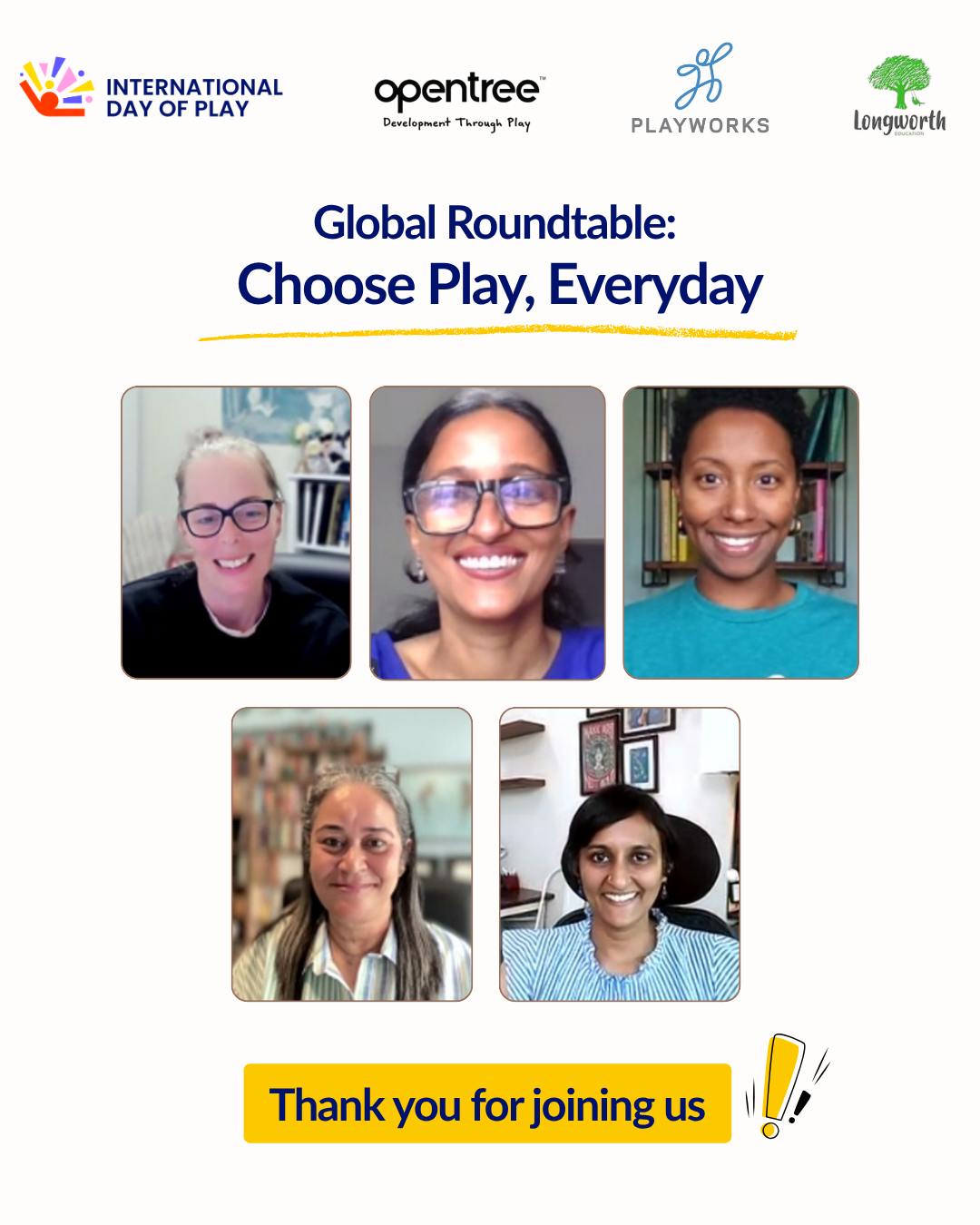
This International Day of Play, The Opentree Foundation hosted a powerful roundtable discussion titled ‘Choose Play, Everyday’, bringing together global voices to tackle a quiet crisis: the disappearance of play from children’s lives.

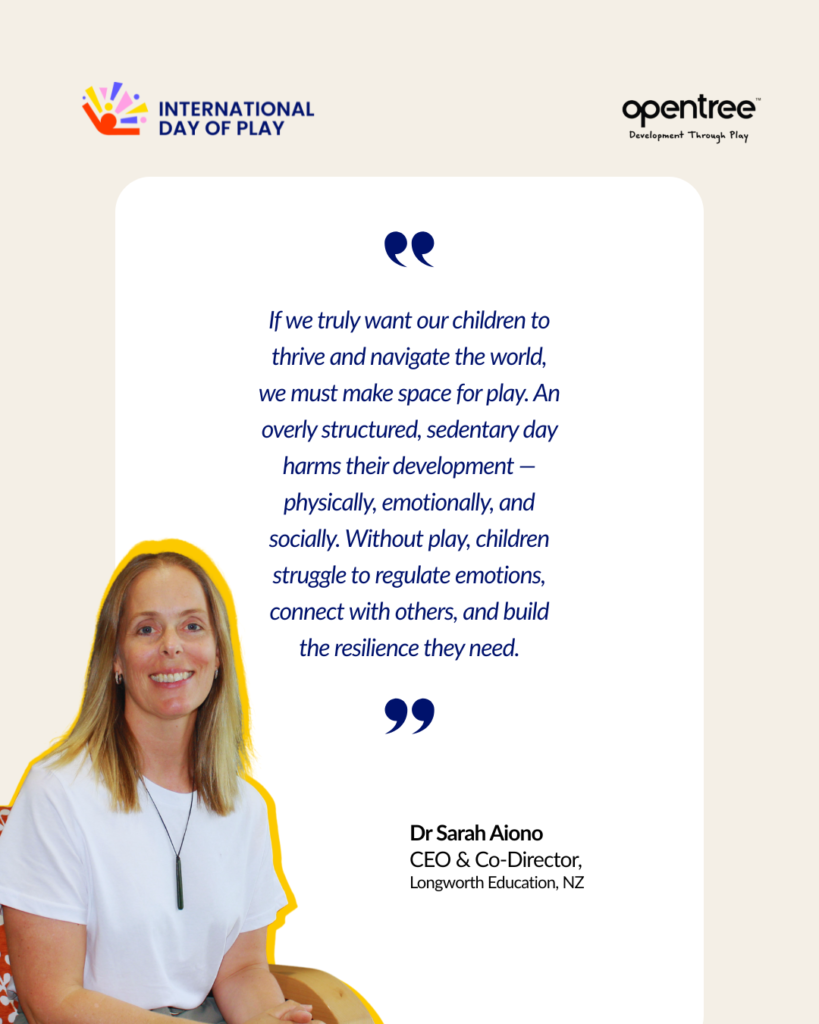
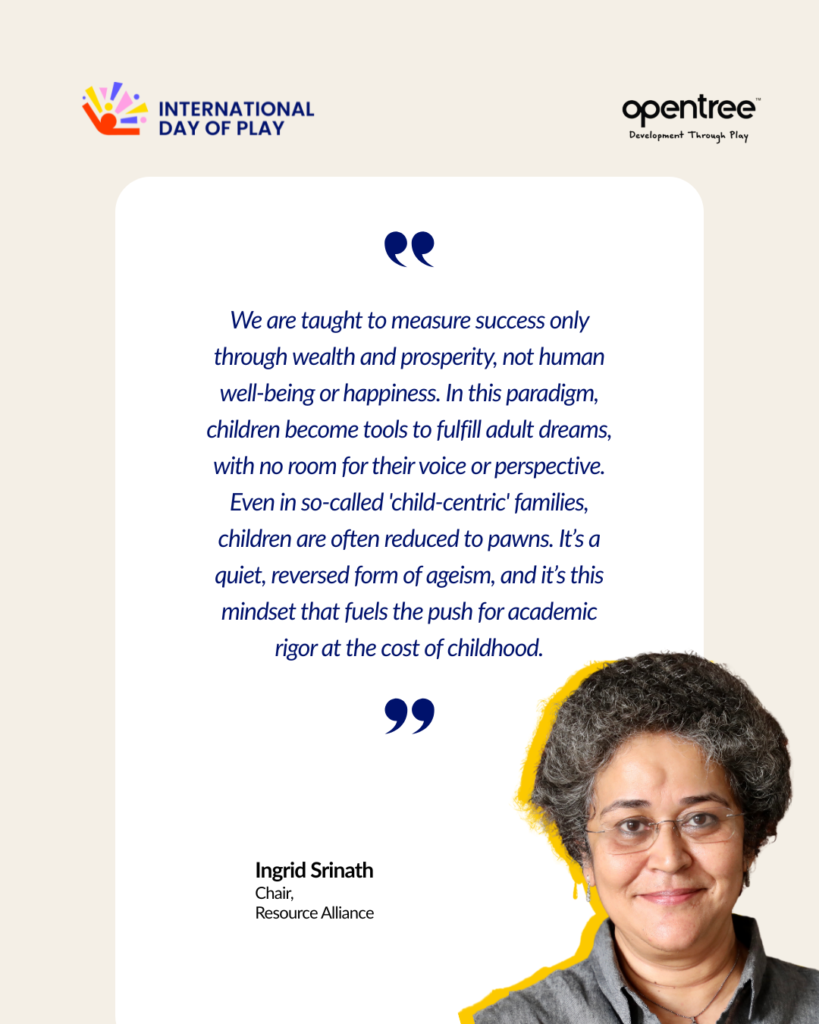
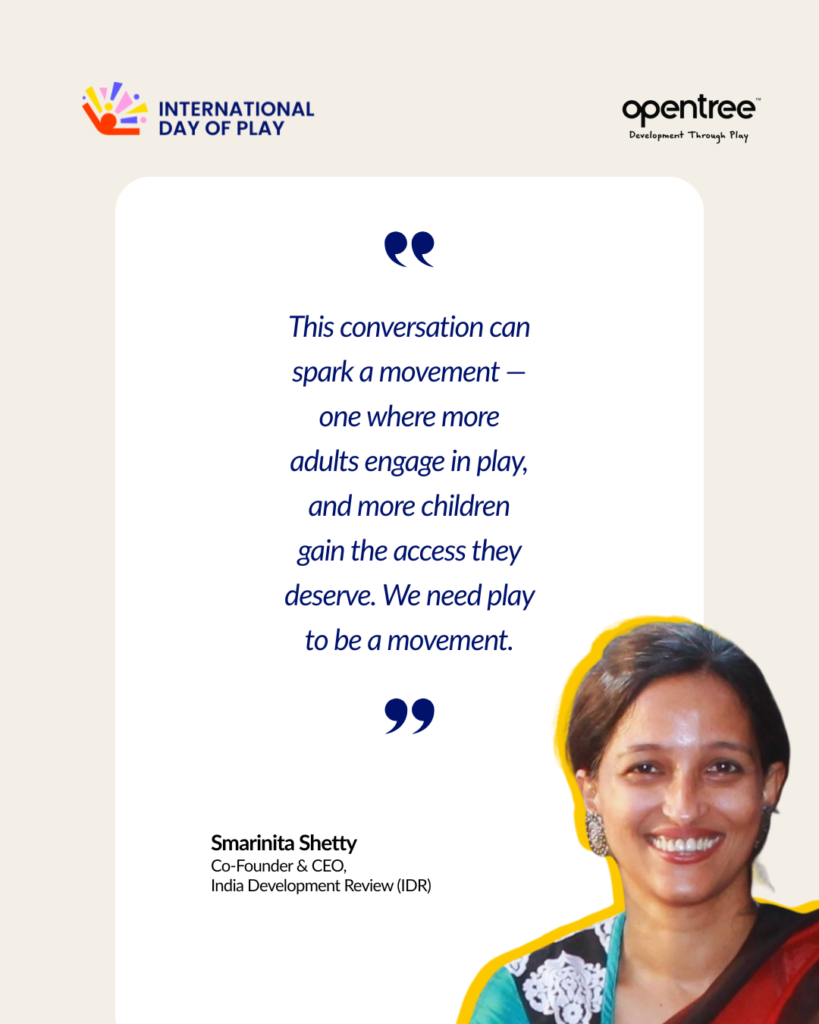
Moderated by Smarinita Shetty (India Development Review), the panel featured Dr Sarah Aiono (Longworth Education), Tia Mathisen (Playworks), Ingrid Srinath (Resource Alliance), and our very own Shweta Chari (The Opentree Foundation). The session explored how play, a natural right of every child, has been sidelined in classrooms, homes, and policy conversations.

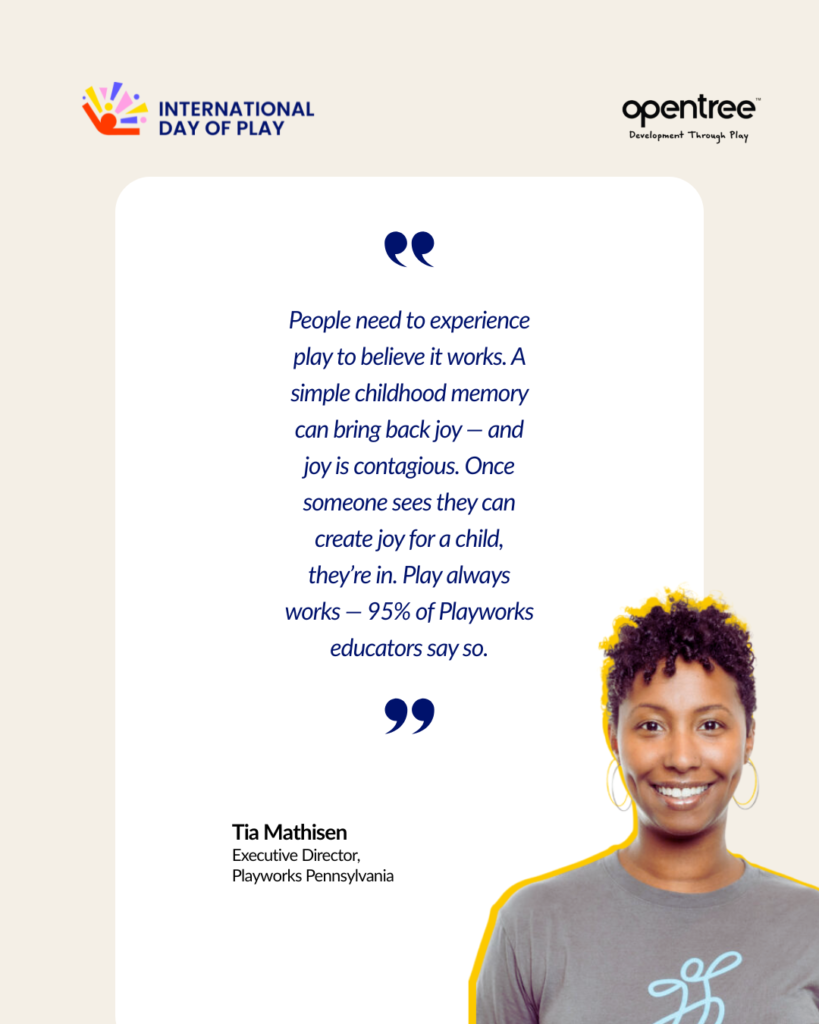
Panelists emphasised that play is not a luxury but a foundational element of childhood. Dr Aiono shared insights on how educators can bridge the gap between knowledge and practice, ensuring play is not reduced to a token activity, but embedded meaningfully in curricula. Tia Mathisen spoke about the power of adults rediscovering play for themselves, creating joyful moments that lead to lasting mindset shifts.

Ingrid Srinath reminded us that systemic change won’t happen until we redefine success, moving beyond grades to include creativity, wellbeing, and joy. And Shweta Chari brought the message home: “It’s so obvious. But still not understood.”

The way forward is clear: we need more data, yes, but we also need more demonstration. We need to let funders, policymakers, and educators feel the power of play. 

At The Opentree Foundation, we remain rooted in our belief: it’s easier to build strong children than to repair broken adults. And in a world that desperately needs healing, choosing play every day might just be the most radical, hopeful act of all.

IMPORTANCE OF PLAYPLAY2LEARNSAFE SPACE

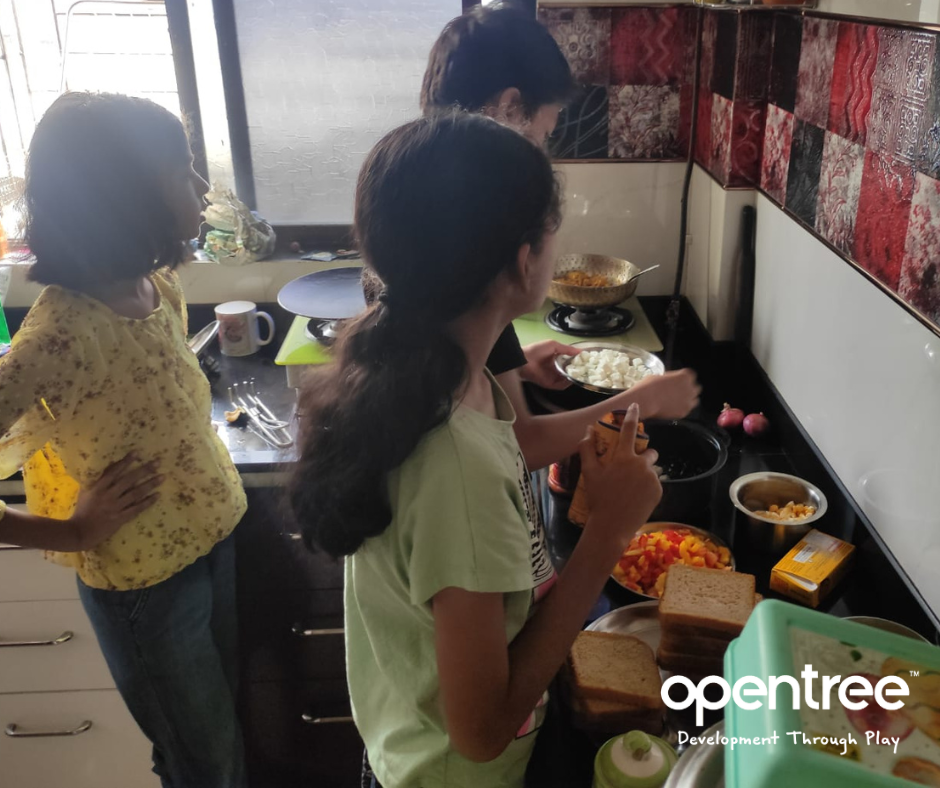
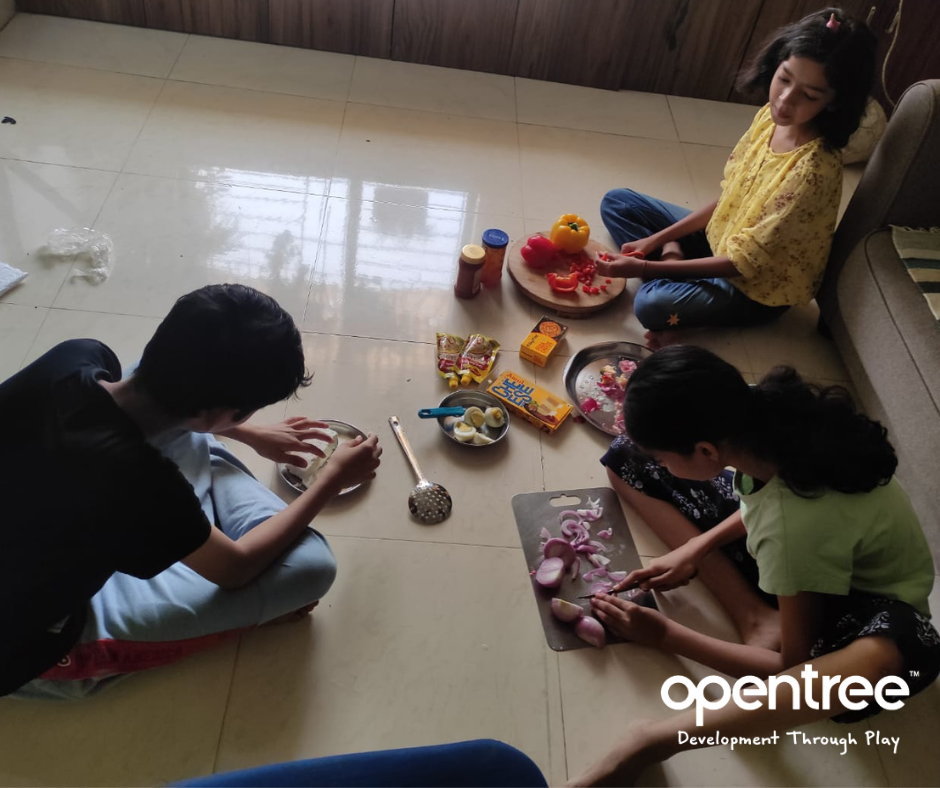
Cooking Up Skills Through Play With Little Chefs

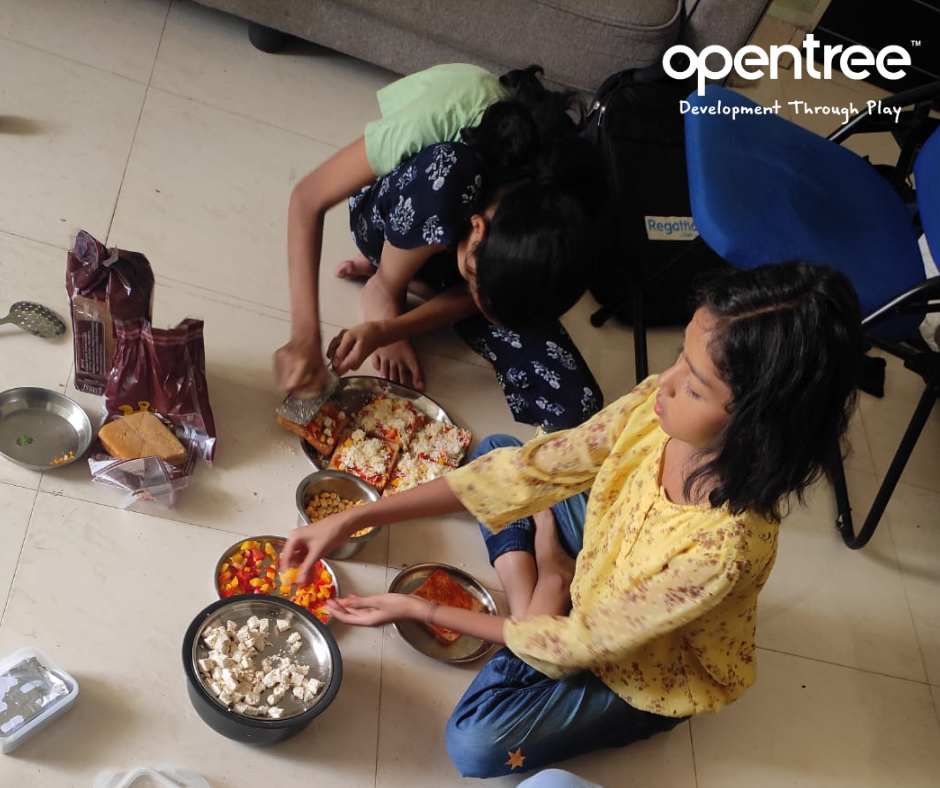
It all began with a simple craving — a craving for pizza. But this time, it wasn’t just about eating it. It was about making it. Together.

The idea sparked during playtime, as the children chatted about their favourite foods, and just like that, they decided to make their own pizza and the game was on. 

What followed was no ordinary kitchen activity — it was an adventure led entirely by the children, powered by imagination, curiosity, and joy. First, they huddled together to list all the ingredients they would need. Tomatoes, cheese, onions, bell peppers… the list grew longer with every excited suggestion.

Then came the expedition. With shopping lists and bags in hand, the little team set off to the vegetable market, the dairy, and even a nearby supermarket. They asked questions, compared prices, bargained shyly, and learned how to choose the freshest produce. The bags were heavy, but not one complaint was heard — because they carried them together.

Back home, play turned into purpose. Sleeves rolled up, hands washed, and vegetables rinsed. Some chopped while others debated the best topping combinations. It was messy, noisy, but perfect. Each child had a role, and every task was a tiny triumph — from slicing mushrooms to spreading sauce just right. They took turns, shared tools, and offered encouragement. 

When the pizzas were finally ready, they gathered around like proud chefs at a grand feast. It wasn’t just about the taste — it was about the journey. The teamwork, the creativity, the hands-on problem-solving. And the play.

This wasn’t a structured lesson. There were no worksheets, no formal instructions. Yet, in that afternoon of pretend play turned into a real-life project, they learned more than any textbook could offer — how to collaborate, communicate, plan, adapt, and most of all, how to turn ordinary moments into extraordinary memories.

This activity reminded us that play is not separate from learning — it is learning. 

Written with inputs from Vijay Suryavanshi, a longtime volunteer at The Opentree Foundation and a supporter of play and play-based learning.  

IMPORTANCE OF PLAYPLAY2LEARNSAFE SPACE

Play, Practice, Checkmate: How Play Sessions Sparked Mansi’s Rise to State-Level Chess

Mansi (name changed) is a Class 7 student at the Zilla Parishad Primary School in Wanwada, Latur. Mansi lives with her siblings, grandparents and parents, who are farmers.

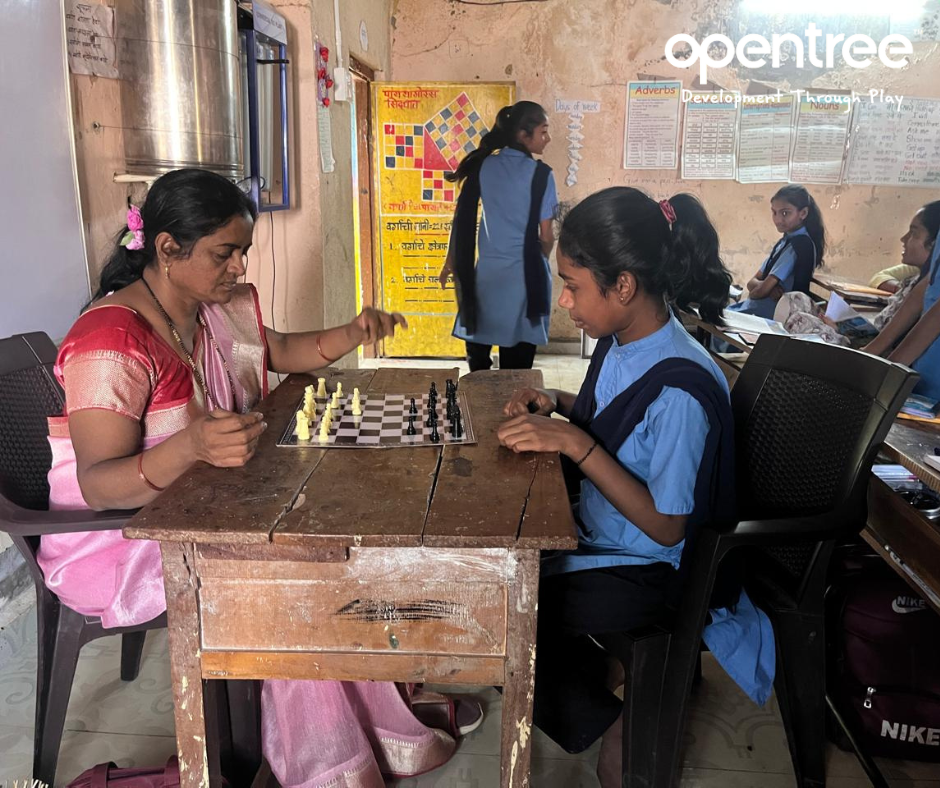
While she is average in academics, she has a keen interest in extracurricular activities. In June 2024, when we introduced play sessions in her school, she was instantly fascinated with the game of chess. She did not know how to play it and had asked other groups in class if she could join them, but they refused, as they all knew the game and had formed their groups. She was still determined to learn it. Though it seemed complex at first, with all its intricate rules and movements, Mansi started observing the other students and tried understanding the game. She learned the basics by merely observing her peers.

One day, Mansi gathered the courage to ask her teacher, Jyoti, if she would play a game of chess with her. Jyoti, who has attended multiple workshops organised by The Opentree Foundation, is a Play Practitioner and often encourages children to play and uses play-based learning in her teaching. When Mansi came with her request, Jyoti readily agreed. During the game, Mansi made several mistakes, but Jyoti remained patient and supportive. Instead of pointing out errors, she took the time to explain what Mansi could do differently, offering advice on strategies and tactics. When her classmates and others overlooked her attempts, it was Jyoti who encouraged Mansi to keep practicing, providing consistent guidance and motivation. Mansi had found a reliable guide who pushed her to persist, experiment, and improve.

Following Jyoti’s guidance, Mansi began playing chess more frequently with her classmates and also her brother at home. What had started as a challenge soon became a passion for her. She began participating in class chess competitions. At first, she lost a few games, but did not let it discourage her. Each defeat taught her something new, and her chess skills and strategies gradually improved. Mansi’s perseverance eventually paid off when she won a chess competition in her class. This achievement motivated her to compete in a school-level chess tournament in February 2025, where she secured the first rank.

Mansi with her school teachers after winning the district-level chess championship.

This win marked a turning point for her. As a result of her dedication and practice, she was offered the opportunity to represent her school at the taluka and district levels in the same month. Once again, her hard work led to a first-place finish, which further boosted her self-confidence. Her journey took a significant turn as she went on to represent her school at the state-level. Although she did not win the state competition, she was not discouraged. Instead, she recognised the immense value of the experience and how far she had come, from knowing absolutely nothing about chess to participating in a state-level competition. Her journey is one of determination, growth, and self-discovery. 

Mansi’s journey is a powerful reminder of how play can transform a child’s self-image, confidence, and future. Through something as simple yet profound as a game of chess, Mansi discovered her strengths, learned to persevere, and developed a love for learning beyond the classroom. Play not only gave her a voice and a platform but also helped her connect with a supportive adult who believed in her potential. This is exactly the kind of impact The Opentree Foundation strives to create — ensuring that every child has the right, space, and encouragement to play. Through play-based learning and the dedication of Play Practitioners like Jyoti, TOF is helping children unlock their hidden talents, build essential life skills, and thrive in every aspect of their growth.

IMPORTANCE OF PLAYPLAY2LEARNSAFE SPACE

Art, Imagination, and Play: A Vibrant Day at Kala Ghoda Arts Festival 2025

“It was inspiring to see how freely they translated their thoughts into art, reminding me that imagination has no limits when given the right space to grow.”

– Grade 11 ABWA CAS volunteer

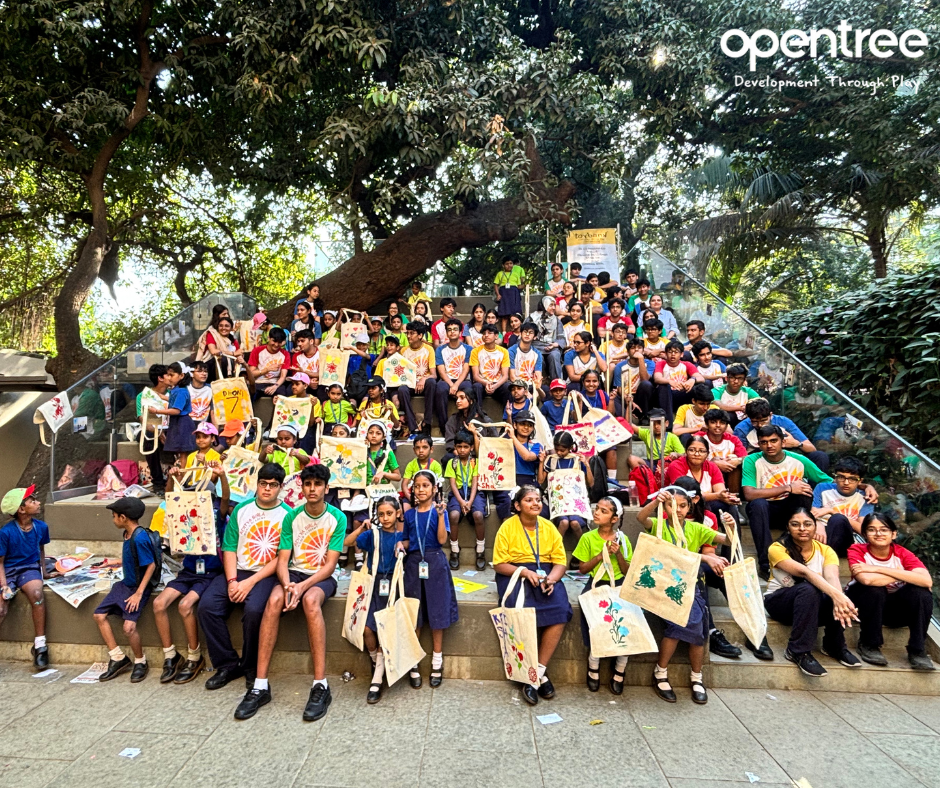
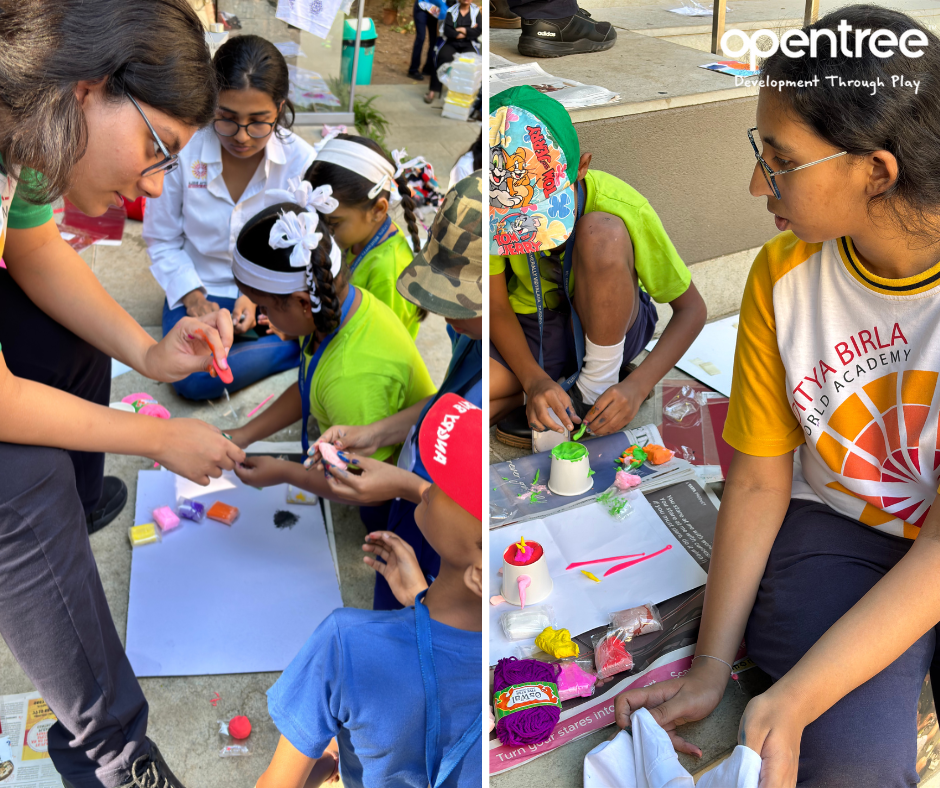
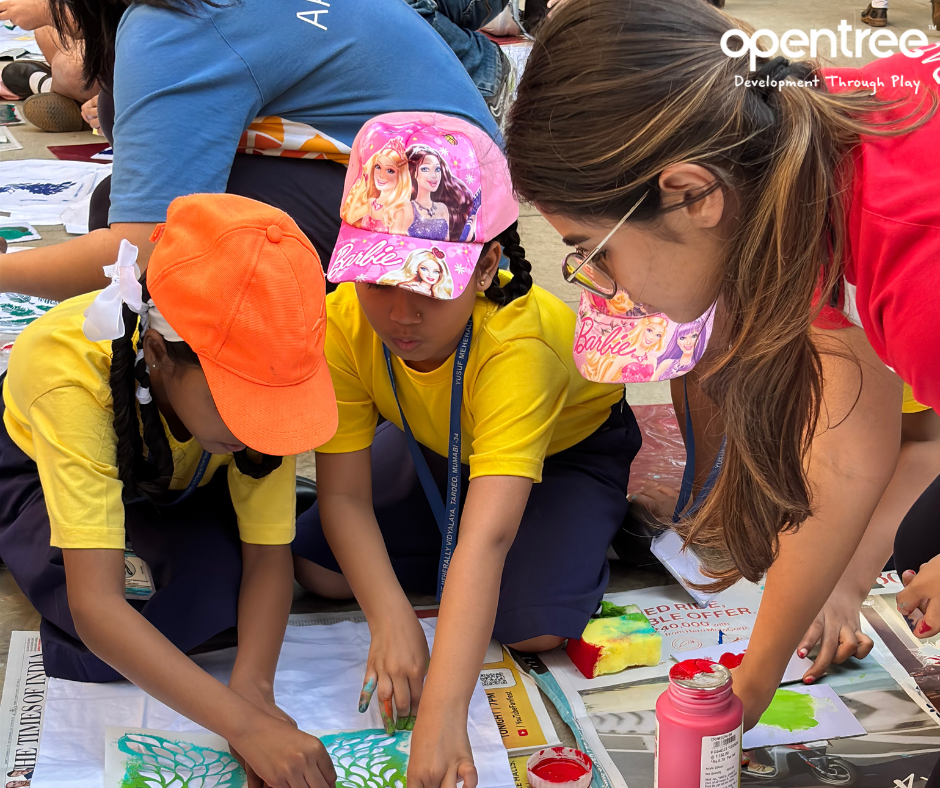
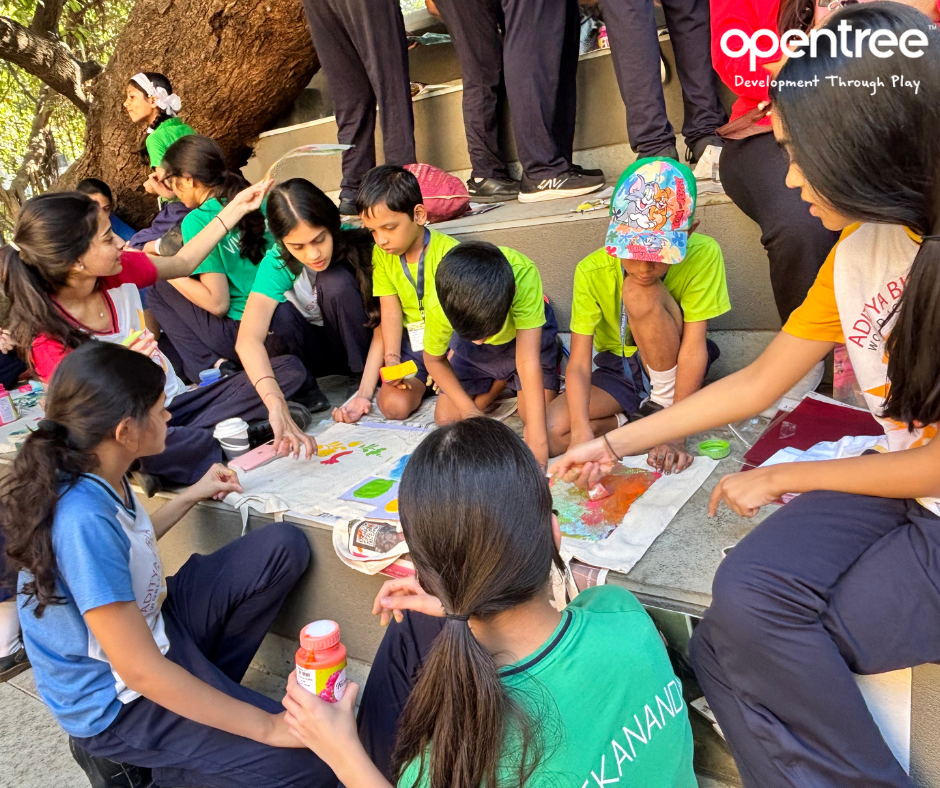
On January 29, 2025, we partnered with Aditya Birla World Academy (ABWA), to co-create a vibrant and inclusive play session at the Kala Ghoda Arts Festival. The collaboration brought together over 60 enthusiastic students from ABWA and 41 of children from The Opentree Foundation’s play centres, who celebrated the power of play, creativity, and connection. This wasn’t just an event — it was a reminder of how play can break down social barriers and empower every child to express themselves freely.

A Canvas of Creativity and Connection

The session was a colourful fusion of artistic exploration and joyful interaction. Children immersed themselves in:

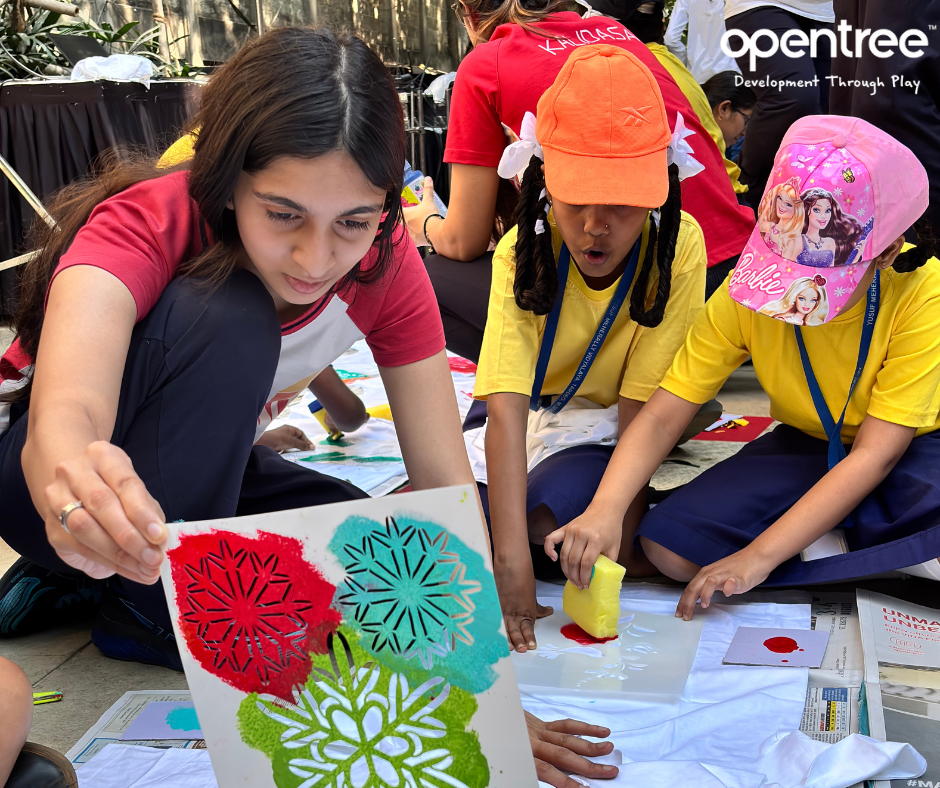
  • T-shirt and bag stencil painting – Letting their imaginations run wild, children designed unique pieces that reflected their inner worlds.
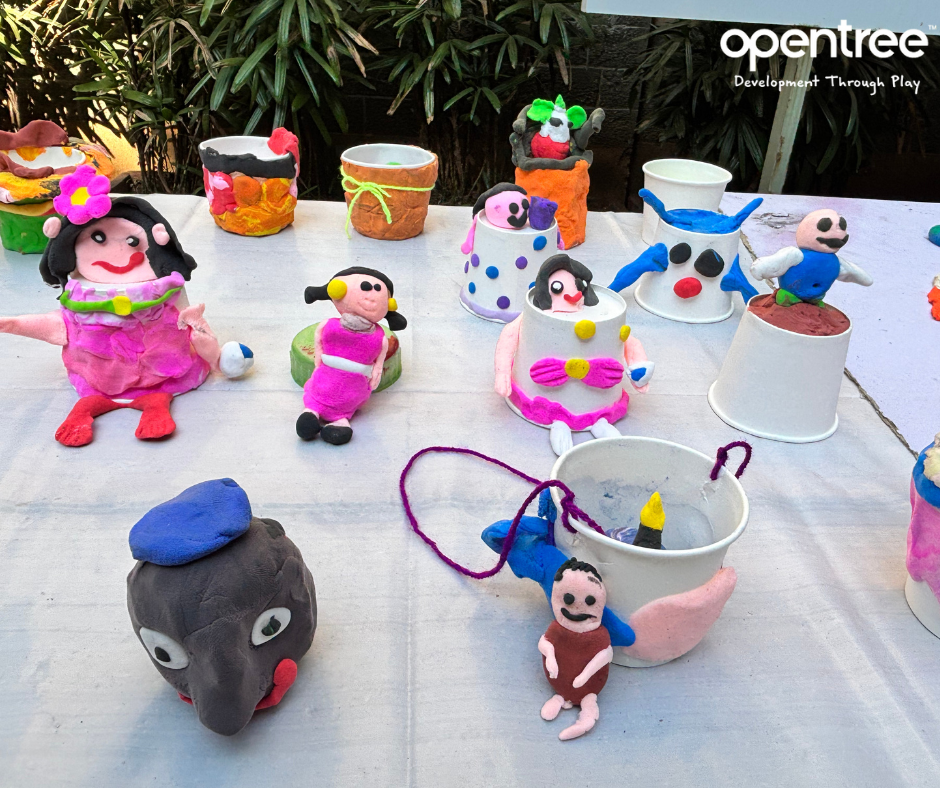
  • Loose parts play – Using everyday materials like U-pins, paper cups, and clay, the children created their own ‘imaginary friends’ —characters born entirely out of creativity and personal interpretation.

These hands-on activities encouraged self-expression, problem-solving, and collaboration. Children weren’t just making art — they were communicating ideas, forming bonds, and stepping into each other’s imaginative universes.

Play Beyond the Classroom

This session stood as a powerful testament to how unstructured play fosters critical life skills like creativity, empathy, critical thinking, and teamwork. Through shared experiences, children learned not only about themselves but about each other—celebrating differences, building confidence, and finding common ground through joyful engagement.

“Through this activity, I learned the importance of self-expression and creativity in a child’s development,” a Grade 11 ABWA CAS volunteer said. “It was inspiring to see how freely they translated their thoughts into art, reminding me that imagination has no limits when given the right space to grow.”

For the students of ABWA, it was a day of reflection and inspiration. For children from our play centres, it was a moment of recognition and freedom. And for us, it was yet another affirmation of the transformative power of play.

EVENTSIMPORTANCE OF PLAY

Child Wellbeing Through Play: Insights from Our Play Seminar

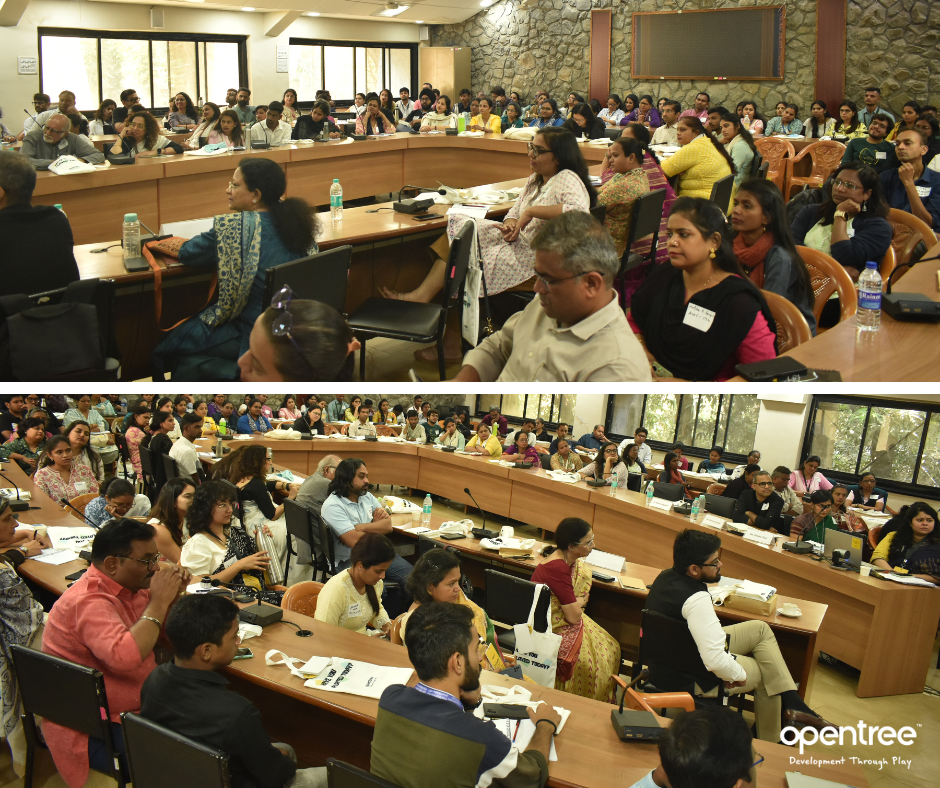
On December 14, 2025, The Opentree Foundation (TOF) hosted a Play Seminar – Child Wellbeing Through Play at the Armaity Desai Hall at the Tata Institute of Social Sciences, Mumbai. It was attended by over 100 engaging, enthusiastic play supporters from diverse spaces of academia, education, urban design, psychology, philanthropy and the social sector. It was heartening to see an auditorium and a courtyard bustling with participants throughout the day, showing a shared commitment and passion for play and play advocacy. 

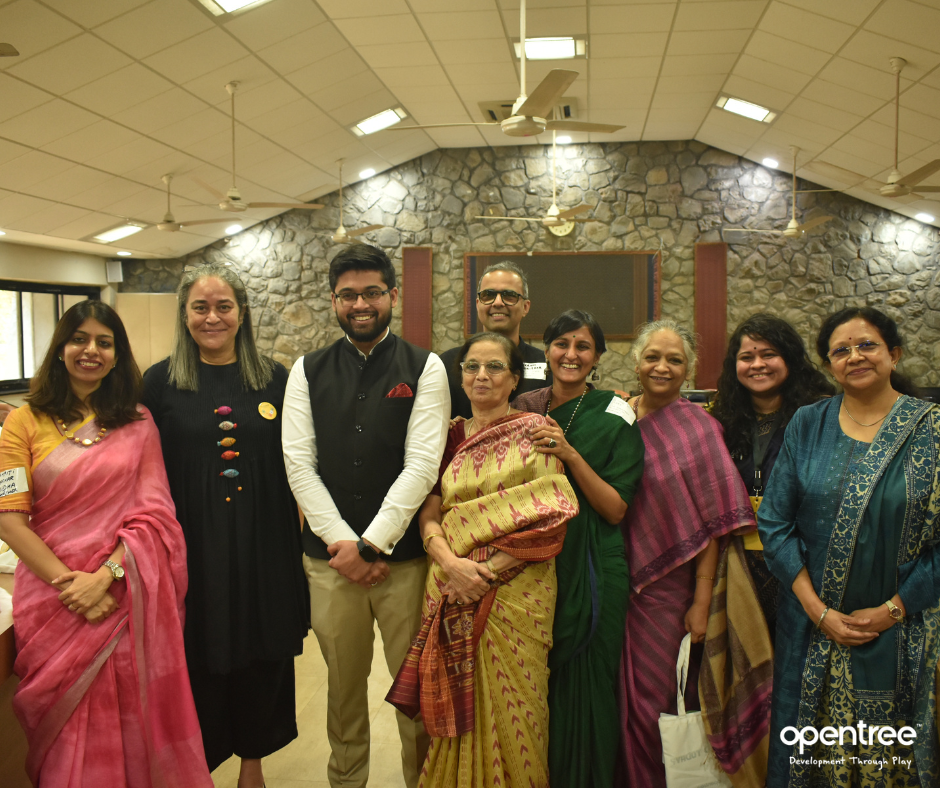
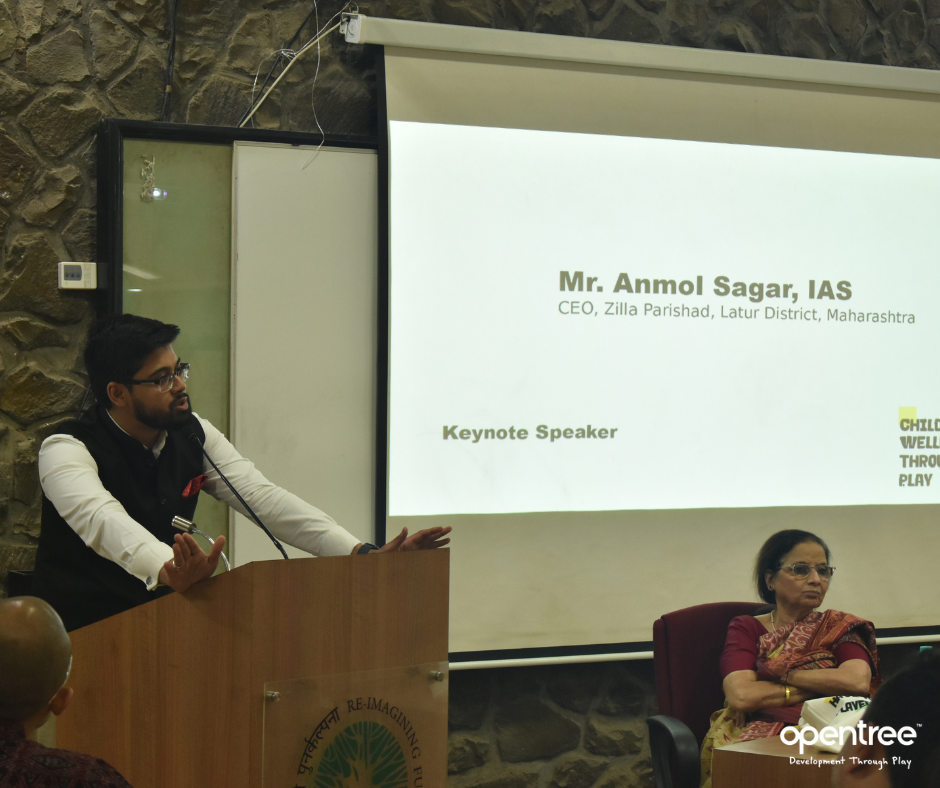
The keynote speakers for the event were Farida Lambay, Co-Founder, Pratham Education Foundation, and Anmol Sagar, IAS, CEO of Latur District, where TOF’s play programmes impact over 10,000 children across 50+ schools.

Lambay spoke at length about the various socio-economic barriers that limit children’s access to play, highlighting that even with the inclusion of Play in the National Education Policy (NEP) 2020, there remain considerable gaps in the implementation of play-centric teaching methods and the integration of play into learning spaces. Sagar, who has witnessed the impact of TOF’s programmes in Latur, spoke about play as a key tool for helping children develop positive attitudes towards school and learning, and urged organisations like TOF, and experts to come forth and collaborate with the government on more scalable, low-cost models of play-centric learning.  

A Play-centric Space

Play is ubiquitous – we are surrounded by Play, and yet, we often fail to notice it. At this seminar, along with fostering dialogue and collective action on play, one of our goals was to create as many opportunities as possible for everyone to observe, recognise, and reflect on the presence of play all around.

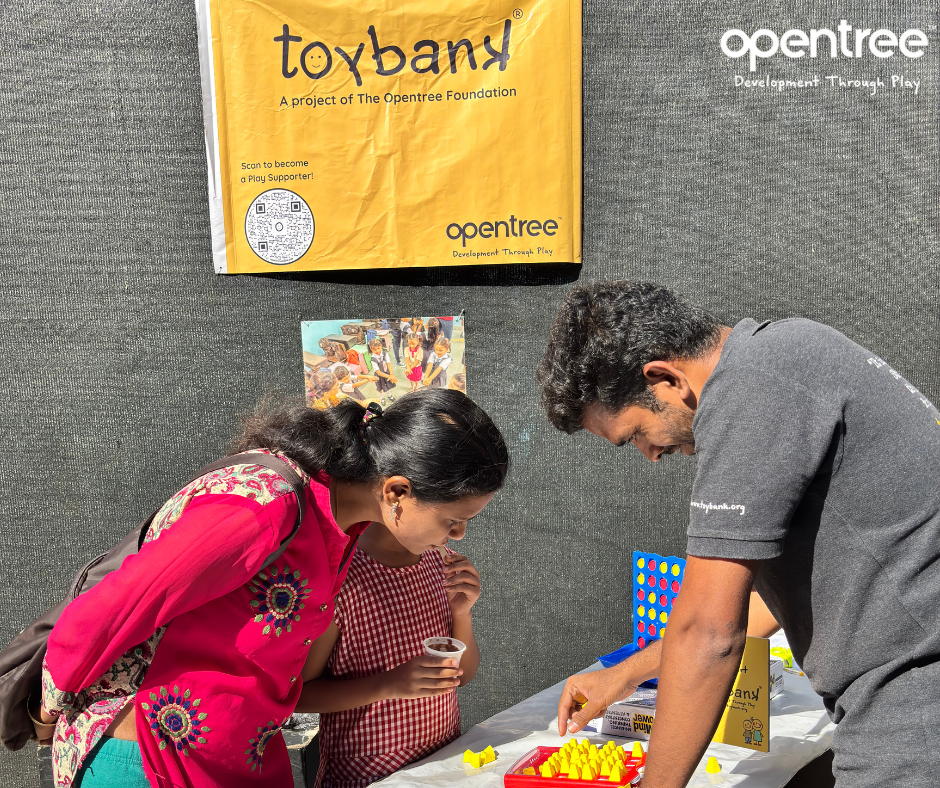
The essence of Play and playfulness was a key element of the experience design of the seminar. Our team created a series of interactive ‘play nooks’, that gave participants a chance to relive their own play memories, to understand some of the games used as part of project Toybank’s Conscious Play® approach, and invited them to reflect and collectively brainstorm solutions to these big questions: How can play become a part of learning environments? What can be done to make play accessible and equitable for children from underserved communities?

At these exhibits, participants also had a chance to understand the impact of TOF’s life skills play programme, which was also the focus of a session on Assessing through Play. 

Panel Discussion - The Child and Play: Current Realities & Way Forward

The lack of equitable access to play is a complex problem, one that is deeply enmeshed with other socio-economic-cultural factors, and needs to be addressed through an ecosystem of mindset change, policy reform, capacity building and resource allocation. It is important that the child’s Right to Play is examined in the context of all these factors, along with defining the roles of various stakeholders in realising it. 

These diverse  perspectives on play came together in the form of a panel discussion titled ‘The Child and Play: Current Realities & Way Forward’ at the seminar, chaired by Ingrid Srinath, Founder-Director of Centre for Social Impact and Philanthropy. The panelists were:

  • Prof. (Dr.) Shubhada Maitra, former dean of the School of Social Work, TISS and an expert on children’s welfare, mental health, gender and play
  • Ms. Samriti Makkar Midha – a clinical psychologist and expert on play therapy, child protection, diversity and inclusion
  •  Mr. Luis Miranda, chairman of the Indian School of Public Policy

The panelists navigated questions on where play can find a place in children’s well-being and cognitive development, the need to reimagine ecosystems through play-centric design and approaches, the role that socio-economic adversity, gender, geography play in enabling or restricting access to play. 

Play in Practice: Parallel Sessions

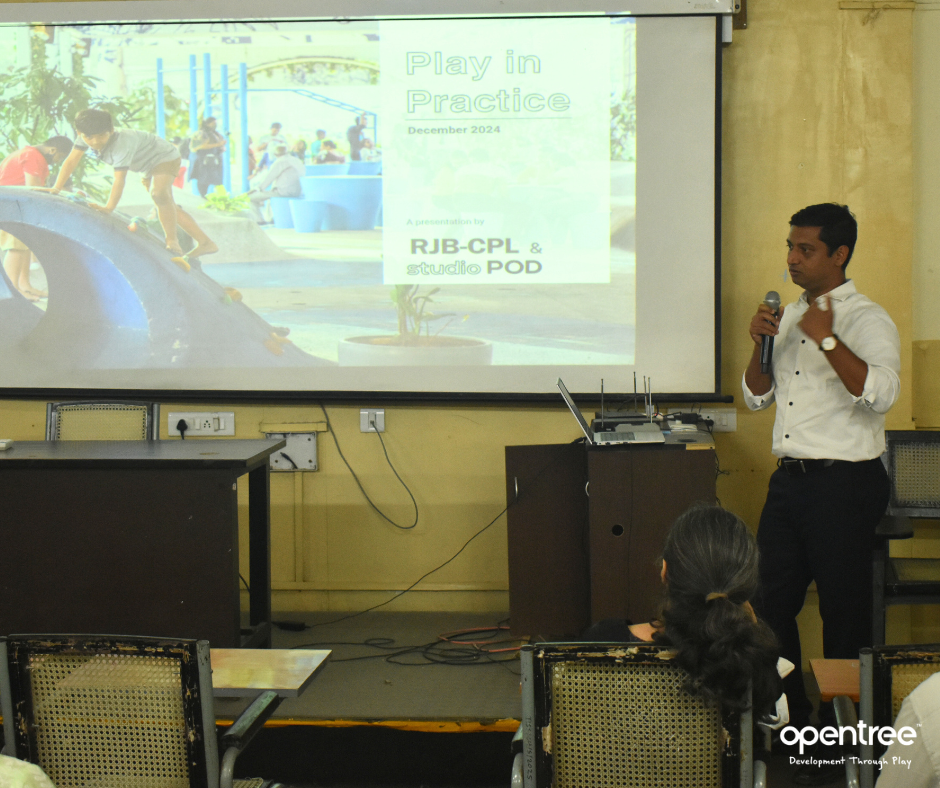
One of the highlights of the seminar were the sessions led by play practitioners – experts who use play as a tool for change in their own practices and contexts. The first session, ‘Beyond Toys: Beyond Toys: Creating a Culture of Playfulness for Families and Communities, was conducted by Dr. Krishna Kulkarni, a play researcher who uses playful practices to advise parents on fostering safe, joyful interactions and spaces with children. In Urban Spaces for Play, Sarfaraz Momin, the Co-Founder of StudioPOD spoke at length about how play can consciously be integrated into the design of spaces, and how play-centric design fosters wellbeing, cognitive development, and creates more equitable access for play. 

The  third session, How Play Makes Sense: Integrating Play in Schools & Communities and its Impact on Children was conducted by Rahul Aggarwal and Kuldeep Kannoujiya from Swatantra Talim, a Lucknow-based organisation that works to build children’s skills and agency through play-centric activities and environments. This session wove elements of free play, puppetry to give participants an immersive experience. These sessions inspired participants with ideas on how to integrate play into their own context, to address children’s needs and overcome barriers to play.

Workshop: Rediscovering Play

Facilitated by the The Opentree Foundation’s team, this 45-minute workshop was a space for participants to revisit play in their childhood, reflect on the paucity of play as we become adults, and to immerse themselves in a state of playfulness where they used their imagination to bring abstract objects to life. The workshop brought out rich reflections – from the role of stress in our fast paced lives, to the lack of non-judgemental, safe spaces where one can be playful, to the need for being open to newer, less structured ways of thinking and finding solutions. 

Launch: Play is Everywhere

With all the participants in a playful state of mind, TOF announced the launch of Play is Everywhere, a crowdsourced digital archive that will inspire all of us to be more aware of play round us, to think more critically about what enables or deters access to play and the intermingling of culture with play. You can follow us here. 

Assessing Play through Play

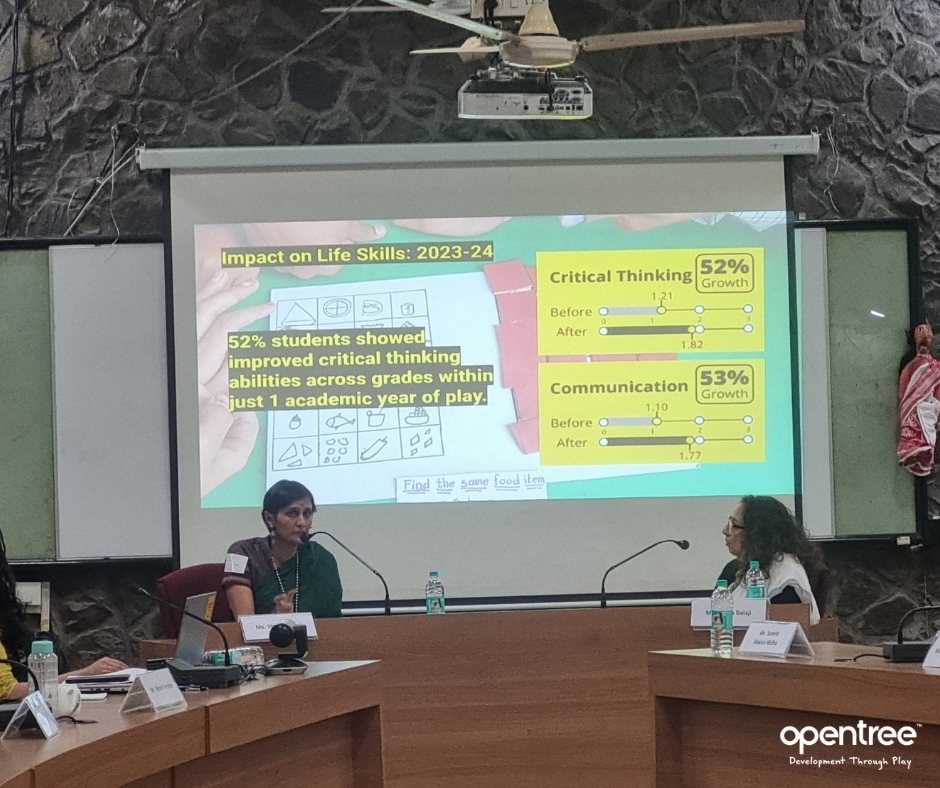
In the two decades of our work at The Opentree Foundation, a question that we have tried to address is: How do you measure Play? Play is not linear; its impact of play is largely visible through observation or interaction with children, and the outcome varies from child to child. Over the years we have conducted assessments, observations and case studies that document the impact of play on skills, socio-emotional development, school attendance and learning outcomes; and yet, there remains a large gap in terms of a shared body of knowledge, or even shared evidence on measuring the impact of play in the Indian context.

As our programmes have evolved, we also have steadily worked on bridging this gap in terms of resources and research on assessments for play in India. At the play seminar, Shweta Chari, CEO and Co-Founder, The Opentree Foundation, presented this journey of evolution of impact measurement for play, along with Vijaya Balaji, founder, Social Lens, which is our partner for data analysis and impact measurement. 
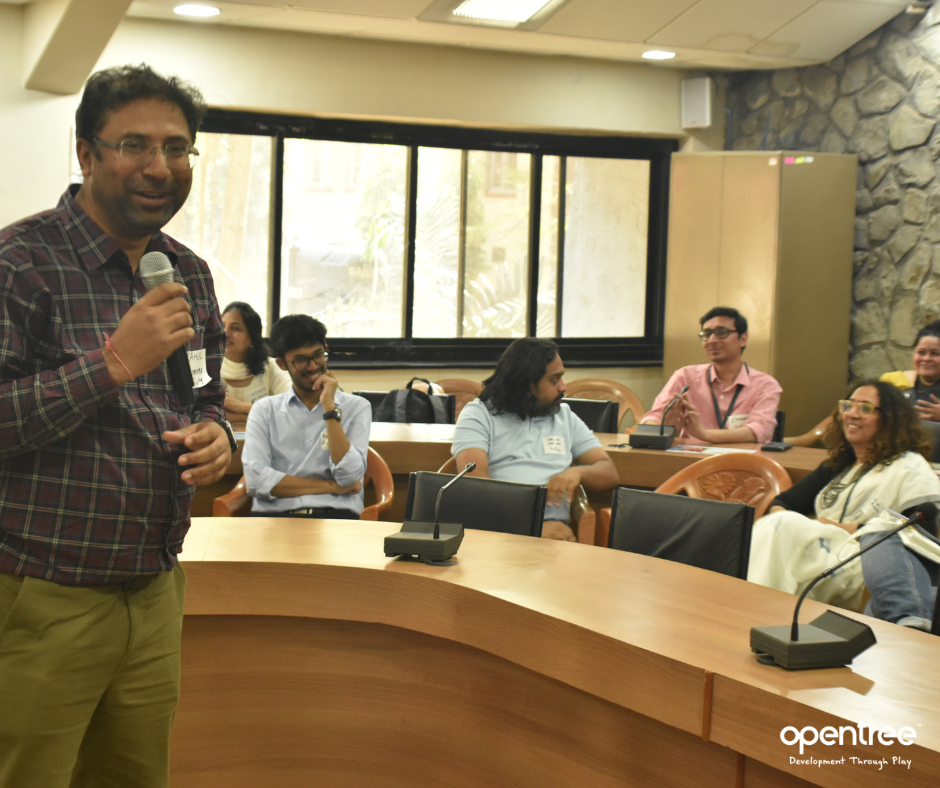
In their session, Shweta and Vijaya reflected on the lack of structured tools and methods to measure the impact of play, beyond traditional surveys and questionnaires, and introduced TOF’s play-based assessment of life skills, which will be the first every framework of its kind in India that uses play to measure play. 

Call for Collective Action

The seminar concluded with a call to action, for participants to come forward and sign up for a Play Collective, which will bring together a group of driven play advocates who will leverage their individual strengths, influence, resources and expertise to initiate collective action for mainstreaming play in schools, communities and public spaces in India. Through this Play Collective, The Opentree Foundation will spearhead play-centric research, innovation and policy change, paving the path for realising the Right to Play for every child in India.